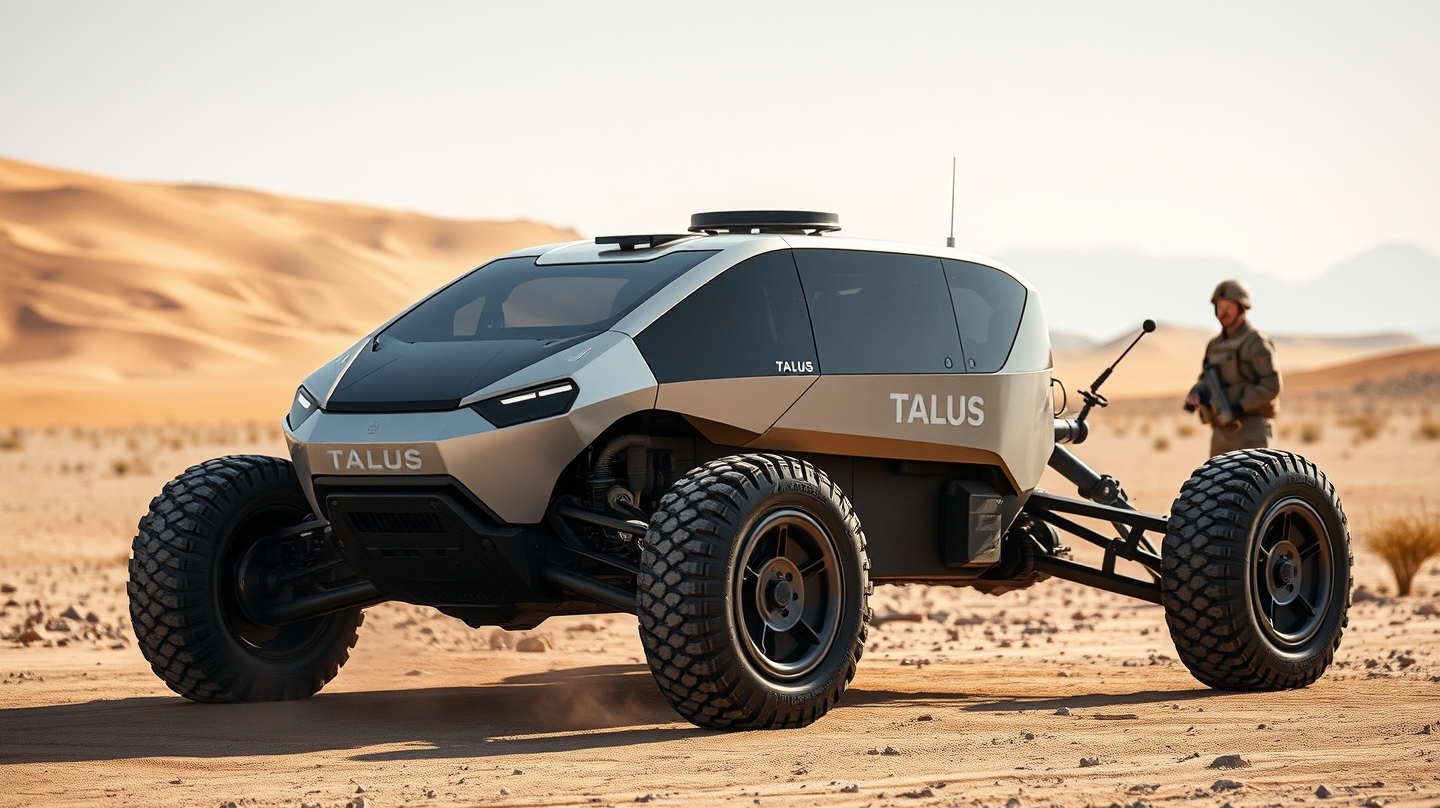
The U.S. Army announced Tuesday that it has awarded a $15.9 million Project Sustainment contract to Stratom Inc., a Boulder‑based Service‑Disabled Veteran‑Owned Small Business, to develop the Tactical Autonomous Logistics Utility System (TALUS). The contract marks the first public unveiling of a modular, autonomous distribution platform designed to resupply dispersed forces operating in contested environments.
TALUS is envisioned as a fleet of self‑navigating vehicles capable of carrying ammunition, fuel, medical kits and other critical payloads from brigade support areas to forward units that are spread across a battlefield. Its modular architecture lets operators swap mission kits—whether for cargo, energy or specialized equipment—without redesigning the hardware, allowing the system to evolve alongside Army requirements.
For soldiers on the ground, the promise is straightforward: fewer convoys exposed to enemy fire and a steadier flow of supplies when traditional routes are disrupted. By automating the “last mile” of logistics, the Army hopes to extend operational reach, reduce fatigue, and strengthen sustainment resilience in environments where communications are degraded and threats are pervasive.
Stratom’s approach leans heavily on proven commercial‑off‑the‑shelf (COTS) technology. Mobility platforms, autonomy stacks, and robotic cargo‑handling modules that have already been fielded in civilian sectors are being repurposed for military use. This strategy cuts development risk, accelerates integration, and keeps costs in check. The company describes TALUS as a “multi‑mission system” that blends its own autonomous logistics expertise with capabilities contributed by a network of non‑traditional defense contractors and small businesses.
The eight‑month prototype phase, known as Project Sustainment, will culminate in operational evaluations at the Army’s Transformation in Contact unit Combat Training Center. Those trials will test TALUS under simulated contested conditions, providing data that will shape decisions on broader fielding. If successful, the system could become a staple of future brigade combat teams, complementing existing manned logistics convoys.
Beyond the immediate contract, TALUS reflects a broader shift in defense acquisition: the migration from bespoke, purpose‑built hardware toward adaptable solutions built on commercial foundations. Stratom’s status as an SDVOSB and its collaboration with small, specialized firms illustrate how the Department of Defense is widening its supplier base to capture niche innovations that larger contractors may overlook.
This trend aligns with the military’s increasing reliance on automation to address logistics bottlenecks. Autonomous ground vehicles, drone resupply, and AI‑driven inventory management are all part of a growing ecosystem that seeks to reduce the human footprint in dangerous supply lines. As the Army modernizes its sustainment doctrine, platforms like TALUS could set a template for integrating robotics across other mission sets, from medical evacuation to energy distribution.
On the ground, the impact could be immediate. A forward unit engaged in a high‑intensity operation could request a specific payload—say, a 500‑liter fuel pod—and have a TALUS vehicle deliver it within minutes, bypassing the need for a traditional convoy that might be vulnerable to ambush or IEDs. The reduction in exposure not only safeguards personnel but also preserves combat power by keeping essential materiel flowing.
Looking ahead, the Army plans to assess the prototype’s performance and, pending favorable results, move toward limited fielding before scaling up. The success of TALUS will likely influence future contracts focused on autonomous sustainment, reinforcing the Department’s push toward a more agile, technology‑driven logistics posture.




















