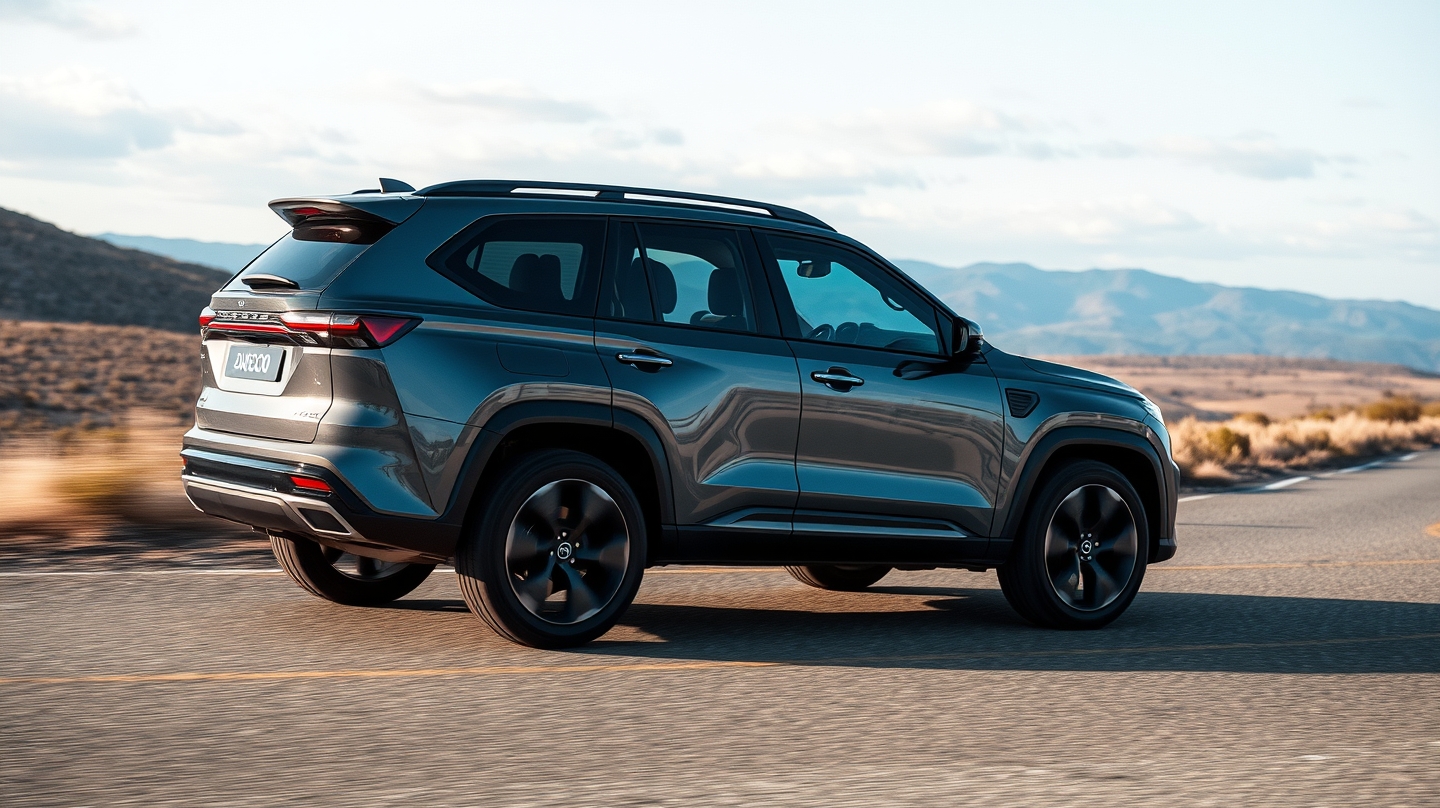
The Jaecoo 7's success story is one of strategic pricing, clever marketing, and a dash of good timing. Just 18 months ago, Jaecoo hadn't even entered the U.K. market, but today, it's the brand behind the country's bestselling car. So, what's driving this phenomenal growth?
The answer lies in a combination of factors, including China's highly competitive domestic market, which has forced companies to look abroad for growth opportunities. With the U.S. market largely closed off due to high import tariffs, European markets have become the next best option. However, the European Union's introduction of tariffs on Chinese imports has led to a mixed bag of outcomes, with the U.K.'s relatively modest 10 percent tariff making it an attractive destination for Chinese brands.
Jaecoo has capitalized on this opportunity by offering the 7, a five-seat, mid-size SUV that's squarely aimed at rivals like the Honda CR-V, Toyota RAV4, and Kia Sportage. The 7's design, which bears a resemblance to the Range Rover Evoque, has been dubbed the 'Temu Range Rover' by some, and its competitive pricing has made it an attractive option for cost-conscious families.
The 7 is available in several variants, including gas-powered, conventional hybrid, and plug-in hybrid options. While an all-electric version is not currently available, the plug-in hybrid model offers a compelling combination of performance and efficiency. The car's drive system, which teams a 141-hp 1.5-liter turbo four with a 201-hp traction motor and a 16-kWh battery, provides smooth and quiet operation, with plenty of torque and prompt throttle response.
Jaecoo claims a zero-to-62-mph time of 8.5 seconds, and the car's electric range of roughly 50 miles makes it an attractive option for those looking to reduce their environmental impact. The addition of 40-kW fast-charging and V2L discharging capabilities further enhances the 7's appeal, allowing owners to use the car as a giant power bank if needed.
The Jaecoo 7's success is not just a story about a single car, but about the broader implications of Chinese brands' rapid expansion into European markets. As technology continues to drive automation and workflow transformation, the automotive industry is likely to see significant changes in the coming years. The Jaecoo 7's rise to dominance is a testament to the power of strategic pricing, clever marketing, and a deep understanding of local market conditions.
As the industry continues to evolve, it will be interesting to see how established brands respond to the challenge posed by Chinese newcomers like Jaecoo. One thing is certain, however: the Jaecoo 7's success has sent a clear message to the automotive industry that Chinese brands are here to stay, and they're ready to compete.




















