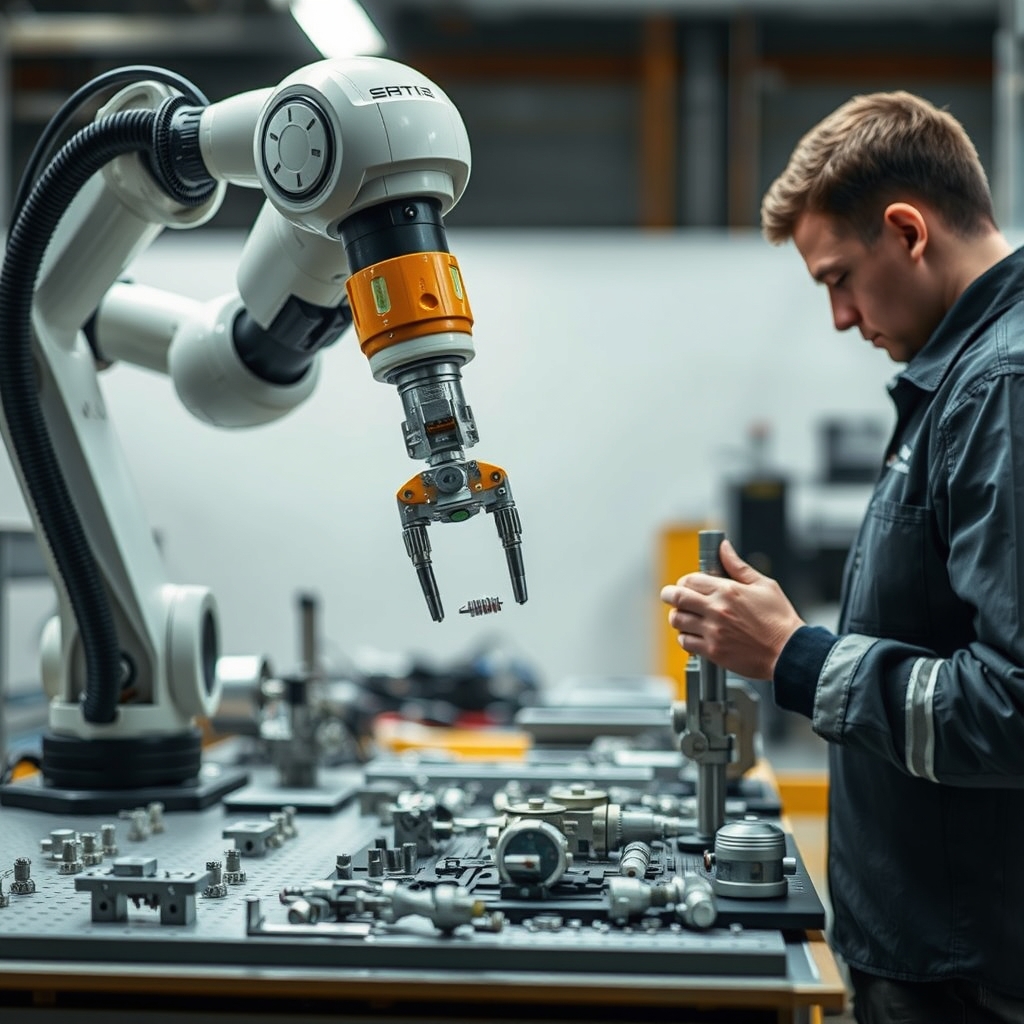
From promise to bottleneck: the high-mix paradox
When a factory floor is awash with dozens of part numbers, the allure of a robot that can adapt on the fly is undeniable. Yet the reality is a litany of compromises: change‑over times that dwarf the savings, software that chokes on variability, and a cultural inertia that favors the familiar hand‑tool. The narrative of robotics as a one‑size‑fits‑all solution collapses under the weight of diversity, leaving many manufacturers stuck in a limbo between ambition and practicality.
Economic friction in a sea of SKUs
High-mix environments thrive on flexibility, but each new SKU demands a recalibration of the robot's grip, vision system, and path planning. Dr. Lena Ortiz, a senior researcher at the Institute for Advanced Manufacturing, notes, "The marginal cost of reprogramming a robot for a new part can exceed the profit margin of that part, especially when volumes are low." This economic calculus discourages investment, prompting firms to retain skilled operators who can pivot instantly.
Technical hurdles: perception and handling
Vision systems trained on a narrow set of objects falter when confronted with the kaleidoscope of shapes typical of high‑mix lines. A case study at a German automotive supplier revealed that a state‑of‑the‑art camera array misidentified 12 percent of parts during a trial, leading to a cascade of stoppages. The root cause, according to robotics engineer Marco De Luca, is "the lack of robust, real‑time learning algorithms that can generalize across disparate geometries without extensive retraining."
Human‑robot collaboration: a cultural shift
Beyond the hardware, the human element exerts a powerful influence. Workers accustomed to tactile feedback often mistrust a machine that cannot "feel" a part. In a recent interview, veteran assembler Carla Mendes confessed, "I trust my hands more than a robot that sometimes drops the piece. It feels like a gamble." Companies that invest in collaborative robots (cobots) and comprehensive training report smoother adoption, but the transition remains uneven across sectors.
Comparative lens: Lessons from the pharmaceutical sector
The pharmaceutical industry, long plagued by high‑mix, low‑volume production, offers a cautionary tale. Early attempts to automate pill packaging stumbled for similar reasons—rigid automation clashed with ever‑changing formulations. It was only after integrating modular tooling and AI‑driven inspection that scalability became viable. The manufacturing world watches closely, hoping the same iterative approach can unlock robotics for complex assembly lines.
Perspective: The road ahead
While the obstacles are formidable, they are not insurmountable. Emerging standards for modular end‑effectors, coupled with cloud‑based learning platforms, promise to shrink reprogramming cycles dramatically. If the industry can align economic incentives with technological agility, the high‑mix paradox may finally tip in favor of the robot.




















