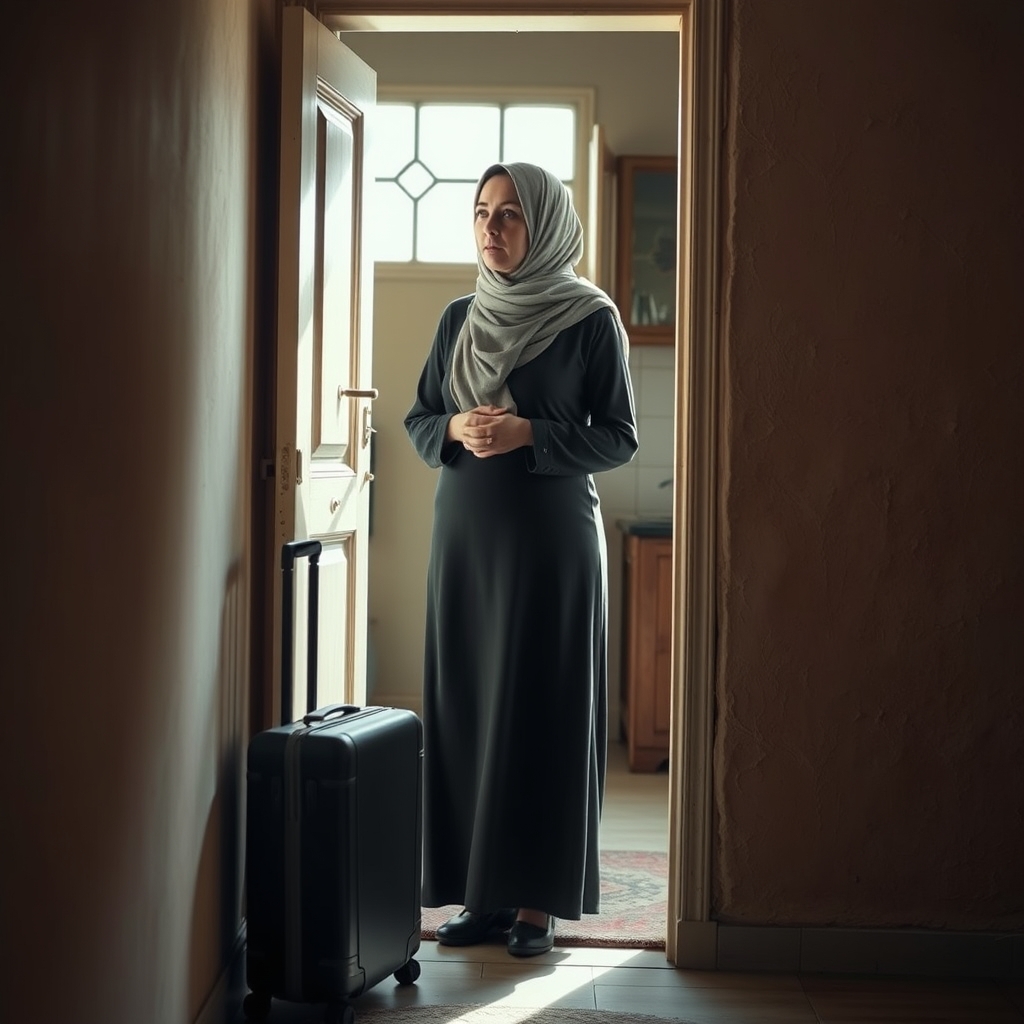
A Homecoming Framed by Grief
When the lights dim on Leyla Bouzid's latest narrative, the audience is thrust into a quiet Tunisian suburb where a young woman steps off a bus, clutching a suitcase and a secret that has been hidden for years. The film's opening sequence lingers on the cracked pavement and the muted hum of distant traffic, setting a tone that feels both intimate and universal. It is a story about the collision of personal truth with the expectations that have shaped a lifetime.
New Faces, Old Tensions
Fresh on the screen is newcomer Eya Bouteraa, whose performance radiates a fragile confidence. As the protagonist, she navigates the narrow hallway of her family's home, each footstep echoing the weight of a funeral she never imagined attending. Opposite her, veteran actress Hiam Abbass embodies the matriarch—a woman whose devotion to tradition is as palpable as the scent of incense that fills the rooms. Their chemistry crackles, a silent dialogue that speaks louder than any spoken word.
Context Within Bouzid's Oeuvre
Bouzid, known for her keen eye on the complexities of Tunisian youth, expands her thematic repertoire with this third feature. While her earlier work, As I Open My Eyes, explored the turbulence of political awakening, this film turns inward, probing the private battlefield of identity. Critics have drawn parallels to the quiet intensity of Céline Sciamma's Portrait of a Lady on Fire, noting how both directors use restrained settings to amplify emotional stakes.
Beyond the Screen: Cultural Resonance
In interviews, Bouzid has spoken about the urgency of portraying stories that sit at the intersection of religion, sexuality, and family. "I wanted to create a space where a Muslim lesbian could be seen not as an exception, but as a person whose love and grief are as real as anyone's," she told a Tunisian newspaper last month. This sentiment reverberates through the film's careful mise‑en‑scene, where every photograph on the wall and every piece of pottery hints at a lineage that both grounds and confines the characters.
Implications for Audiences
For viewers, the film offers more than a portrait of a single family's struggle; it invites reflection on the broader societal conversations happening across North Africa and the diaspora. The narrative does not offer neat resolutions, instead lingering on moments of quiet understanding—a shared glance, a tentative hand on a shoulder—that suggest change is possible, even if incremental. As the credits roll, the lingering question is not whether acceptance will come, but how the act of returning home can reshape the very notion of belonging.




















