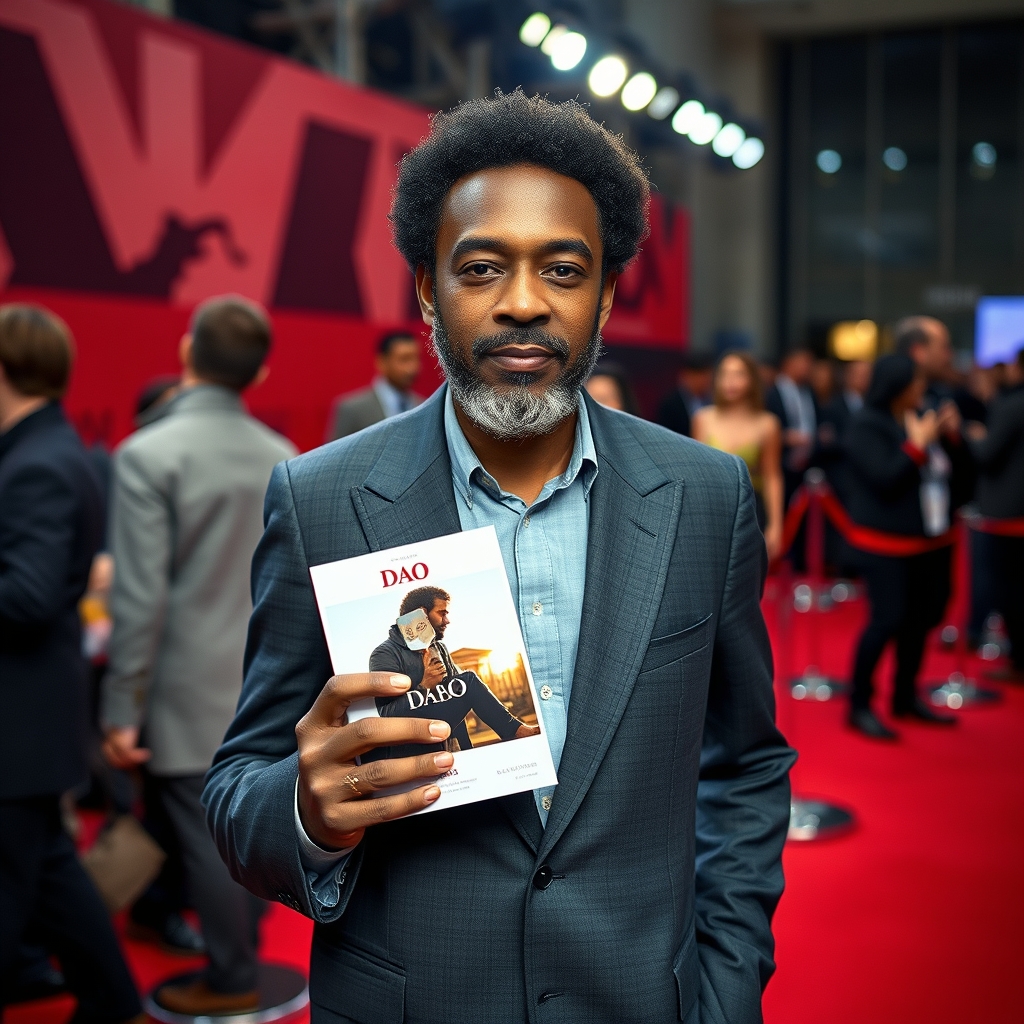
From Silver Bear to Berlin's Main Stage
Nearly a decade after the Berlin International Film Festival honored his debut with the Silver Bear for Félicité, French filmmaker Alain Gomis is back, this time with a work that pushes both narrative scope and personal introspection. The three‑hour film, titled DAO, arrives at a moment when European festivals are increasingly spotlighting trans‑continental stories that bridge post‑colonial realities with contemporary family dynamics.
The evolution of Gomis's storytelling
Gomis's early oeuvre, marked by lyrical realism and a focus on marginalised voices, set a foundation for his current ambition. Critics have noted a gradual shift from the tight, character‑driven frames of his first feature toward a more expansive canvas that incorporates history, migration, and intergenerational memory. In a recent interview with Le Monde, the director described DAO as "the most intimate yet most outward‑looking film I have ever attempted."
'DAO': A three‑hour odyssey across continents
The title, an acronym for "Diaspora, Ancestry, Obligation," signals the film's structural ambition: three interwoven acts that move between modern Parisian suburbs and rural Senegal. Each segment follows a different branch of a single family, tracing how decisions made in the 1970s reverberate through the lives of grandchildren navigating identity in a globalised world. The narrative deliberately resists conventional climax, opting instead for a rhythm that mirrors the slow, often fragmented, passage of memory.
Production roots in France and West Africa
Financing for DAO was secured through a co‑production agreement between French CNC funds and Senegal's national film agency, a partnership that reflects the story's bilateral focus. On set, Gomis worked with a mixed crew of French and Senegalese technicians, fostering a collaborative atmosphere that he says "allowed the film to breathe in both languages, both cultures." The cinematography, handled by veteran Senegalese director‑of‑photography Amadou Tall, employs natural light to capture the stark contrast between Paris's steel‑gray streets and the sun‑bleached savannahs of the Sahel.
Anticipated reception and cultural resonance
Industry observers anticipate that the film's length and deliberate pacing will spark conversation about programming choices at major festivals. Berlin's artistic director, Carlo Chatrian, has expressed confidence that the festival's flexible scheduling will accommodate the work, noting that "audiences are ready for cinema that asks for patience and offers depth in return." Early screenings for press have drawn comparisons to the epic family chronicles of Hou Hsiao‑Hsien and the transnational narratives of Mati Diop.
What the festival circuit may mean for the film
Beyond accolades, the true measure of success for DAO may lie in its ability to catalyse dialogue on diaspora identities across Europe and Africa. Scholars at the University of Paris have already cited the film in preliminary research on post‑colonial family structures. If the Berlin audience embraces the three‑hour journey, it could signal a broader appetite for films that traverse borders both geographically and emotionally.




















