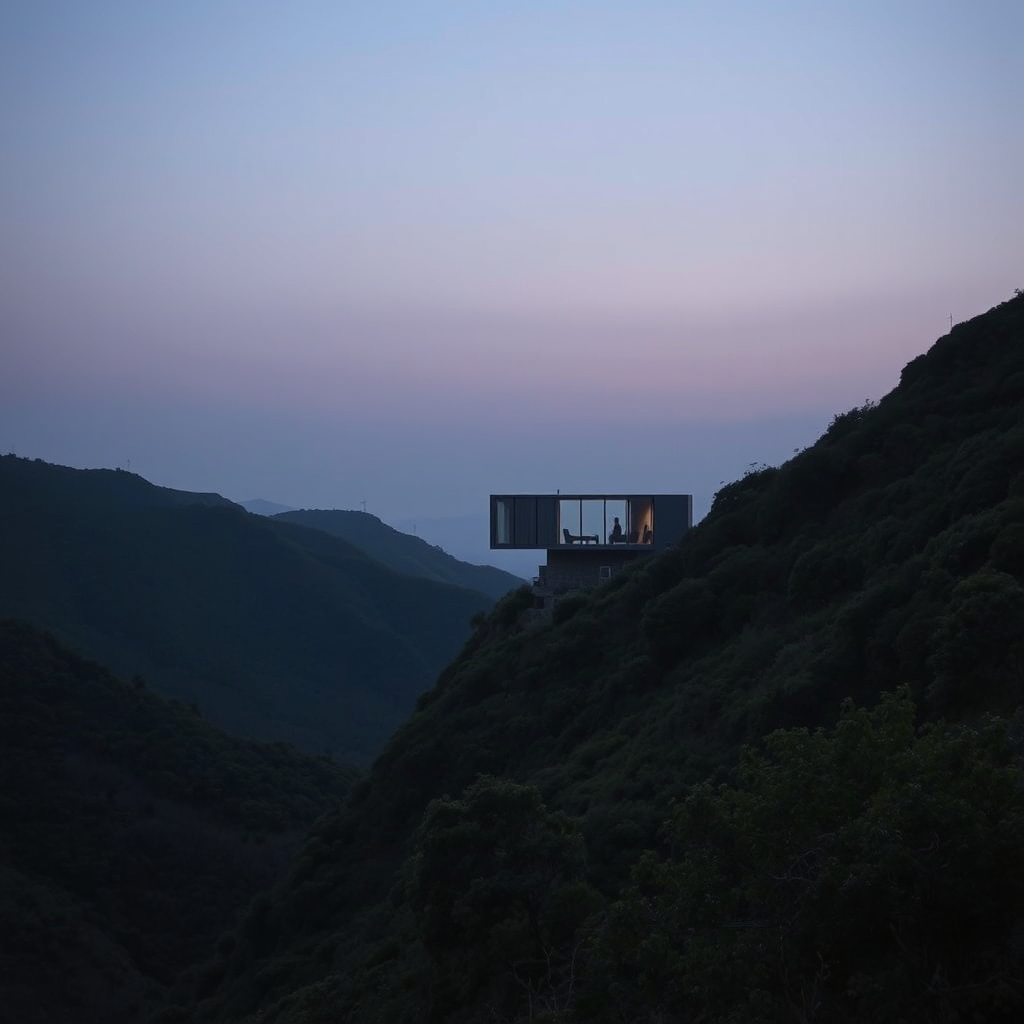
Entremontes House, a single‑family residence designed by Harpa Arquitetura, occupies a 5,000 m² plot perched between two hills that frame the skyline of Montenegro, a small town in southern Brazil. Completed in 2022, the project confronts a rare urban site where municipal utilities intersect with a steep, forested slope. The architects treated the duality as a structural tension, letting urban infrastructure and natural landscape negotiate space through a glass‑wrapped living room that opens onto a terrace. As the wind carries the scent of eucalyptus across the stone floor, the client paused at the threshold, reconsidering the placement of the expansive glazing. This hesitation reveals how design decisions become moments of negotiation between comfort and exposure.
Mediating Urban Infrastructure and Natural Landscape
Rather than a private retreat, the house functions as a micro‑scale study of Brazil's broader negotiation between rapid urbanization and the preservation of its diverse ecosystems. By positioning the main volume at the edge of the municipal grid, the design forces a dialogue where concrete utilities meet native vegetation, exposing the cultural tension between efficiency and ecological stewardship. Entremontes House matters because it demonstrates how architecture can reconcile development with ecological stewardship.
Material Choices and Spatial Dialogue
The façade combines locally sourced stone with reflective glass, allowing the building to absorb the warm afternoon light while echoing the texture of the surrounding hills. Inside, the floor transitions from polished concrete to reclaimed timber, a tactile reminder of the site's shift from urban to rural. These material decisions anchor the project in its specific place and time, illustrating how a single residence can echo a national conversation about sustainable growth.
The dialogue between city and hill continues to shape Montenegro's future.




















