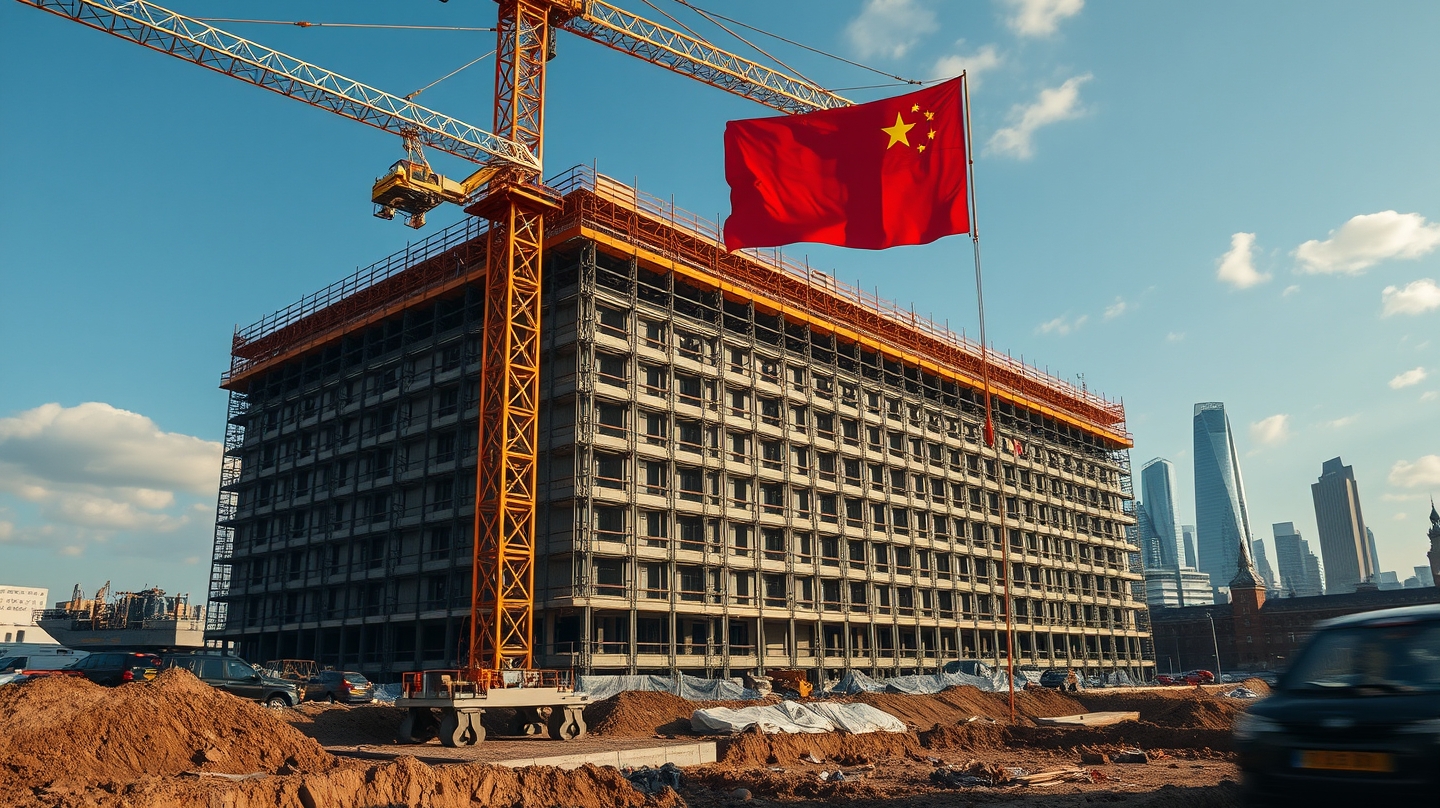
When two High Court judges dismissed a legal challenge by the Royal Mint Court Residents’ Association (RMCRA), the decision did more than clear a construction site – it exposed a clash between diplomatic privilege, urban planning technology and community security concerns.
The contested development is a sprawling Chinese embassy complex slated for the former Royal Mint grounds, adjacent to the Tower of London. Residents, representing roughly one hundred families and businesses, argued that the project posed an espionage threat, could enforce “draconian” Chinese laws on UK soil, and ignored fire‑safety obligations that diplomatic immunity would shield from enforcement.
Justice Lieven and Lord Justice Dingemans found no procedural unfairness. They noted that the government had “conscientiously and carefully” considered the Chinese government’s application and that the residents’ lack of access to a confidential “blast assessment” – a digital model estimating the impact of a potential terrorist explosion – did not constitute a denial of justice. The judges emphasized that the assessment, prepared by specialist engineers, was part of a broader suite of technology‑driven tools that modern planning departments rely on to evaluate risk.
These tools, ranging from GIS‑based site analysis to AI‑enhanced structural simulations, have become standard in high‑profile urban projects. Their use in the embassy case illustrates a structural shift: legal arguments now hinge not only on statutory interpretation but also on the transparency and reliability of automated risk models. When such models are classified for security reasons, they can become flashpoints in disputes over procedural fairness.
Beyond the courtroom, the case has ignited a media‑technology debate. The Interparliamentary Alliance on China (IPAC) and the RMCRA have turned to automated content distribution platforms to amplify their message, employing algorithm‑friendly headlines and rapid‑turnaround video briefs. This “automation‑driven media infrastructure” ensures that local grievances reach a global audience within hours, reshaping public pressure tactics.
Chinese officials, speaking to the BBC, framed the project as an “international obligation” of the host country, insisting that the planning and design adhered to both local regulations and international practice. The embassy’s spokesperson highlighted that the proposal met all required standards, a claim backed by the same digital assessments that the residents could not review.
For the affected community, the verdict is a setback but not the final chapter. RMCRA spokesman Mark Nygate announced plans to appeal to the Supreme Court, describing the case as “far beyond planning law” and a test of Britain’s ability to protect itself from foreign intimidation. Chloe Cheung, a Hong Kong‑born democracy activist living nearby, echoed the sentiment, noting that personal safety concerns intertwine with the legal battle.
The broader implication is clear: future diplomatic constructions in the UK will likely be evaluated through a blend of legal precedent, digital risk modelling, and heightened public scrutiny powered by automated media channels. Cities may need to balance diplomatic immunity with transparent, technology‑enabled planning processes that allow residents to assess safety data without compromising national security.
Policymakers are already discussing reforms, such as mandating limited public access to non‑sensitive portions of blast assessments and establishing independent oversight bodies for high‑risk diplomatic projects. Such steps could mitigate the perception of secrecy while preserving the protective intent of diplomatic immunity.
In a climate where geopolitical tensions are increasingly reflected in brick‑and‑mortar projects, the High Court’s decision underscores how law, technology and media converge to shape the built environment and public confidence alike.




















