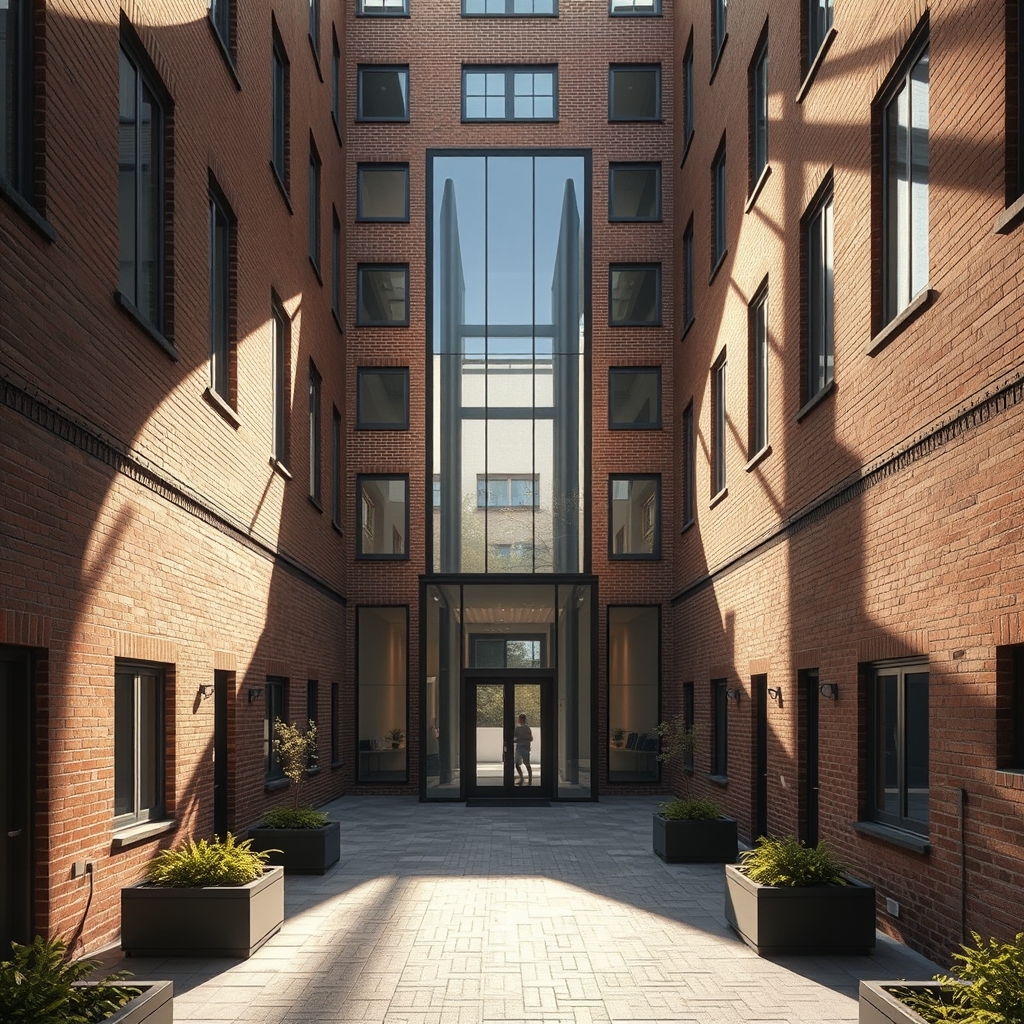
The project, located in the inner courtyard of a 1900s apartment block in Berlin, reimagines the European Stadthaus as a compact, sustainable dwelling that adds housing without expanding the city's footprint. It inserts a sleek glass volume into a quiet, sun‑warmed space framed by aged brick, offering a new model of urban infill that balances density, sustainability and spatial quality.
Reinterpreting the Stadthaus for the 21st Century
Where once the courtyard served only as a service lane, the intervention turns it into a living core. The design preserves the historic façade while inserting a lightweight, energy‑efficient shell that draws daylight through operable clerestory windows. The structural tension here is clear: the desire for higher density collides with the need for human‑scale comfort. By layering private units over shared terraces, the architects negotiate that tension, proving that density need not sacrifice spatial quality.
On the first morning, a resident pauses at the narrow doorway, hand resting on the polished rail, hesitating before stepping onto the new terrace. The faint smell of rain on the stone walls mingles with the rustle of a child's toy being set down, grounding the architectural gesture in lived experience.
This approach signals a broader shift in European cities toward inward‑looking densification, echoing post‑war infill strategies while employing contemporary sustainability standards. It matters because it demonstrates a scalable path to increase housing without sacrificing livability.




















