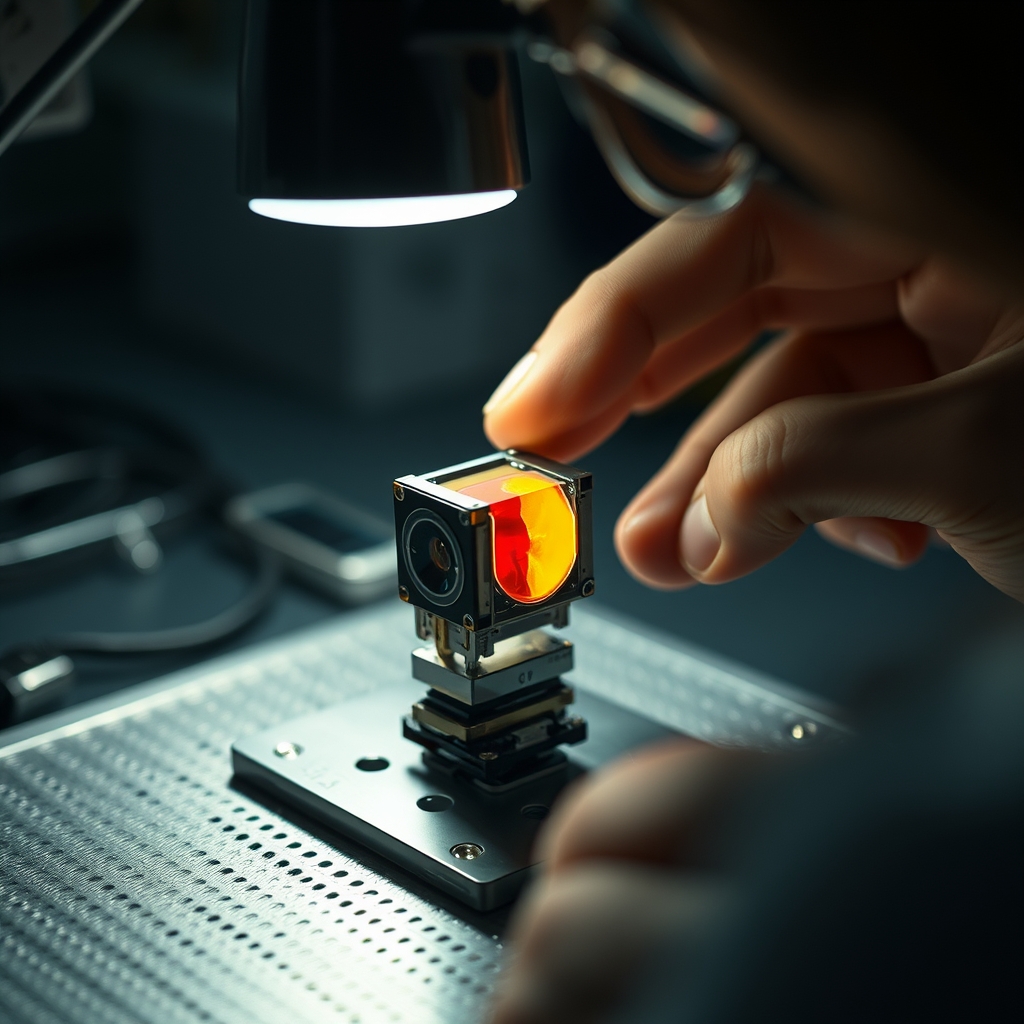
Teledyne FLIR has unveiled the Lepton XDS, a compact camera module that combines thermal infrared and visible‑light imaging in a package no larger than a thumbnail. Designed for devices where space and power are at a premium—such as small satellites, unmanned aerial vehicles, and edge‑computing sensors—the XDS delivers 160 × 120 pixel resolution in each band while drawing less than 500 mW.
How the Lepton XDS changes low‑power imaging
The module's silicon‑on‑silicon architecture fuses two focal‑plane arrays onto a single substrate, collapsing what once required two separate lenses and separate power rails. This integration cuts board real‑estate by half and reduces thermal management demands, a structural tension between performance and power consumption that has long limited multispectral payloads on constrained platforms.
During a recent bench test, the faint click of the latch echoed as an engineer secured the XDS onto a test board. He paused, thumb hovering over the power switch, weighing the trade‑off between a higher frame rate and the limited battery capacity of a CubeSat prototype. The decision to run at 30 Hz rather than the maximum 60 Hz preserved a critical margin for the satellite's mission duration.
Beyond the hardware, the launch signals a broader shift in the aerospace and IoT ecosystems: the relentless drive to embed richer perception into ever‑smaller nodes. By delivering both thermal and visual data from a single, power‑lean package, the Lepton XDS could accelerate the adoption of edge‑AI analytics in fields ranging from wildfire monitoring to industrial inspection, where previously only one modality was feasible.
The Lepton XDS matters because it unlocks thermal awareness for devices that previously could not afford it.
As the module finds its way into the next generation of miniature spacecraft and autonomous drones, the line between what is observable and what is actionable continues to blur, reshaping design priorities across the industry.
In the quiet of the lab, the future of low‑power imaging settles into place.




















