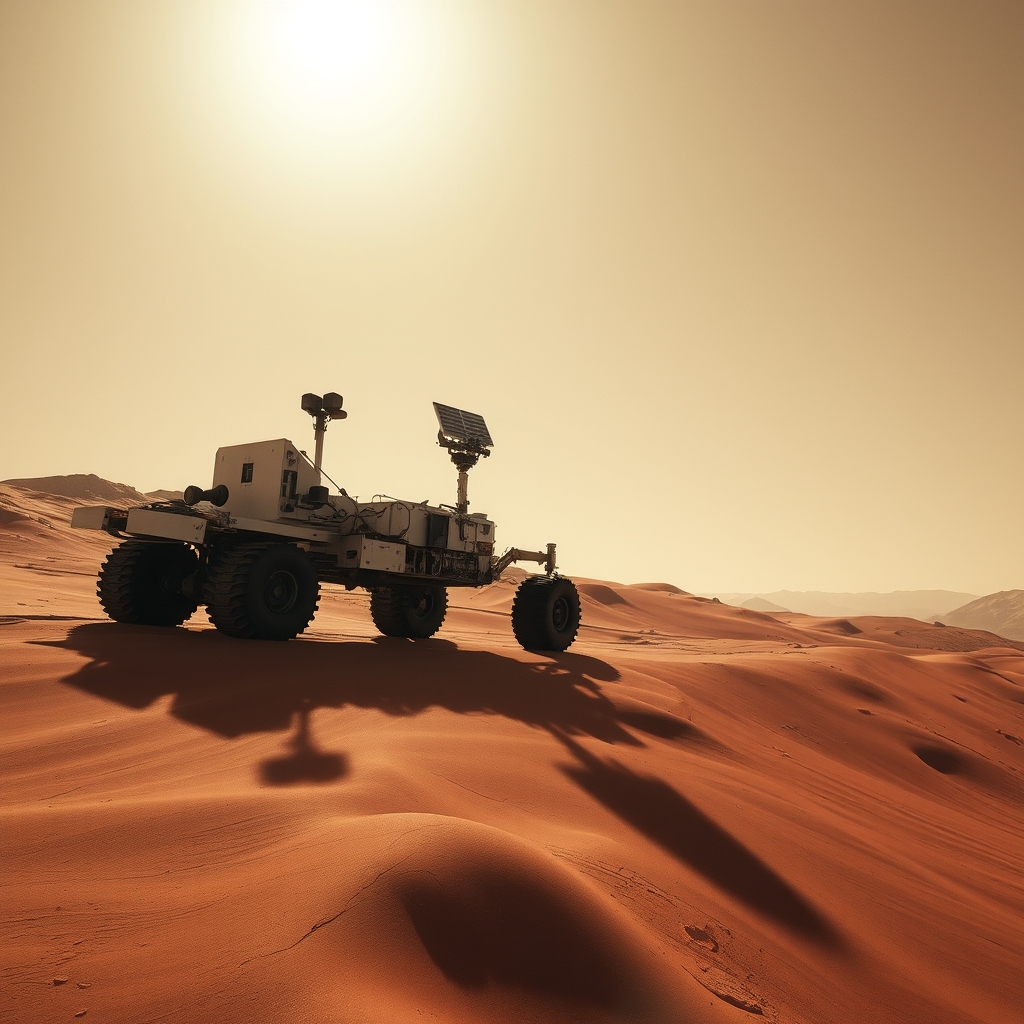
ENav lets a 1990s processor steer a rover across alien terrain
Since its touchdown on 18 February 2021, NASA's Perseverance rover has driven more than 30 kilometres of the Jezero crater using the Enhanced Autonomous Navigation (ENav) algorithm. Unlike Curiosity, which relied on ground‑control commands for over 90 % of its moves, Perseverance now decides its own path in real time, assessing roughly 1,700 possible routes within a six‑metre radius and applying a heavy‑weight collision check only to the most promising few. This feat is achieved with the computational budget of an iMac G3, a radiation‑hardened CPU from the late 1990s.
Efficiency versus safety: the core tension
The algorithm balances speed with caution. By postponing the intensive Approximate Clearance Estimation (ACE) until after a quick ranking of terrain roughness, ENav maximises travel efficiency while preserving the safety margin needed to avoid the jagged basaltic boulders that litter the Martian surface. The trade‑off is explicit: every extra metre covered per sol reduces the time scientists have to analyse samples, yet a misstep could end the mission.
A moment of human hesitation
During a December test of AI‑generated waypoints, a JPL engineer stared at the projected path, thumb hovering over the "send" button, then paused to compare the model's suggestion with a high‑resolution image from the Mars Reconnaissance Orbiter. That brief hesitation—an instinctive check against the unknown—underscored how even as machines take the wheel, human judgement remains the final gatekeeper.
Why autonomous navigation matters
Autonomous navigation on Mars matters because it multiplies the amount of terrain a rover can explore within its finite power budget. By freeing the rover from the latency of Earth‑based commands, missions can gather more data, test more hypotheses, and respond to fleeting scientific opportunities such as transient dust devils or newly exposed strata. This shift mirrors a broader cultural move toward AI‑driven autonomy in extreme environments, from deep‑sea submersibles to lunar habitats, redefining how humanity extends its reach.
The faint whir of Perseverance's wheels against the cold, iron‑oxide dust, the way the thin Martian air carries the heat of the setting sun across the rover's chassis, all attest to a machine that thinks and moves in tandem. As the rover continues its trek toward the ancient river delta, each autonomous kilometre rewrites the limits of what a distant robot can achieve.
In the grand arc of exploration, Perseverance's self‑driving capability signals a decisive step toward truly independent planetary probes.
Autonomous rovers will shape the next chapter of space discovery.




















