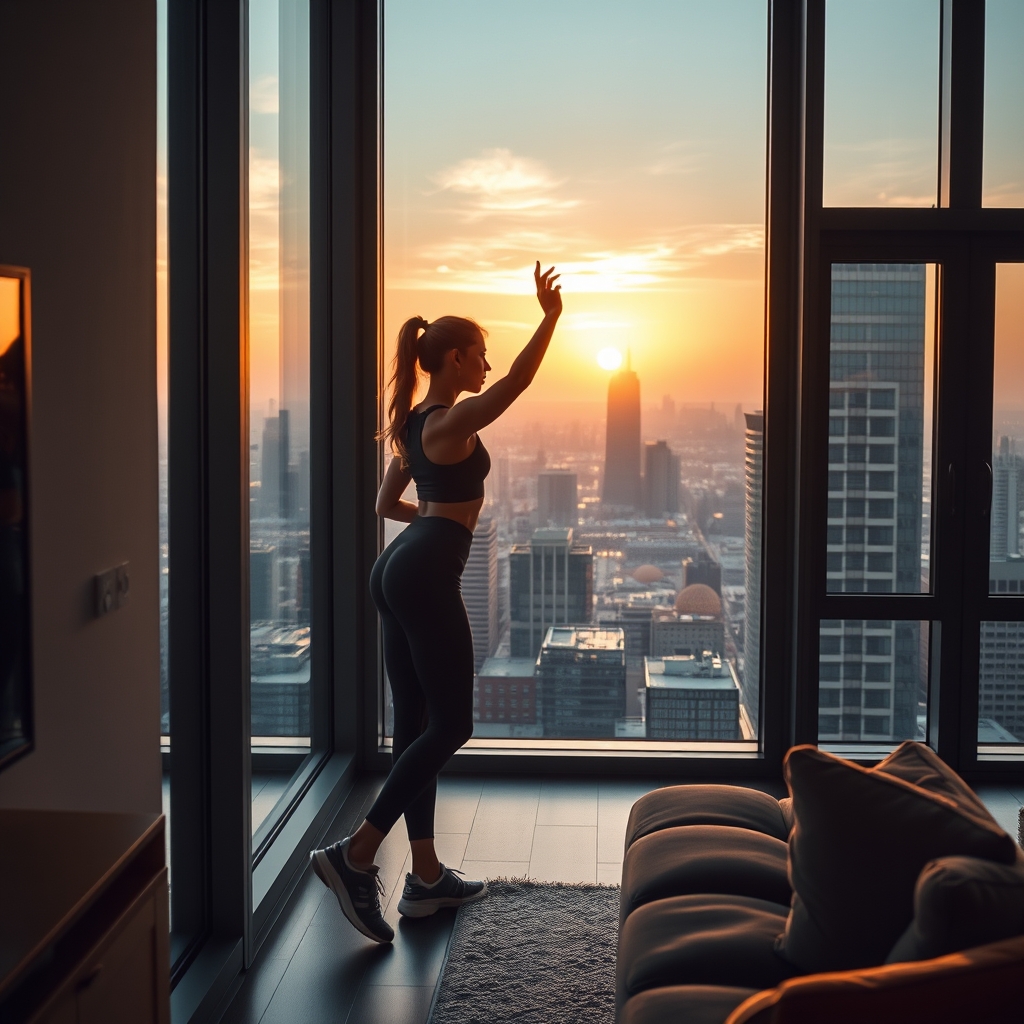
On the third floor of a converted warehouse in the heart of the city, a residence unfolds as a living laboratory for the active individual. Sunlight pours through electrochromic glass, shifting from transparent to a soft matte as the homeowner steps from the bedroom into the open‑plan living area, where a compact treadmill blends into a reclaimed‑wood floor. The space is wired to a network of sensors that track movement, adjusting lighting and climate in real time. From a wall‑mounted sound system that cues a high‑intensity interval playlist to a kitchen island that powers a smart blender, every element dialogues with the body's rhythm.
Design that Responds to Motion
The faint whir of the treadmill motor becomes a metronome for the day, while the cool texture of bamboo flooring underfoot reminds the occupant that the house is a material extension of the body. When she pauses at the smart‑glass panel, thumb hovering over the app, she decides whether to let the sunrise flood the room or to filter it for a calmer ambience. This moment of hesitation illustrates the structural tension between efficiency—automated climate and lighting—and comfort—the personal agency to shape one's environment.
The Tension Between Efficiency and Comfort
By embedding wellness‑focused technology into the architecture, the home reframes the traditional notion of a dwelling as a static backdrop. Instead, it becomes a kinetic partner that anticipates and reacts to daily movement, a shift that mirrors the broader cultural move toward "wellness architecture" where health, sustainability, and urban living converge. This model matters because it shows how homes can become engines of personal health and civic sustainability.
In a city where space is at a premium, such integrated design offers a template for future residences that must negotiate density, technology, and the human desire for embodied experience. As the day wanes, the house softens its glow, inviting the resident to unwind, proof that a well‑tuned dialogue between structure and body can sustain both performance and repose.




















