How the Lynx M20 tackles mountainous agriculture
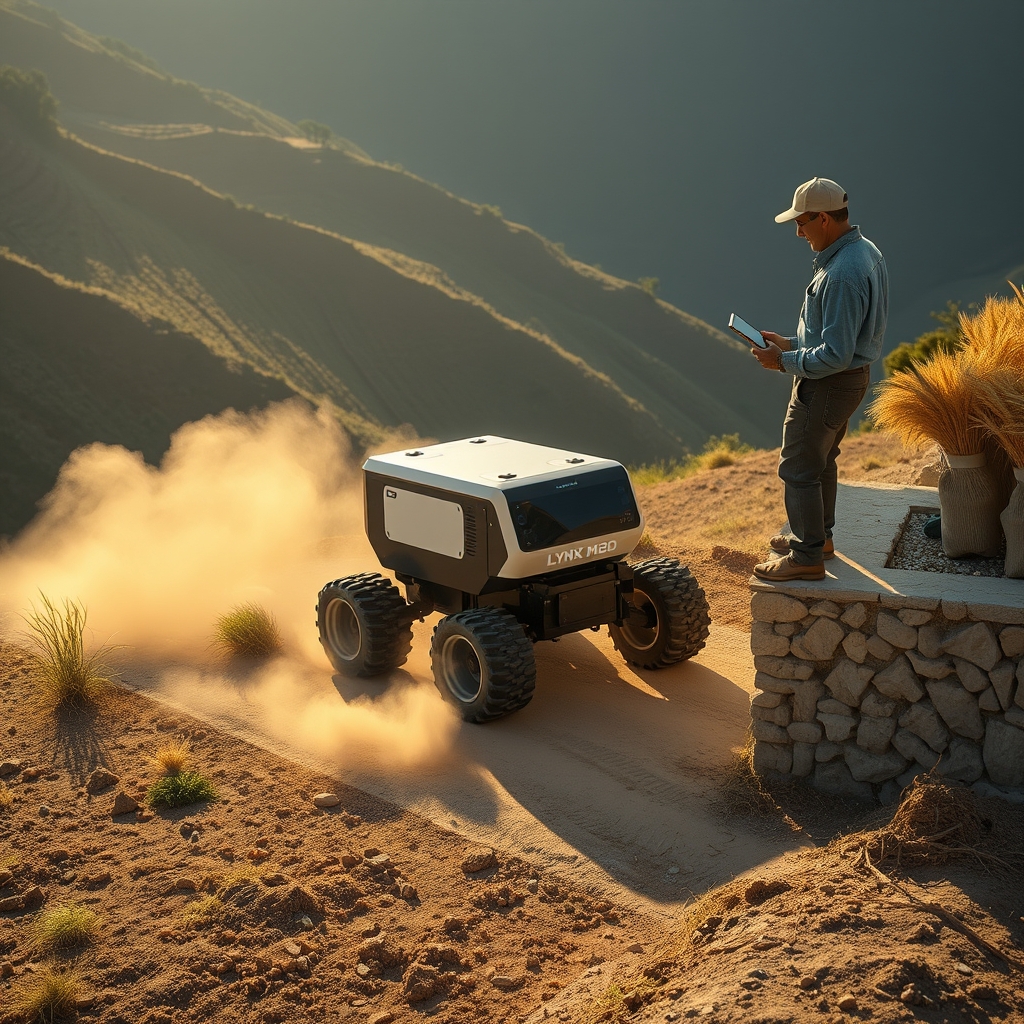
The Lynx M20, a six‑wheel autonomous rover, is being field‑tested this week in the steep terraces of Austria's Tyrol region, hauling bundles of harvested wheat down to the valley loading dock. Its electric motors emit a low, steady whine that blends with the rustle of wind‑bent barley, while the scent of damp earth rises from the furrows it traverses.
A local farmer watches from the edge, hand hovering over his tablet, hesitates before confirming the robot's path across a narrow stone ledge, then nudges the control to widen the clearance. This deployment reframes agricultural robotics as a tool for topographical constraints, shifting the narrative from massive, flat‑land farms to the fragmented, hillside plots that feed many European regions.
Design choices for steep terrain
The vehicle balances efficiency—maximizing payload per charge—with safety, requiring precise traction control on loose gravel to avoid rollovers. Its chassis, built from lightweight alloy, absorbs vibrations that would otherwise destabilize delicate produce, while a redundant sensor suite monitors slope angle in real time.
It sits within a broader push toward resilient, decentralized food systems, where climate‑induced variability demands that smallholders retain control over every link of the supply chain. It matters because improving last‑mile transport in rugged farms can keep small producers viable amid climate stress.
As robots learn the rhythm of hill farms, the line between field and factory blurs, reshaping rural labor.
Robotics now climbs the hills where food first grows.




















