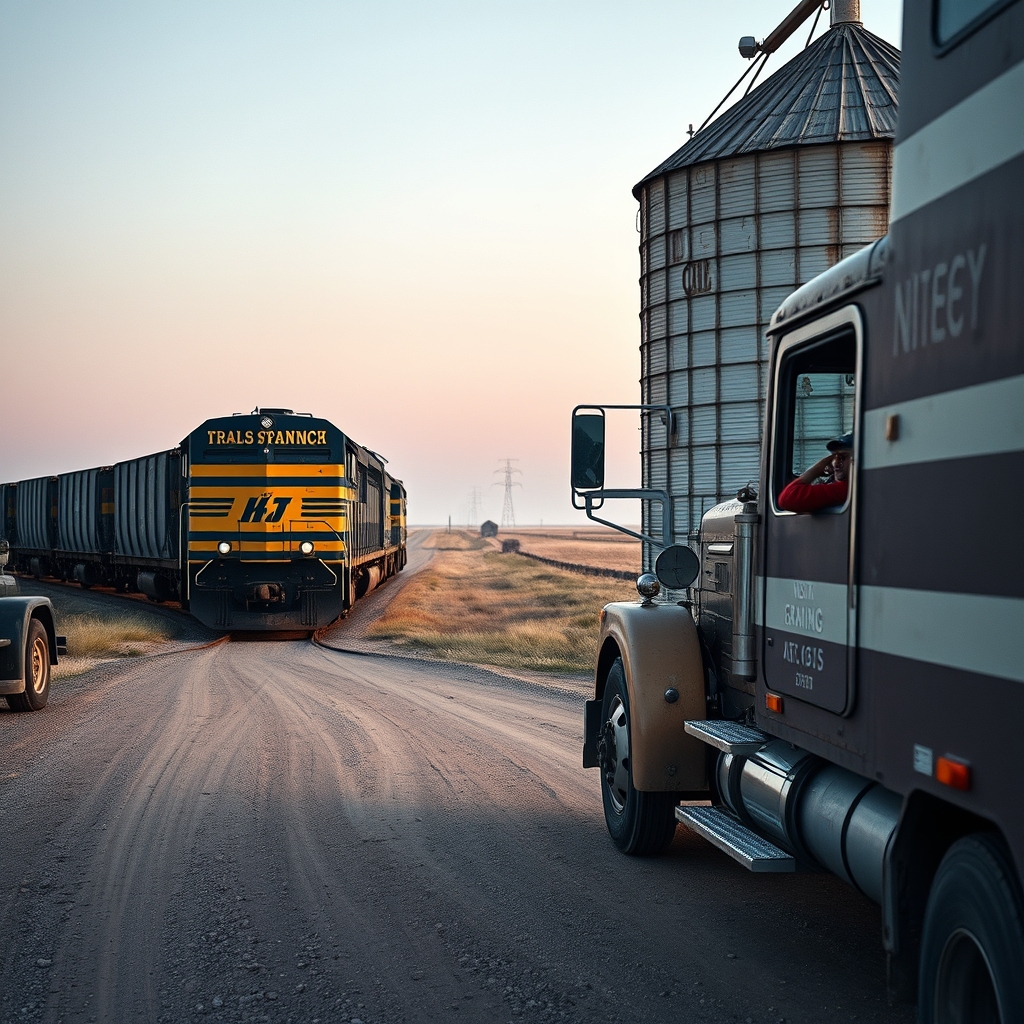
Rural transportation hubs are the overlooked engines of U.S. freight mobility, handling nearly half of all truck vehicle miles traveled and originating two‑thirds of rail freight across more than two million miles of county roads. Their concrete role as regional access points and distribution centers shapes national logistics far beyond the glossy terminals of major cities. The low rumble of diesel engines and the scent of diesel‑soaked air punctuate the quiet expanses where a truck driver pauses at a loading dock, checking a handheld device for a blockchain verification before committing to the next leg of the journey.
Why rural hubs matter to national logistics
The structural tension between efficiency and resilience becomes evident when a single urban hub is disrupted by weather or cyber‑attack; rural nodes distribute risk and preserve flow. An analytical insight reveals a gradual shift: investors and policymakers are redirecting infrastructure funds toward decentralized freight corridors, a movement amplified by supply‑chain digitization and the modest adoption of distributed ledger technologies that promise immutable tracking without inflating hype.
Blockchain's neutral mechanics—cryptographic hashing, consensus validation, and immutable records—offer a trust layer for freight contracts, yet they introduce a speed‑versus‑trust dilemma. Verifying a shipment's provenance on a public ledger can add seconds, but those seconds safeguard against fraud, a trade‑off that rural operators increasingly accept as part of a broader push for supply‑chain transparency.
Historically, the United States built its freight backbone around rail and highway arteries that crisscross the heartland. Today, that legacy is being reinterpreted: regional warehouses equipped with IoT sensors feed data into interoperable platforms, while tokenized freight contracts allow smaller shippers to access capacity previously reserved for large carriers. This evolution reflects a cultural shift toward decentralization, echoing the post‑pandemic emphasis on local resilience.
Understanding rural transportation hubs is essential for securing the United States' freight resilience. Their continued development will determine whether national mobility remains vulnerable to centralized failures or evolves into a distributed network capable of withstanding future disruptions.




















