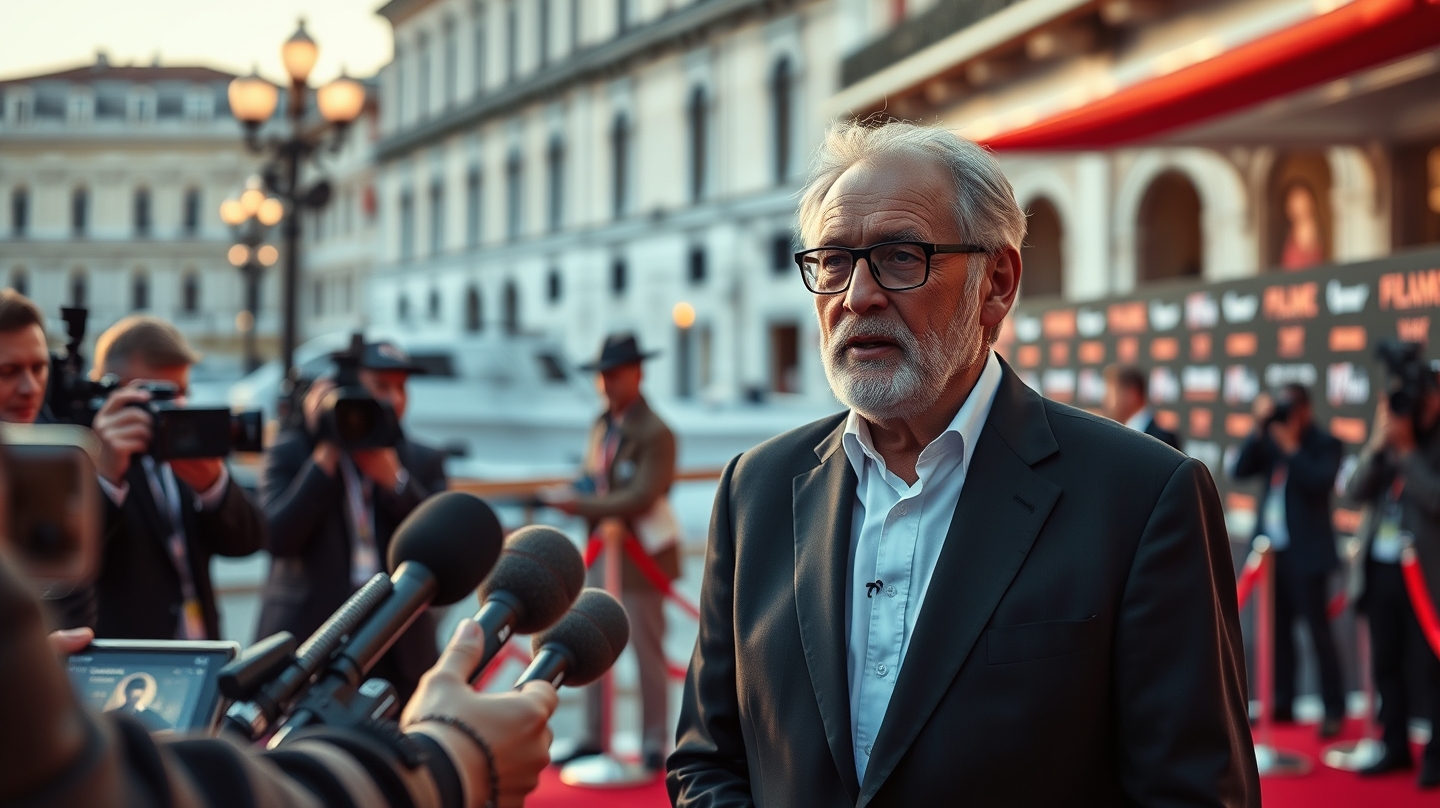
Alberto Barbera, the artistic director of the 83rd Venice International Film Festival, unveiled a competition slate that reads like a global talent showcase, yet it also exposes a stark retreat by Hollywood’s biggest studios.
The lineup features Robert Pattinson’s Primetime, Penélope Cruz and Javier Bardem in Bunker, Jack O’Connell’s Ink, and Alicia Vikander headlining The Echo Chamber. New entries from Martin McDonagh, Lee Chang‑dong, and Werner Herzog promise auteur‑driven cinema, but the absence of a single major studio‑backed film marks a departure from the red‑carpet spectacles of recent years.
Barbera explained to The Hollywood Reporter that the scheduling nightmare—actors juggling on‑set commitments and a compressed festival window—compounded the problem. “Everyone wants to play on the first weekend, which is impossible,” he said, noting that the festival’s logistics are now a “nightmare” that must be re‑engineered multiple times before the opening night.
Beyond logistics, the festival’s programming reflects a broader industry shift. The only studio film the team hoped to secure, Alejandro G. Iñárritu’s Digger starring Tom Cruise, was pulled by Warner Brothers in favor of an October theatrical release. Barbera described the move as a “marketing strategy” that left Venice without a marquee studio title, echoing a pattern seen at Berlin and Cannes where major distributors are increasingly ghosting festival circuits.
That vacuum has allowed documentaries and emerging voices to claim more screen time. Barbera highlighted a “strong documentary” presence, noting that the festival now screens more non‑fiction works than in recent years. This pivot aligns with a digital‑first distribution model, where streaming platforms and on‑demand services favor documentary content that can be marketed year‑round.
However, the festival’s commitment to diversity remains uneven. Of the 20 competition films, only one—May El‑Toukhy’s Danish drama Woman Unknown—is directed by a woman. The 50/50 by 2020 pledge, signed nearly a decade ago, has yet to translate into measurable parity at Venice.
Barbera also addressed the growing conversation around artificial intelligence in filmmaking. While no AI‑generated feature is slated for competition, the director acknowledged that AI tools are reshaping pre‑production, editing, and visual effects pipelines. “We are seeing technology‑driven automation that changes how stories are built,” he said, suggesting that future festivals may need new criteria to evaluate AI‑assisted works.
The implications are twofold. First, the retreat of studios may push independent and documentary filmmakers into the spotlight, accelerating a market shift toward content that can thrive on digital platforms without a traditional theatrical window. Second, the gender imbalance and the nascent AI debate signal structural challenges that festivals must confront to stay relevant in a rapidly evolving media ecosystem.
For audiences, the changes mean a festival experience that is less about star‑studded premieres and more about discovering fresh narratives from around the globe. For the industry, Venice’s 2024 edition serves as a barometer of how festivals can adapt to studio disengagement, gender equity demands, and the rise of AI‑enhanced storytelling.




















