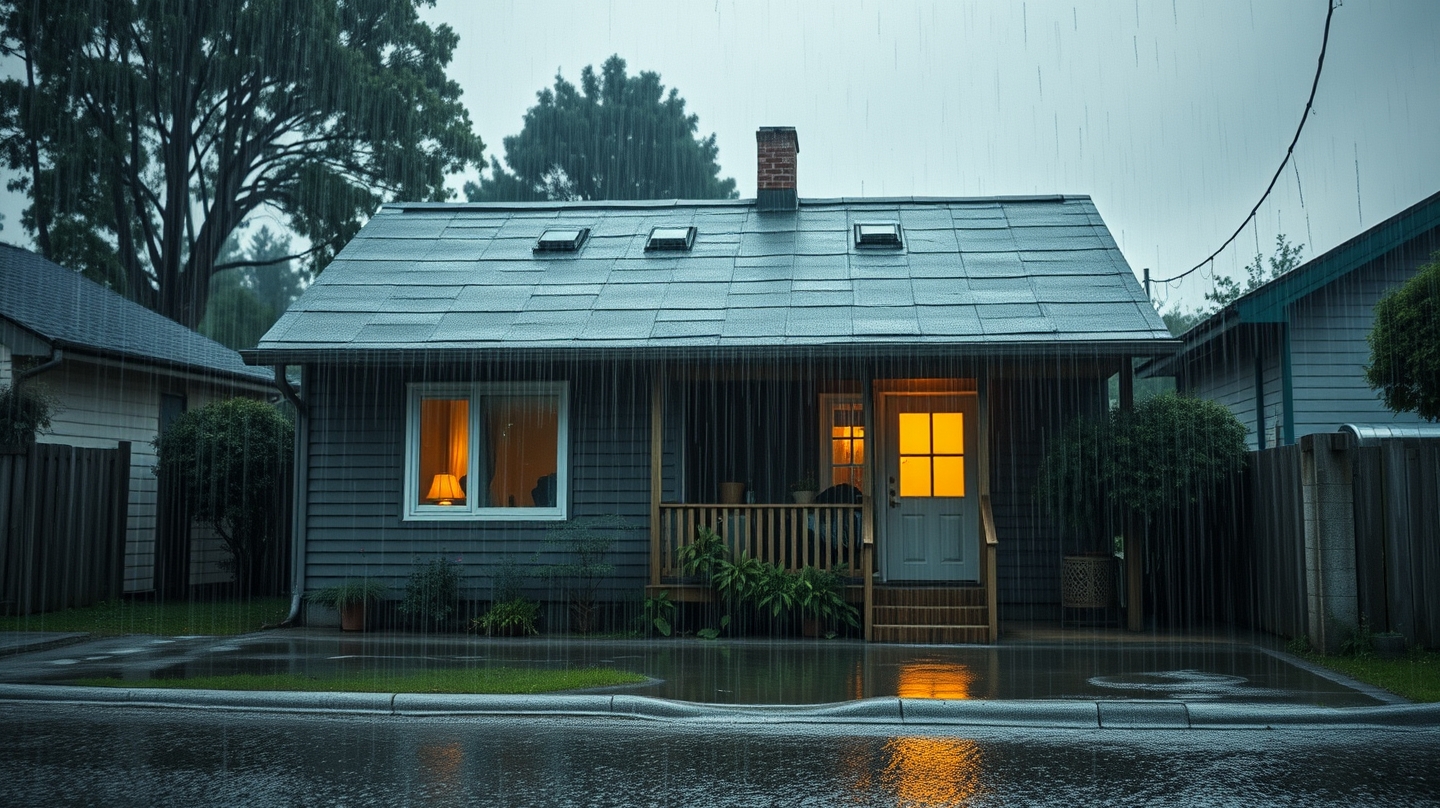
When a sudden downpour turns an ordinary suburb into a sealed prison, Netflix’s new sci‑fi film The Last House does more than deliver suspense—it forces viewers to confront the invisible systems that keep their screens alive.
The story follows Ann and Jason, a couple trapped with their two children inside a house that refuses to open. Weeks turn into months, rain becomes a weapon, and a grotesque water‑based creature briefly cracks the seal, only to leave the family still confined. The film’s climax reveals that the very water keeping the neighborhood alive is laced with salt, poisoning the food and water supply the family depends on.
Beyond the horror, the narrative mirrors a familiar pattern in today’s media landscape: an initial disruption, rapid scaling of a solution, and unforeseen side effects. Netflix’s own journey from DVD mail‑order to a global streaming powerhouse has been driven by layers of automation—AI‑generated subtitles, algorithmic recommendation engines, and cloud‑based rendering pipelines that deliver new content in minutes rather than weeks.
Industry analysts note that the same technology that powers the film’s visual effects—real‑time ray tracing, procedural generation, and automated compositing—has become standard in Netflix’s production workflow. By automating repetitive tasks, the studio can allocate human talent to creative decision‑making, shortening the time from script to screen. This shift is reshaping job roles across the industry, with editors now supervising AI‑assisted cuts and sound designers curating machine‑generated mixes.
Structurally, The Last House follows a three‑act progression that aligns with the adoption curve of automation: the first act introduces the disruption (the rain‑seal), the second act shows the scaling of survival tactics (the garden‑in‑the‑house), and the third act reveals the unintended consequences (the salt‑water poison). This framing offers a clear lens for readers to understand how technology can solve a problem while simultaneously creating new vulnerabilities.
For creators, the film underscores a real‑world implication: as streaming platforms embed more automation, the creative process becomes a partnership between human intuition and algorithmic efficiency. Audiences benefit from faster delivery and higher production values, but they also inherit the risk of homogenized content if the underlying data sets are not diverse. Netflix’s recent investment in AI‑driven script analysis tools aims to mitigate that risk by surfacing underrepresented voices early in the pipeline.
Ultimately, The Last House serves as a cautionary tale for a media ecosystem that increasingly relies on invisible automation. The sealed houses are a visual metaphor for the closed loops of data that dictate what we watch, while the leaking salt water warns of the systemic biases that can seep into those loops if left unchecked.




















