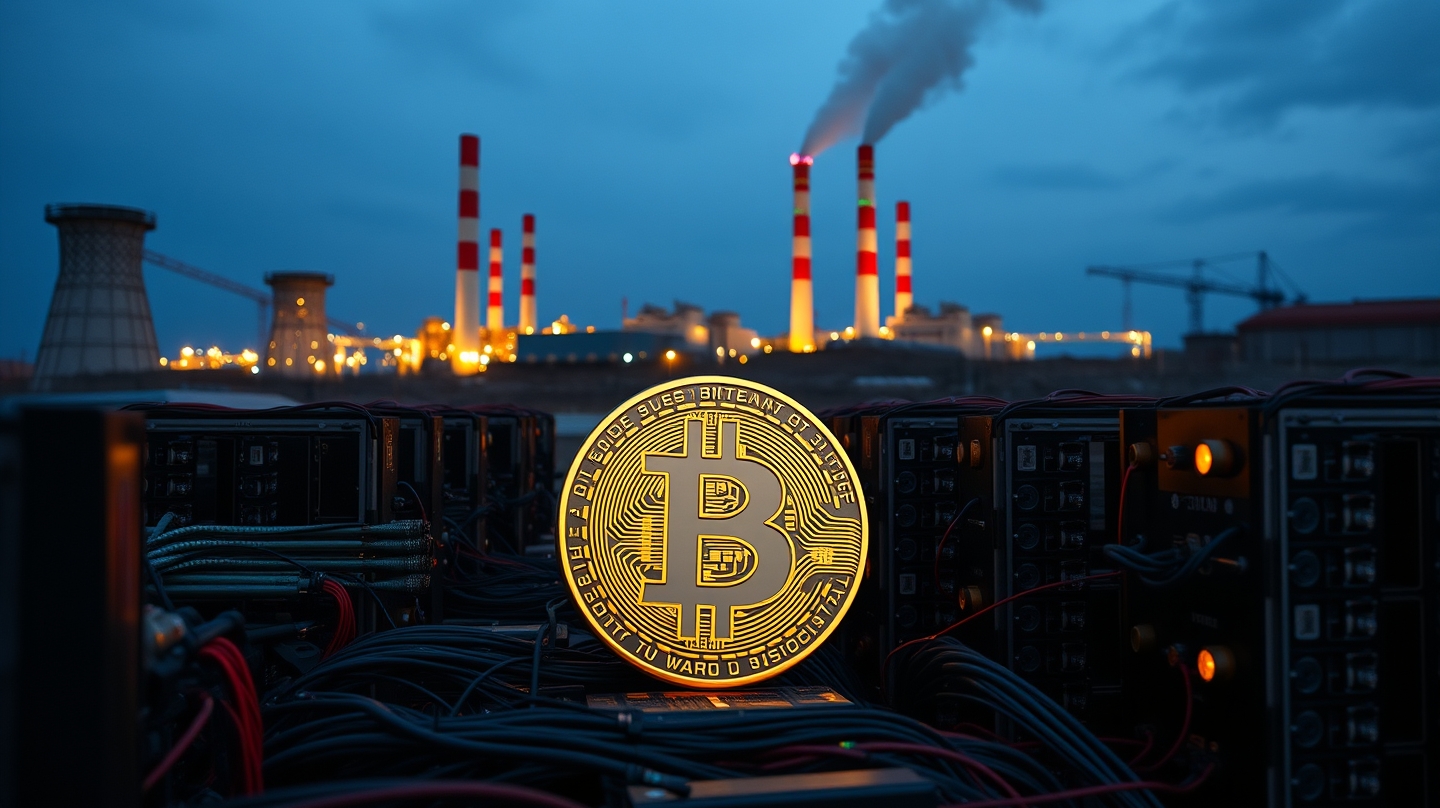
In a move that blends energy policy with digital finance, Kazakhstan has signed a presidential decree and a follow‑up government resolution to funnel a share of its booming Bitcoin mining output into a sovereign crypto reserve. The two‑step framework, announced on July 7 and detailed on July 18, creates a regulated pipeline: miners receive capped‑tariff electricity for up to ten years, and in return they hand over 10% of the coins they generate after covering power costs.
The reserve will be managed by the National Investment Corporation of the National Bank, with the Astana Hub fund acting as the immediate recipient of the monthly transfers. By investing the collected assets directly, as well as derivatives and equity stakes in crypto‑related firms, the state aims to diversify its exposure rather than simply hoard a single token.
Why it matters goes beyond a novel revenue stream. Kazakhstan ranks among the world’s top five Bitcoin mining hubs, a position earned after China’s 2021 ban redirected hash power to the country’s abundant, low‑cost coal electricity. The new program signals a shift from punitive regulation toward state‑guided growth, allowing the government to capture value while attempting to mitigate grid strain.
Market reaction has been cautious but noticeable. Local exchanges reported a modest uptick in on‑shore trading volumes, and several regional institutional investors have expressed interest in participating in the reserve’s derivative products. Analysts see the 10% carve‑out as a potential source of supply that could temper price volatility, especially if the reserve begins to liquidate assets to fund public projects.
Institutionally, the decree establishes a Committee on Digital Assets and Payment Systems under the National Bank, tasked with developing tokenization platforms, stablecoin settlement mechanisms for cross‑border trade, and custodial safeguards that isolate customer assets from a provider’s bankruptcy estate. By linking crypto to the traditional financial system, Kazakhstan hopes to attract foreign capital and position itself as a hub for regulated digital finance in Central Asia.
The structural insight lies in the combination of energy allocation and financial oversight. Miners must secure a minimum 150‑megawatt data center and meet a hash‑rate threshold of 150 TH/s, tying physical infrastructure directly to the reserve’s supply chain. The first approved power source, the 300‑MW Ekibastuz GRES‑1 coal plant, illustrates how the state is leveraging existing fossil‑fuel assets while also pledging to tap associated petroleum gas, natural gas, and renewable output for mining.
Globally, Kazakhstan’s approach mirrors recent moves by the United States, which created a strategic Bitcoin reserve from forfeited coins last year. Both models treat crypto as a strategic asset class, comparable to gold reserves, and suggest a broader trend of governments formalizing digital‑asset holdings.
Real‑world implications are already emerging. Export‑oriented firms anticipate using stablecoins approved by the new committee to settle trade, potentially reducing reliance on the US dollar in regional commerce. Meanwhile, the National Bank’s involvement may encourage other post‑Soviet states to adopt similar frameworks, reshaping the competitive landscape for mining locations that rely on cheap electricity.
Critics warn that tying state revenue to a volatile asset could expose public finances to market swings. The decree attempts to mitigate this risk by allowing the reserve to invest in derivatives and equity stakes, spreading exposure across the sector. Whether this hybrid strategy will deliver stable returns remains an open question, but it undeniably marks a significant policy experiment at the intersection of energy, finance, and technology.




















