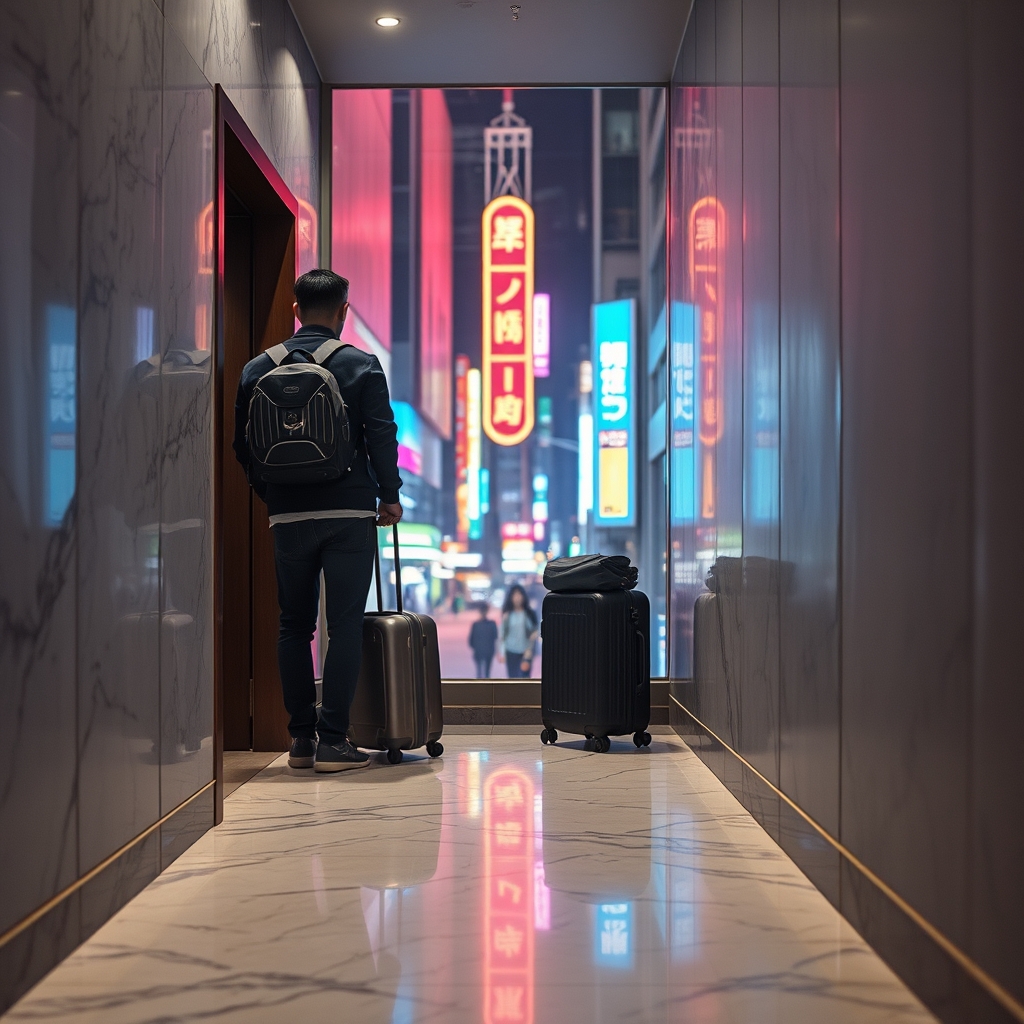
Hotel Myeongdong Station, a nine‑storey building nestled in the heart of Seoul's bustling Myeongdong district, houses a series of micro‑accommodation units that dictate the tower's overall form. The compact rooms, each no larger than a modest studio, are arranged in a dense lattice that shapes the façade as much as the interior functions. A traveler steps onto the cool marble threshold, the neon glow of the street spilling onto the polished floor, and pauses, adjusting his suitcase as he wonders whether the space will fit his coat.
Form Driven by Interior Density
The hotel's architecture flips the conventional script: instead of responding to the surrounding skyline, the building's exterior emerges from the spatial logic of its interiors. This interior‑first approach creates a structural tension between efficiency—maximising usable floor area in a high‑cost city—and the need for personal privacy, which the micro‑units attempt to preserve through thoughtful partitioning and acoustic treatment. The result is an autonomous architectural language that signals a broader shift in Asian urban hospitality, where micro‑living concepts respond to soaring real‑estate prices and a cultural appetite for compact, curated experiences.
By foregrounding the program over the site, the hotel illustrates how dense urban cores can accommodate individualized retreats without sacrificing the collective rhythm of the city. This matters because it offers a tangible model for reconciling the competing demands of spatial efficiency and human comfort in megacities worldwide.
Beyond the building, the hotel's exclusive fashion collections—displayed in sleek, glass‑encased niches—extend the dialogue between interior design and personal style, reinforcing the notion that even in limited spaces, aesthetic expression remains vital.
As Seoul continues to evolve, Hotel Myeongdong Station stands as a quiet experiment in how interior priorities can reshape external identities, hinting at a future where the inside dictates the city's silhouette.
The hotel's approach invites us to reconsider the balance between density and intimacy in urban design.




















