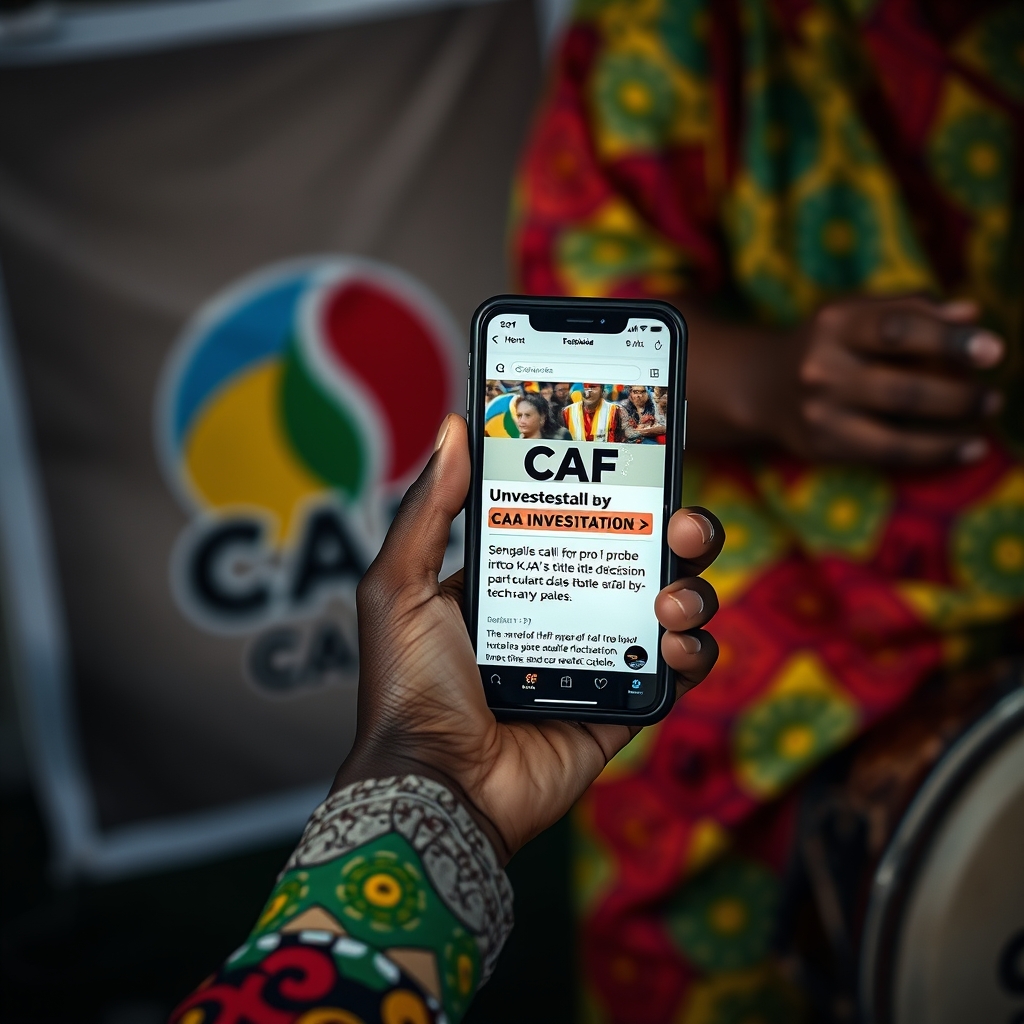
The Senegalese government has formally requested an independent international investigation into the Confederation of African Football's decision to strip Senegal of the Africa Cup of Nations title, a move that has ignited a wave of public discourse across the nation. In the streets of Dakar, the low thrum of sabar drums mingles with the sharp buzz of smartphones as fans scroll through breaking news, their fingers pausing over the share button before deciding whether to amplify the grievance.
Why the investigation request resonates beyond the pitch
Beyond the immediate sporting grievance, the episode reveals a structural tension between traditional authority—embodied by CAF's governing board—and the growing autonomy of digitally connected citizens who now shape narratives in real time. This clash mirrors a broader cultural shift: African societies are leveraging mobile technology to contest institutional decisions, turning a football controversy into a laboratory for digital activism.
Analytically, the incident reframes the title stripping not merely as a regulatory dispute but as a test of national identity in an era where a single notification can mobilise a nation. The tension between institutional control and grassroots expression underscores how sport, politics, and lifestyle intersect in contemporary Senegal.
Why it matters: the dispute tests the legitimacy of continental sport governance and its impact on national pride.
On the ground, a young woman in a hand‑woven boubou adjusts the strap of her smartwatch, feeling the cool metal against her wrist as she watches the news feed flicker. Her hesitation—whether to post a comment or remain silent—captures the personal calculus each fan performs when the public sphere collides with private sentiment.




















