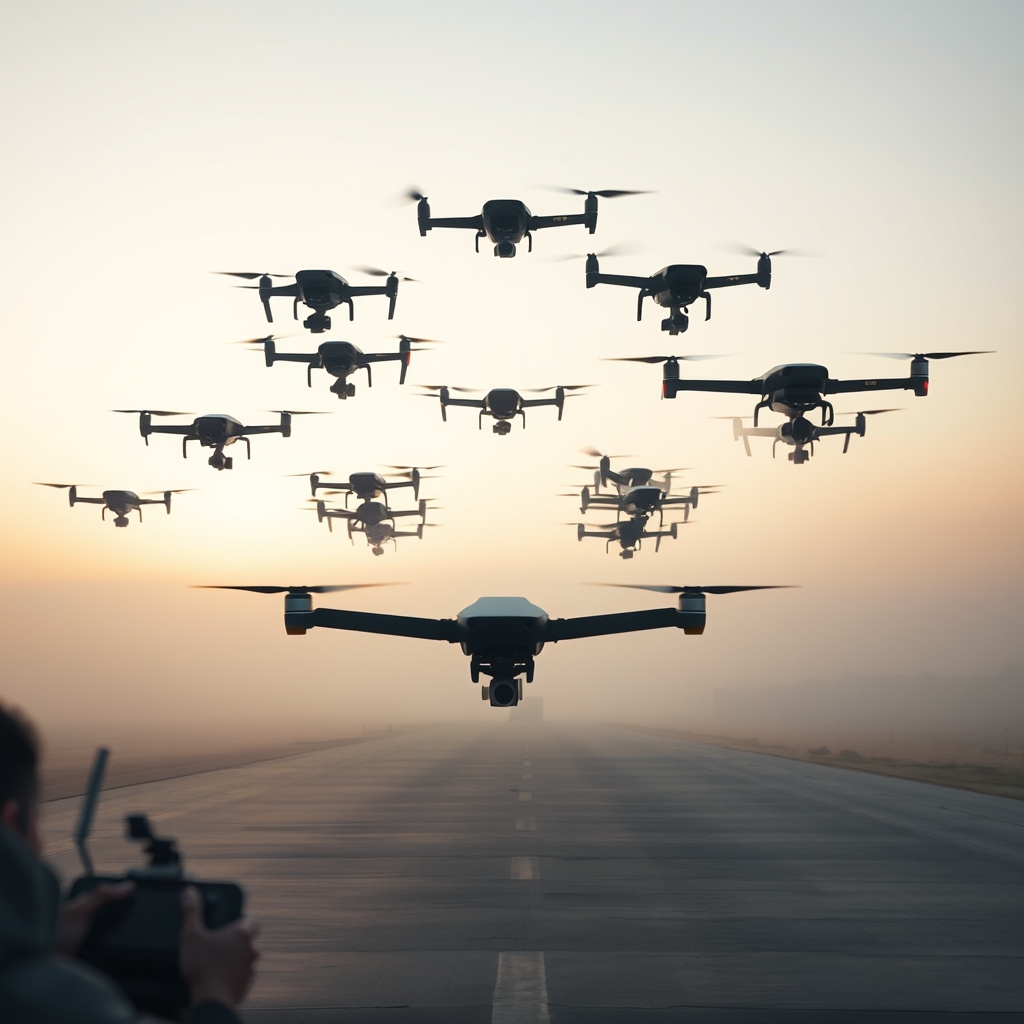
In a cleared airfield outside Ottawa, a fleet of ten quad‑copter drones lifted off in unison, their rotors humming against the cold morning air. Palladyne AI's SwarmOS software communicated with Draganfly's proprietary flight controllers, guiding the machines through a pre‑programmed obstacle course that simulated urban combat scenarios. The test demonstrated that the integrated system could maintain formation while reacting to sudden wind gusts, a prerequisite for future autonomous defense operations.
Why autonomous swarms matter beyond the battlefield
The ability to coordinate autonomous drone swarms will redefine how nations project security in contested airspace. Rather than viewing the test as a purely military milestone, it signals a broader cultural acceptance of AI‑driven coordination that first emerged in fitness wearables and entertainment drones, now migrating into the realm of national defense. This convergence creates a structural tension between the efficiency of AI‑directed flight and the imperative to safeguard civilian airspace, a balance that regulators will wrestle with for years.
The lead operator lingered over the launch console, thumb hovering above the green button, eyes flicking between the telemetry readout and the sky—a brief hesitation that underscored the human responsibility embedded in an otherwise automated choreography. As the drones rose, a faint scent of ozone drifted from the spinning propellers, grounding the high‑tech spectacle in a tangible, sensory moment.
SwarmOS and Draganfly: technical integration explained
SwarmOS provides a decentralized command mesh, allowing each drone to share position data in real time, while Draganfly's flight controllers translate those commands into precise motor adjustments. The partnership pits the speed of machine‑to‑machine communication against the need for fail‑safe protocols, illustrating the classic trade‑off of autonomy versus safety that will shape the next generation of autonomous systems.
In the weeks ahead, the duo plans to expand the swarm's size and test it in more complex environments, moving the technology from a controlled field to the unpredictable contours of urban airspace.
As autonomous flight moves from novelty to necessity, its ripple effects will be felt in everyday life, from delivery services to personal recreation.
We are witnessing the first step of a technology that will soon be as ordinary as a smartwatch.




















