Wireless ambition inside a reactor's heart

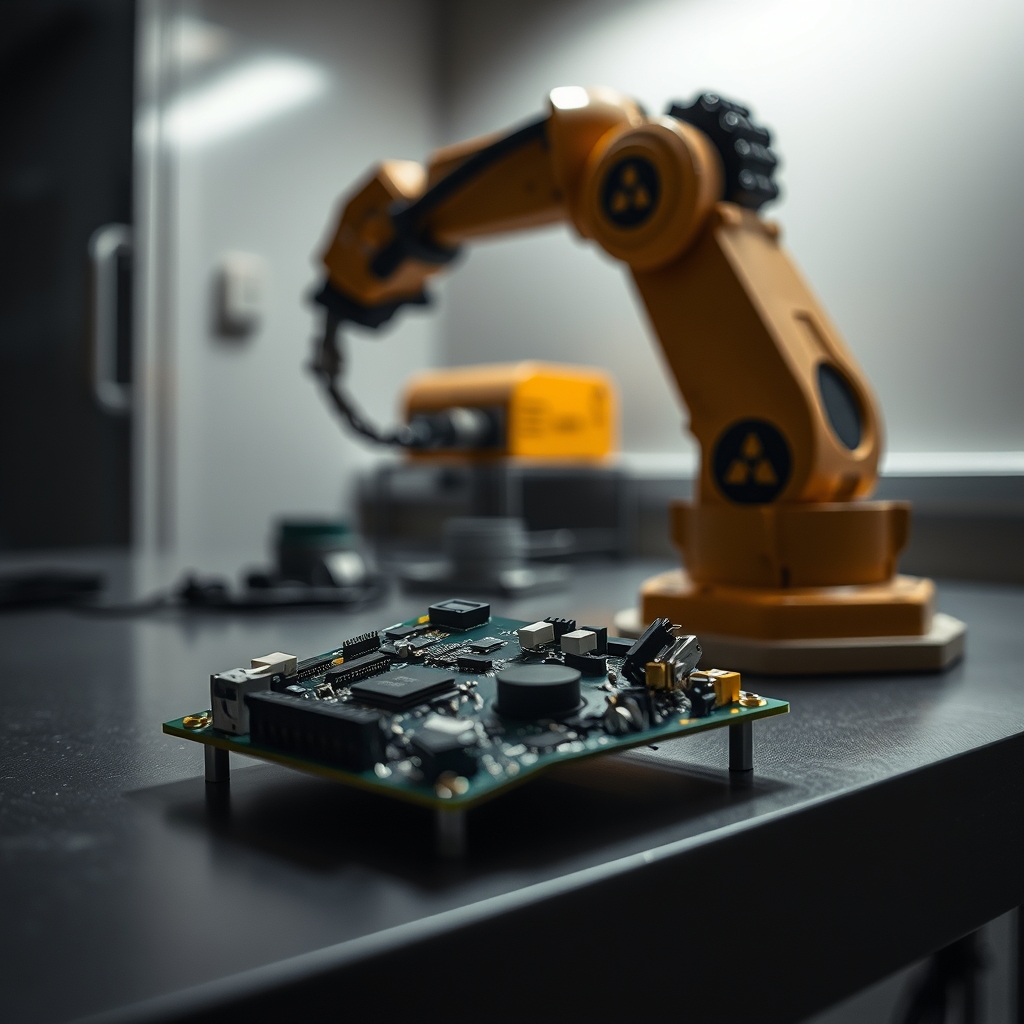
In a stainless‑steel lab at the Institute of Science Tokyo, a compact Wi‑Fi receiver the size of a palm sits atop a lead‑shielded table, its copper traces glinting under fluorescent light. Engineers exposed the device to a cobalt‑60 source, accumulating a total dose of 500 kGy—radiation levels that would cripple ordinary electronics. After the blast, the receiver's gain fell by only 1.5 dB, a performance drop barely audible over the faint whine of the cooling fans.

Beyond cables: the tension between efficiency and safety

Traditional decommissioning robots rely on LAN cables that snag, wear, and become radiation‑induced liabilities. The new wireless module swaps tangled conductors for a clean 2.4 GHz link, promising faster deployment and fewer entry points for contamination. Yet the very freedom of radio waves introduces a structural tension: the drive for operational efficiency must be balanced against the imperative to keep radiation exposure to a minimum for both equipment and personnel. The team's design philosophy reflects this balance. By enlarging transistor gates and favoring NMOS structures over the more vulnerable PMOS, they reduced oxide‑charge trapping, a primary failure mode under gamma bombardment. Inductors replaced many PMOS devices, eliminating the oxide layer that would otherwise accumulate charge. This minimalist approach—fewer transistors, larger geometries—conveys a deliberate retreat from miniaturisation in favour of durability.

What this shift signals for the industry

The breakthrough reframes how nuclear facilities will be retired. Instead of crews threading cables through hot cells, autonomous agents can receive commands from a control room, lowering human presence in high‑dose zones. This change dovetails with a broader cultural movement toward remote, robot‑mediated labour in hazardous environments—a trend accelerated by the Fukushima disaster and now extending to the looming wave of decommissionings projected for the next two decades. Narukiyo paused, his fingertip brushing the soldered joint before he re‑aligned the gate width, a quiet moment that underscored the human judgment still required to tame radiation's chaos. His decision to iterate the geometry, rather than abandon the project, illustrates how engineering intuition remains essential even as circuits become more resilient. The significance is clear: a reliable wireless link could cut worker exposure time by weeks, translating into measurable health benefits and cost savings for utilities facing costly decommissioning schedules.

Looking ahead

The next hurdle is a matching transmitter capable of generating sufficient power without succumbing to the same dose limits. Early prototypes failed at 300 kGy, prompting the team to explore diamond‑based semiconductors, whose lattice may endure even harsher conditions. Success here would close the communication loop, enabling truly untethered robotic crews to navigate the interior of aging reactors. As the nuclear sector confronts an unprecedented retirement wave, the humble Wi‑Fi board may become the quiet conduit through which safety, efficiency, and human ingenuity converge.