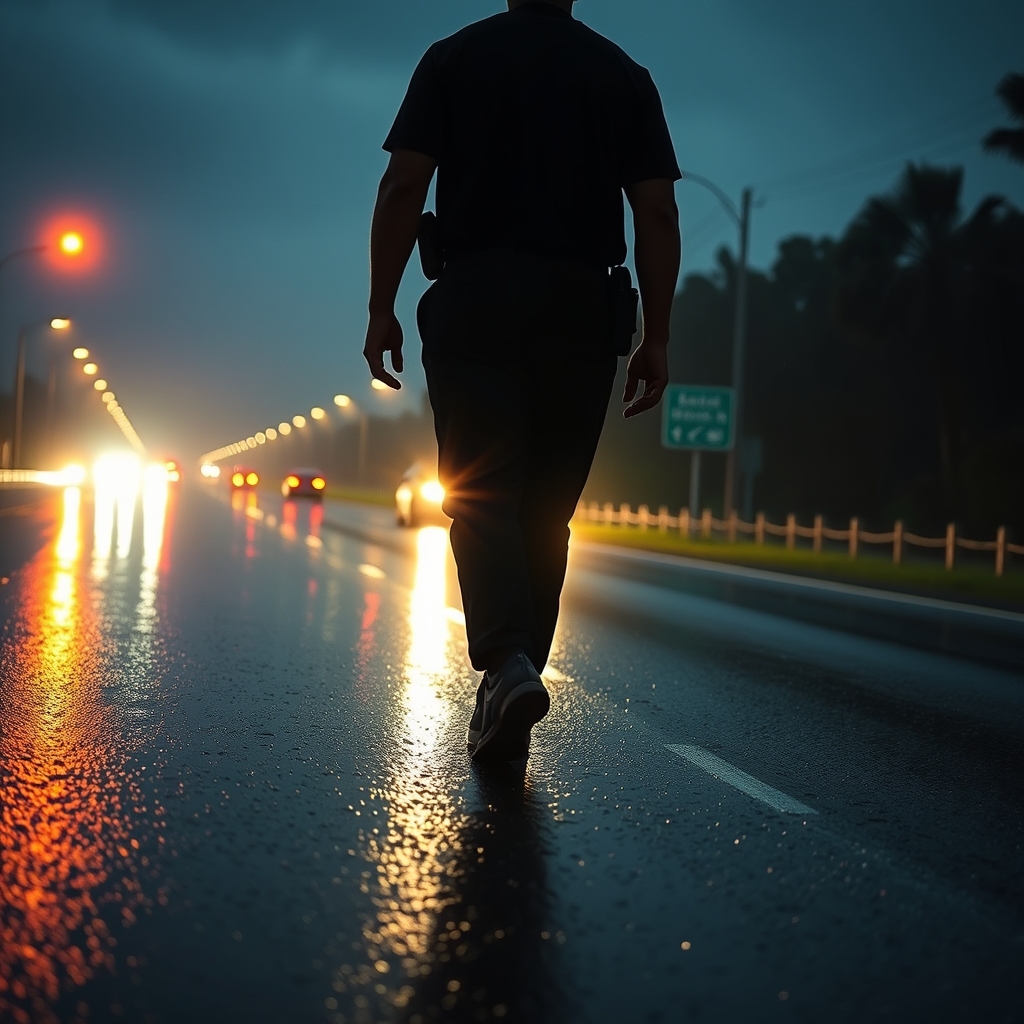
Police in Palm Beach County released body‑camera footage that captures Tiger Woods moments after his sedan clipped a truck and rolled on a rain‑slicked highway last month. The video shows the golfer stepping out of the mangled vehicle, the faint squeal of tires on wet pavement echoing as he steadies himself, and the muted flash of police lights reflecting off the rain‑soaked asphalt. He pauses, his hand hovering over his phone, then lowers it, breathing heavily before walking toward the awaiting officers.
The tension between privacy and public scrutiny
By broadcasting a private moment of vulnerability, the footage forces a negotiation between a celebrity's right to privacy and society's demand for transparency. The structural tension is clear: the camera's unblinking eye offers accountability, yet it also strips away the protective distance fame usually affords. This paradox reshapes expectations of how public figures navigate personal crises under the gaze of technology.
A glimpse into the era of ubiquitous surveillance
The release sits within a broader cultural shift toward constant recording—body cams, dash cams, smartphones—all normalizing the capture of unscripted reality. In this moment, a sport icon's ordinary response to danger becomes a data point in a larger narrative about how we consume authenticity. It matters because it reframes fame as a shared, observable experience rather than a curated spectacle.
As the rain continues to patter on the highway, the incident reminds us that even icons are subject to the same fragile physics that govern every driver.




















