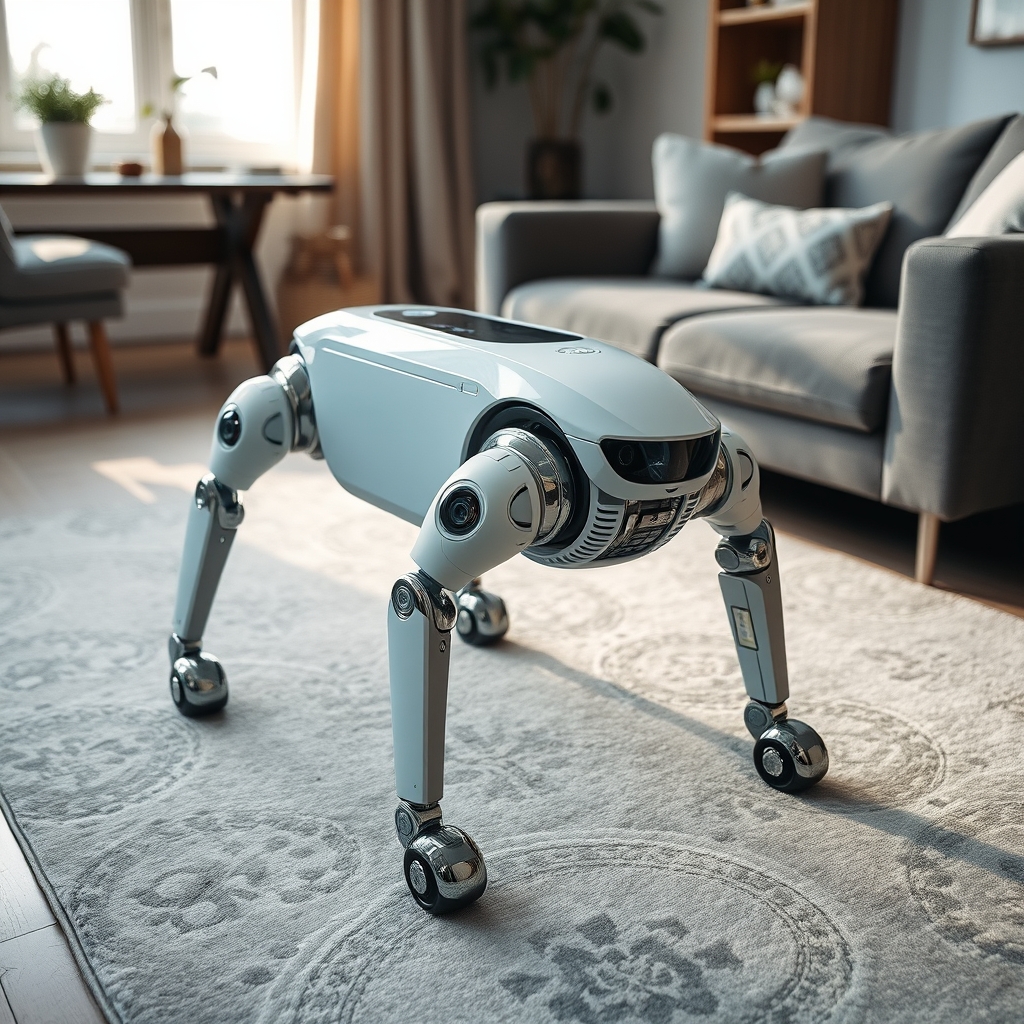
Faraday Future's Aegis quadruped, a four‑legged robot designed for household interaction, has passed the full suite of U.S. safety, security and spectrum compliance tests required for commercial sale. The certification, issued after exhaustive electromagnetic‑interference measurements, mechanical‑stress trials, and data‑privacy audits, clears the path for the device to be shipped nationwide.
What the certification means for consumers and the robotics market
In the certification lab, the robot's servomotors emit a low‑pitched whir that fades into a steady hum as the metal limbs flex under calibrated loads. During a demonstration, a nine‑year‑old paused, hand hovering over the polished aluminum knee, while her mother gently guided the touch, illustrating the subtle trust negotiation that accompanies any new home technology.
Beyond the paperwork, the approval reframes the Aegis from a showcase prototype to a regulated consumer product, signalling that domestic robotics are entering the same compliance corridors long occupied by smartphones and smart appliances. The process highlights the tension between rapid innovation—engineers racing to add richer AI behaviors—and the imperative of safety, where each new sensor must be vetted against electromagnetic standards before it can be trusted in a family living room.
This milestone aligns with a broader cultural shift toward normalized AI companions, a trend accelerated by pandemic‑era home automation and a growing legislative focus on product accountability. The certification matters because it removes regulatory uncertainty, allowing families to adopt the technology with confidence.
As more robots cross the compliance threshold, the line between novelty and necessity blurs, reshaping daily life. The Aegis story marks a quiet turning point in everyday robotics.




















