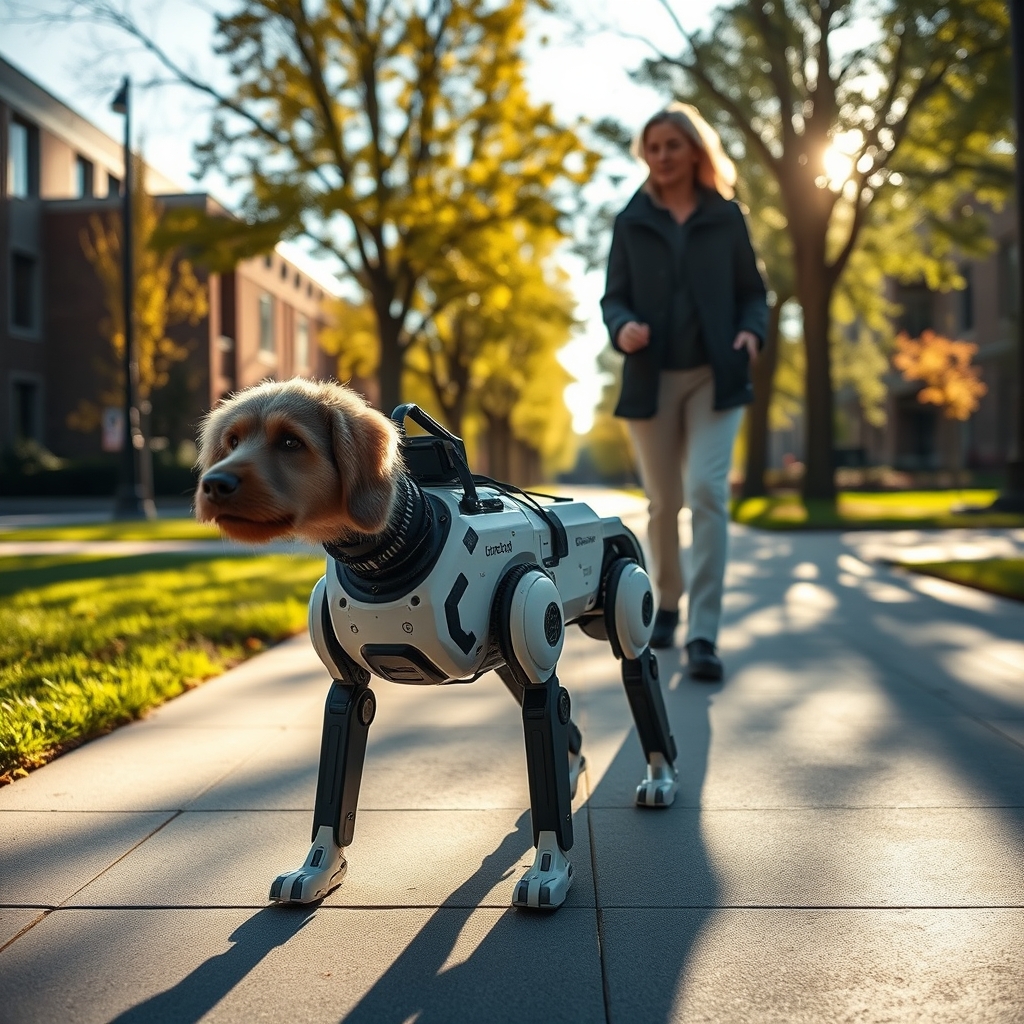
At Binghamton University's robotics laboratory, a four‑legged machine equipped with a large‑language model walks beside a blind student, answering questions in a calm, synthetic voice. The soft whir of servos blends with the rustle of synthetic fur as the device steps onto the campus quad, its eyes—tiny infrared sensors—scanning the path ahead. The student pauses, hand hovering over the leash, uncertain whether to trust the robot's suggestion, then adjusts her grip on the cane and follows the spoken cue.
How conversational AI reshapes assistive mobility
By giving the guide dog a voice, the project reframes assistance from a purely physical aid to an ongoing dialogue, turning navigation into a shared conversation. The structural tension lies between automation's promise of efficiency and the user's need for safety and trust; the machine must be swift yet never overstep the rider's autonomy. This development sits within a broader movement toward AI‑driven inclusive design, where disability informs the very architecture of technology rather than being an afterthought. It matters because it expands independence for millions of visually impaired people by turning navigation into a dialogue.
Beyond the laboratory, the prototype hints at a future where assistive devices speak, listen, and adapt in real time, blurring the line between tool and companion. As the campus lights dim and the robot's LEDs pulse gently, the scene underscores a cultural shift: technology is no longer a distant aid but a conversational partner that respects human hesitation while offering steady guidance.
The conversation between human and machine is becoming a new form of companionship.




















