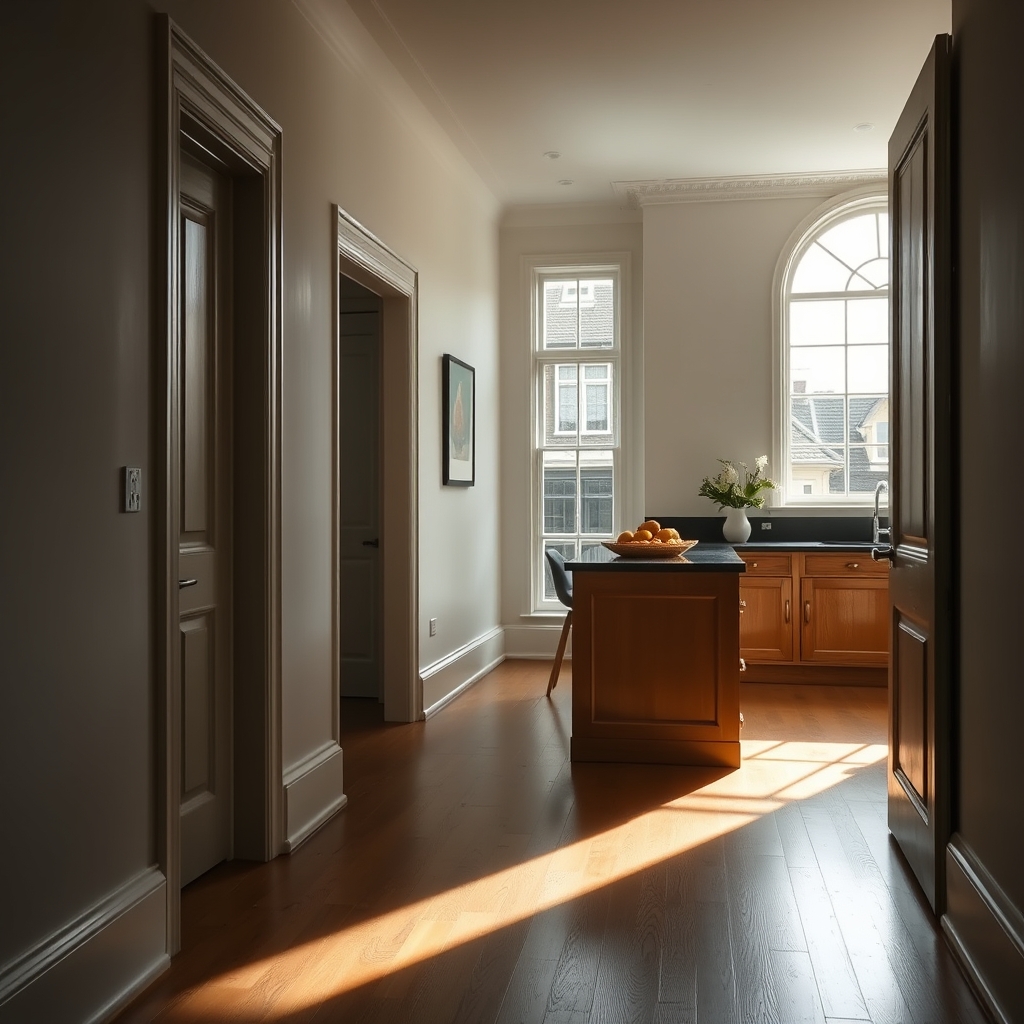
When Hamish Vincent Design returned to Architecture for London to re‑imagine a Neo Georgian townhouse on St Paul's Road in Islington's Canonbury Conservation Area, the brief was clear: preserve the dignified façade while delivering an open‑plan interior the client could live in today. The nine‑unit post‑war terrace, rebuilt after the war, presented a rare opportunity—a non‑listed Georgian shell that sidestepped the heavy constraints of a listed townhouse.
A measured reinvention of Georgian form
The design team kept the crisp, white‑washed brick and the narrow sash windows, letting the street retain its historic rhythm. Inside, the walls were stripped back to reveal smooth plaster, and a polished oak floor was laid to guide the eye from the entry hall toward a spacious living area. The texture of the oak, cool underfoot, contrasted with the warm, slightly uneven plaster that still carried the faint scent of aged mortar.
Balancing heritage and flexibility
Here the structural tension is explicit: aesthetic fidelity to the Georgian silhouette versus the client's desire for an open‑plan layout. By treating the façade as a costume rather than a constraint, the designers allowed the interior to breathe, inserting a modern kitchen island where a wall once divided rooms. The client hesitated at the kitchen plan, tracing the proposed island with a fingertip before approving the shift—a small moment that signified a larger concession to contemporary living.
This project reframes the usual preservation narrative. Instead of freezing a building in time, it illustrates a cultural shift toward selective heritage reinterpretation, where the visual language of the past coexists with the functional demands of the present. It matters because it demonstrates how designers can reconcile historic streetscapes with today's spatial expectations.
In a city where many Georgian townhouses are locked behind strict listing rules, this approach signals a pragmatic path forward, offering a template for future interventions that respect both visual heritage and modern habitability.
Ultimately, the house stands as a quiet testament to the possibility of living within history without being confined by it.




















