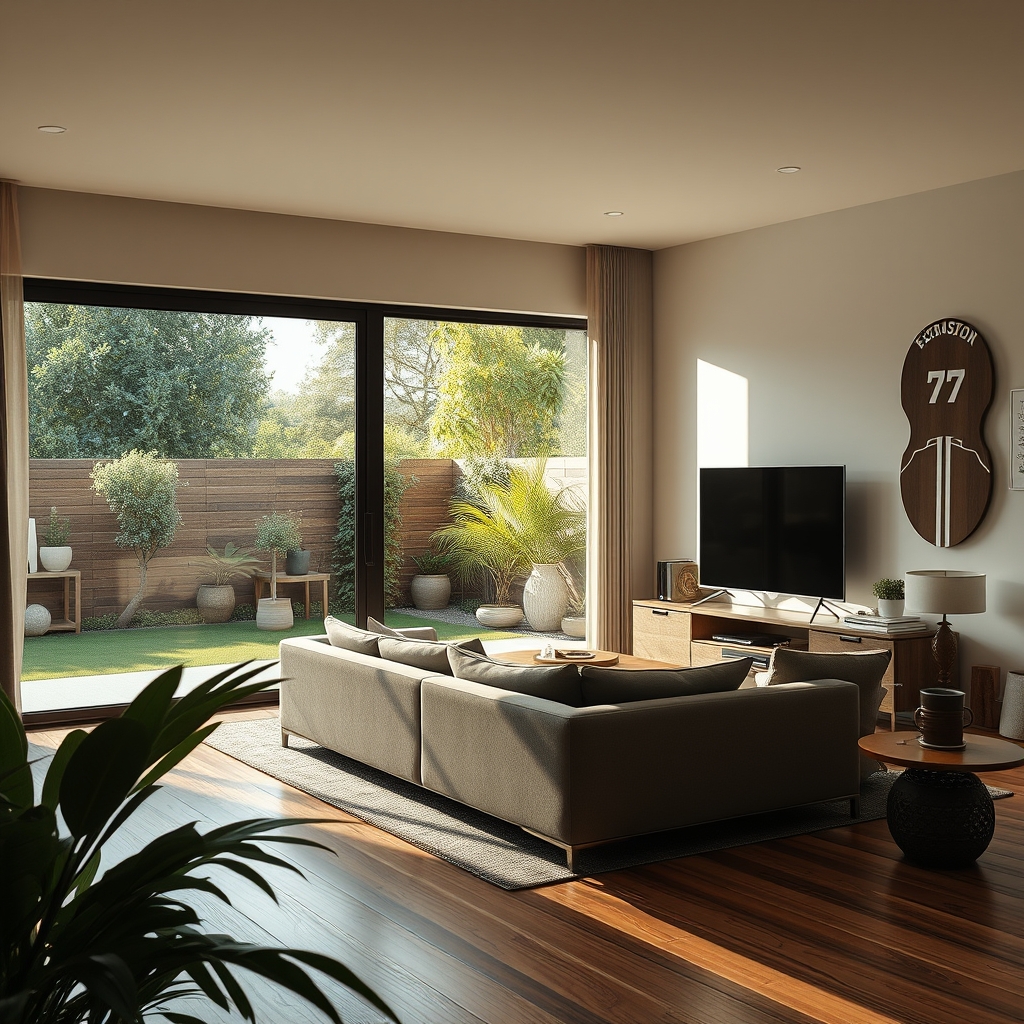
The newly completed infill townhouse at 12 Burnley Crescent sits in a medium‑density suburb, replacing the row of early‑20th‑century terrace houses that once defined the street. Built from weathered brick and reclaimed timber, the two‑storey home frames unexpected sky views through floor‑to‑ceiling glazing and opens onto a modest strip of mature garden. Inside, the living area is arranged for game‑day gatherings, with a wall‑mounted screen, low‑profile seating and a small bar stocked with entertainment essentials. A faint rustle of eucalyptus leaves drifts in as the sliding door opens, grounding the modern interior in its leafy surroundings.
Balancing Openness and Privacy
Large glass panels invite daylight and a sense of expansiveness, yet they also expose the interior to the street's bustle. The homeowner pauses at the glass wall, hand hovering over the remote, unsure where to place the new sound system—a moment that reveals the tension between visual openness and the need for acoustic privacy. This negotiation mirrors a broader suburban trend: homes are being designed to serve as both personal sanctuaries and venues for social entertainment.
Material Choices as Cultural Signal
The robust brick façade and reclaimed timber cladding speak to a growing desire for durability and sustainability in mid‑density redevelopment. Rather than merely replacing lost density, the townhouse illustrates a new model where suburban infill serves as a flexible platform for both private retreat and communal gathering. This shift signals a cultural move away from single‑purpose housing toward adaptable spaces that can host a family dinner and a live‑streamed match in the same room.
It matters because it shows how emerging suburban infill can reconcile the efficiency of compact living with the desire for a curated, experience‑rich home environment.
As the evening light softens, the house settles into a quiet rhythm, its glass walls reflecting the suburb's evolving identity.




















