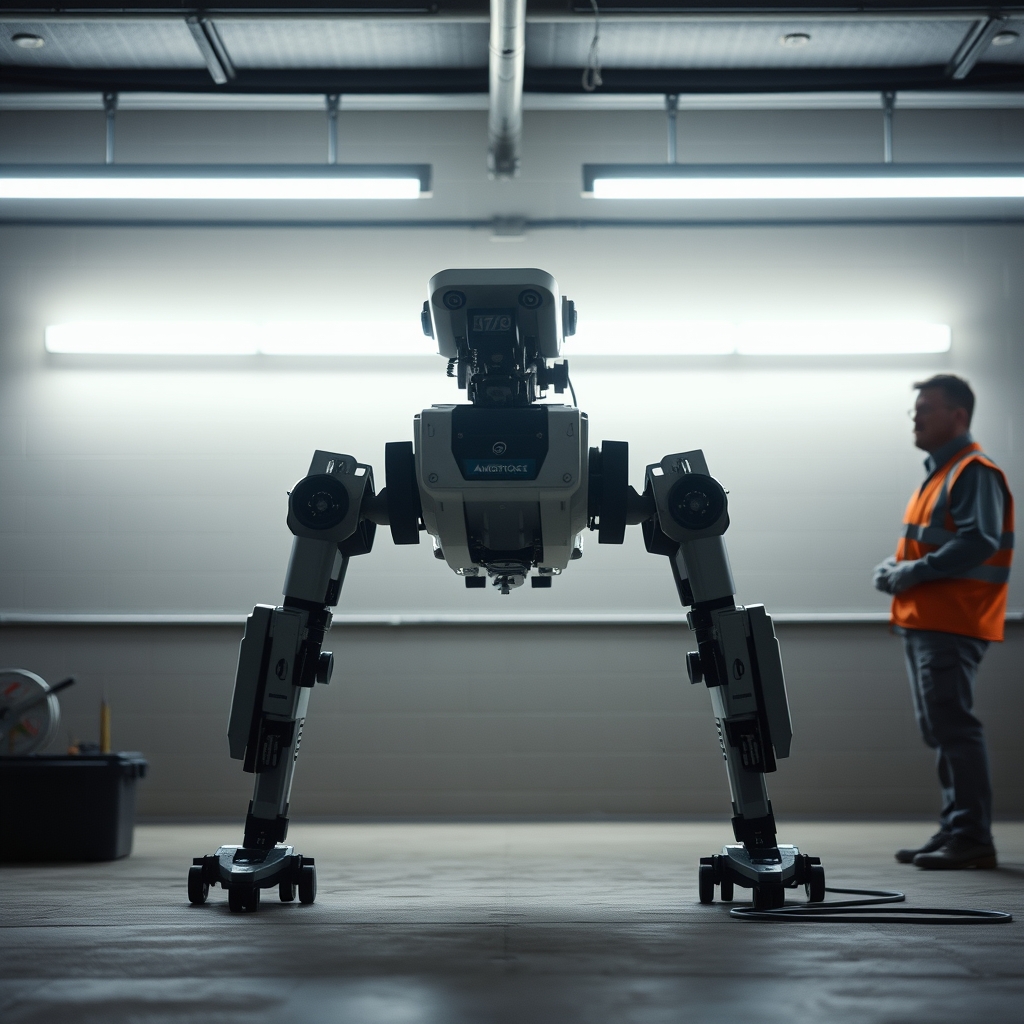
The American Security Robotics Act, a bipartisan bill introduced in March by Senators Tom Cotton, Chuck Schumer and Congresswoman Elise Stefanik, seeks to bar U.S. government procurement of Chinese‑made ground robots—humanoids, dog‑type platforms and crawlers. The proposal follows the FCC's recent tightening of rules on foreign‑made routers, part of a wider effort to decouple sensitive technology from China. By focusing on finished robotic systems rather than low‑level semiconductors, the legislation highlights a new structural tension between national security and supply‑chain efficiency.
Economic and strategic implications
Restricting Chinese robots forces defense agencies to source alternatives from a thin domestic field, where firms such as Ghost Robotics can capture new contracts. Yet those firms still rely on components from South Korea, Japan or other allied producers; a sudden ban on Chinese parts would strain their ability to meet demand. The act therefore illustrates a paradox: eliminating competition at the product level is advantageous only if the underlying component supply remains reliable.
Supply‑chain visibility and uncertainty
When a procurement officer opened a catalog of motor assemblies, she hesitated, tracing a finger over a Chinese supplier's part number before closing the page—a small gesture that reflects the broader uncertainty introduced by rapid policy shifts. The FCC's three‑week exemption for certain routers shows how quickly regulators can adjust, yet the 18‑month limit of those exemptions leaves manufacturers navigating a landscape of intermittent clearance.
Analytically, the bill reframes the techno‑economic contest as a battle over value‑chain positioning: the United States can protect high‑margin end‑products while remaining dependent on foreign components. This dynamic mirrors earlier decoupling moves in semiconductors, telecom base stations and logistics data, suggesting a systematic re‑ordering of how security concerns are translated into trade policy.
Why it matters: the legislation will shape the speed at which the U.S. fields autonomous systems and will redefine the domestic robotics market's growth trajectory.
As the debate settles, the broader pattern of selective bans signals a shift from ad‑hoc restrictions toward a more coordinated, albeit still fragmented, strategy for managing strategic technology dependencies.
In time, the balance between security and supply‑chain resilience will determine whether American robotics can advance without new vulnerabilities.




















