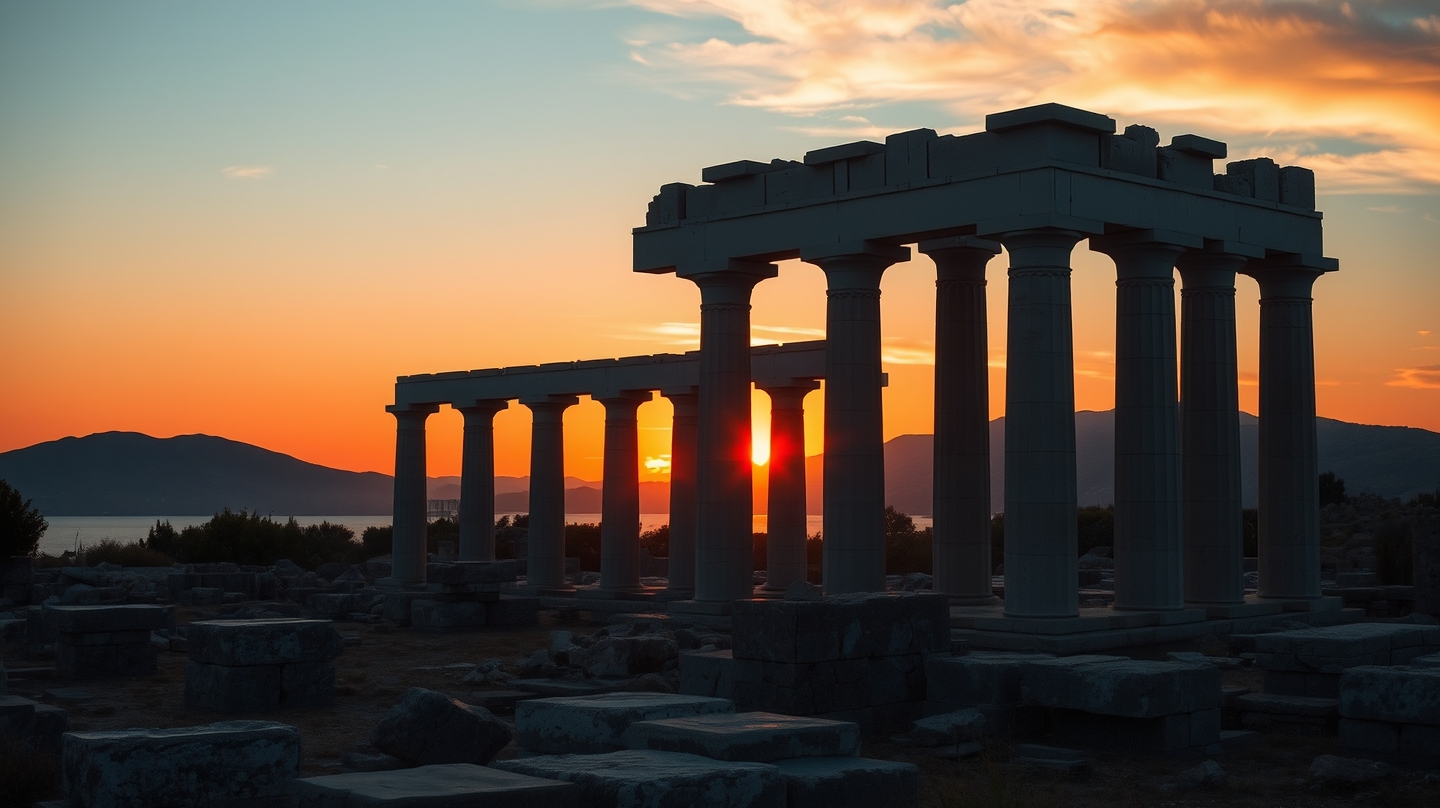
When Erieta Attali steps onto the sun‑kissed cliffs of Delos, she does more than frame a picture; she activates a sophisticated, technology‑driven workflow that turns centuries‑old stone into a living visual archive. The new exhibition, Archipelago of Memory | From Delos to the Aegean, opens under the joint auspices of the Municipality of Mykonos, the Ephorate of Antiquities of the Cyclades, and the Aegean Maritime Museum, and it showcases how modern imaging tools are redefining the preservation of cultural heritage.
Attali’s process begins with high‑resolution, full‑frame cameras equipped with long‑exposure capabilities that capture the subtle dance of moonlight on ancient marble. Yet the magic that reaches museum walls happens after the shutter clicks. In the field, raw files are immediately backed up to encrypted portable SSDs, a practice that minimizes data loss and aligns with emerging standards for heritage digitisation. Back in the studio, automated pipelines employ AI‑assisted noise reduction and dynamic range expansion, allowing the photographer to retain the delicate textures of weathered columns without manual retouching.
These automated steps are not merely technical conveniences; they represent a broader shift in how museums manage visual assets. The Aegean Maritime Museum, for instance, has integrated a cloud‑based digital asset management (DAM) system that tags each image with metadata—location, epoch, material composition—using machine‑learning classifiers trained on archaeological datasets. This metadata enriches the exhibition narrative, enabling visitors to explore the “Genius Loci” of each photograph through interactive kiosks that pull up related artifacts, historical maps, and even 3D reconstructions generated by photogrammetry.
Why does this matter beyond the gallery? The automation of image processing and metadata generation shortens the time between field capture and public display from months to weeks. For heritage sites vulnerable to climate change, such rapid turnaround can be critical: high‑resolution digital records become backup copies that survive when stone erodes. Moreover, the workflow’s scalability means that smaller museums across the Cyclades can adopt similar pipelines without hiring large technical teams, democratizing access to state‑of‑the‑art preservation tools.
From a market perspective, the exhibition signals a growing demand for tech‑enabled cultural experiences. Travel platforms report a 12 % rise in searches for “virtual heritage tours” in the past year, while funding bodies increasingly earmark grants for projects that blend art with digital innovation. Attali’s collaboration with municipal and governmental bodies illustrates how public‑private partnerships can accelerate the adoption of these technologies, turning a single photographic series into a template for future heritage initiatives.
Structurally, the exhibition’s curation mirrors the layered workflow it celebrates. The physical space is divided into three zones: “Capture,” where original prints are displayed alongside the camera rigs used on site; “Process,” featuring large‑format screens that replay the AI‑driven enhancement steps in real time; and “Preserve,” a quiet gallery where the final images sit beside interactive panels that explain the underlying data architecture. This tripartite design not only educates visitors about the technology but also reinforces the narrative that preservation is an ongoing, iterative process rather than a static act.
Real‑world implications extend to education as well. Local universities have already incorporated the exhibition’s workflow documentation into curricula for digital heritage management, giving students hands‑on exposure to tools that were previously confined to specialist labs. In turn, a new generation of conservators will be fluent in both the language of archaeology and the syntax of automation, bridging a gap that has long limited interdisciplinary collaboration.
Ultimately, Archipelago of Memory is more than a showcase of stunning seascapes and moonlit ruins. It is a proof point that technology—when thoughtfully integrated—can amplify the storytelling power of art, safeguard fragile histories, and reshape the economics of cultural preservation.




















