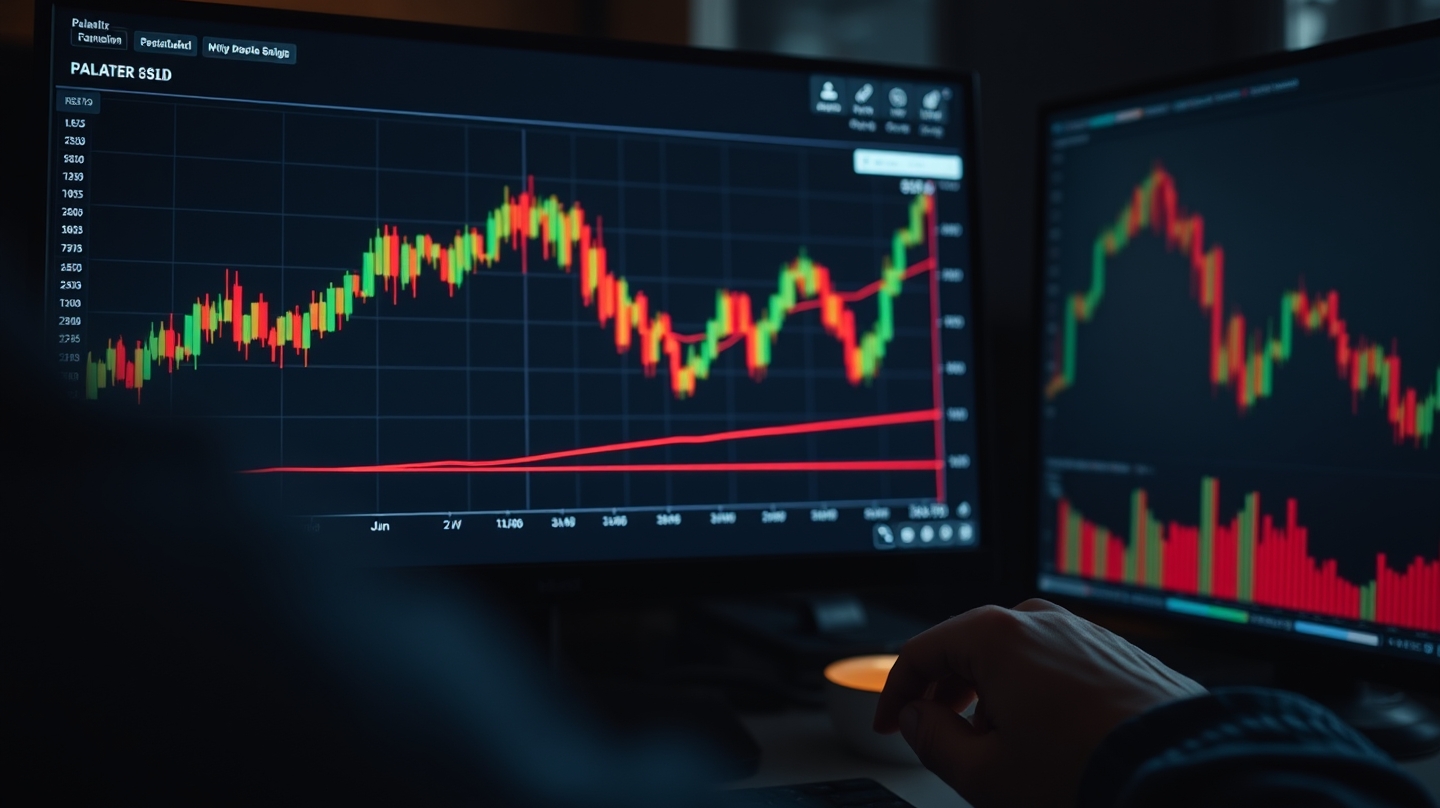
Just as Palantir’s shares surged past $130, its chief technology officer quietly cashed out $24 million worth of stock, raising questions about insider confidence.
On July 2, 2026, Shyam Sankar, Palantir’s chief technology officer and executive vice president, sold 185,000 shares at an average price of $130 per share. The transaction, disclosed in a Securities and Exchange Commission filing on July 7, represents the largest insider sale for the company this year, netting Sankar just over $24 million. While the amount eclipses his February and May sales—$22.5 million and $22.5 million respectively—the timing aligns with a two‑week rally that lifted the stock from the low $110s to $134.37 at the close on July 7.
The sale arrives after a relatively quiet June, during which only two insider transactions were recorded: a $2.1 million sale by Alexander Moore and a $190,753 sale by Jeffrey Buckley. May, by contrast, saw a flurry of high‑value trades, including CEO Alex Karp’s $54 million cash‑out and co‑founder Stephen Andrew Cohen’s $43.5 million sale. The contrast between May’s bulk selling and June’s lull, followed by Sankar’s July acceleration, suggests a nuanced insider strategy rather than a uniform lack of confidence.
Why does this matter to investors? Insider trades are a rare, SEC‑verified window into the expectations of those who know the business best. A senior executive exiting a sizable position during a price rally can be interpreted in two ways. First, it may simply reflect personal liquidity needs or portfolio rebalancing, especially after a year of volatile performance. Second, it could signal a belief that the current price level captures much of the upside, prompting insiders to lock in gains before potential headwinds emerge.
Potential headwinds are already visible. Although Palantir’s stock has rebounded 25 % over the past two weeks, it remains down 19.95 % year‑to‑date. Moreover, the pre‑market session on the Wednesday following the filing showed a 2.69 % pullback to $130.75, hinting at short‑term volatility. External factors add further uncertainty: escalating geopolitical tensions in the Middle East, including recent Iranian attacks on shipping and subsequent U.S. retaliatory strikes, have injected market‑wide risk, particularly for technology firms with government contracts.
From a structural perspective, Palantir’s insider activity underscores a broader market pattern where senior executives time sales to coincide with liquidity events—earnings releases, major contract announcements, or notable price moves. Institutional investors often monitor these patterns to gauge sentiment. The July sale, occurring after a pronounced rally, may prompt fund managers to reassess exposure, especially given the company’s ongoing transition toward technology‑driven automation and workflow transformation, a shift that has attracted both growth‑oriented and value‑focused capital.
Real‑world implications are already materializing. Several large hedge funds that hold Palantir reported adjusting their position sizes in the week after the filing, citing “insider activity” as a factor in their risk models. Meanwhile, analysts at major brokerages have updated their price targets, with a modest downgrade from “Buy” to “Neutral” for some, reflecting concerns that the rally may be short‑lived without a clear catalyst beyond the recent earnings beat.
Looking ahead, the market reaction to Sankar’s sale will likely hinge on two variables: the sustainability of the current price momentum and the company’s ability to deliver on its automation roadmap. If Palantir can demonstrate consistent contract wins and expand its AI‑driven platforms, the insider sell‑off may be viewed as a routine cash‑out. Conversely, if macro‑economic pressures or geopolitical shocks dampen demand for its services, the sale could be retrospectively seen as an early warning sign.
In sum, the July 2 transaction offers a concrete data point for investors seeking to balance Palantir’s growth narrative against insider sentiment and broader market dynamics. While the cash‑in provides Sankar with a substantial personal gain, it also invites a closer look at how the company’s strategic pivots align with shareholder expectations in a volatile environment.




















