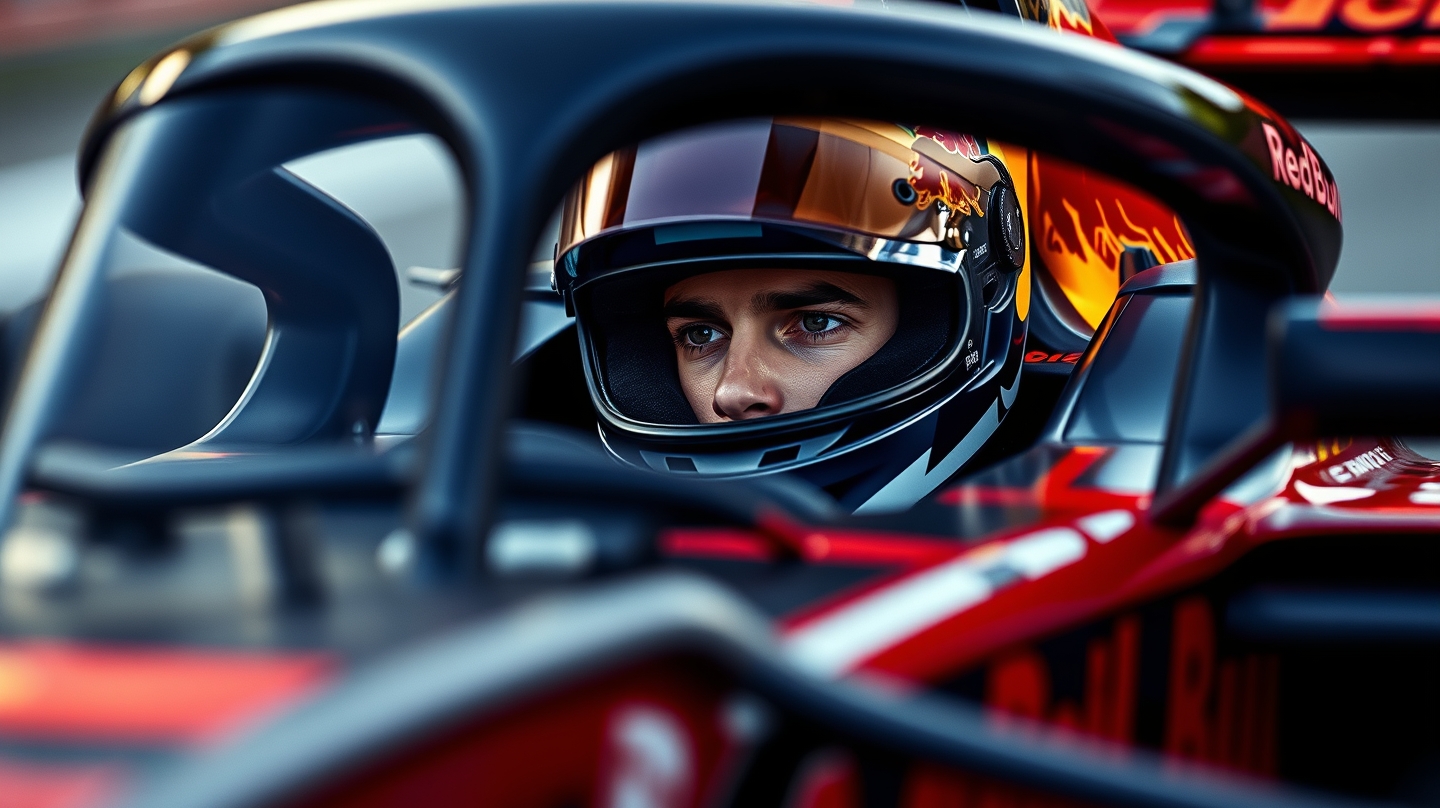
As the Belgian Grand Prix looms at Spa-Francorchamps, a quiet contractual detail is sparking louder conversations than the usual tyre strategies. Max Verstappen, Red Bull’s dominant champion, holds a performance‑related clause that could free him from his current deal as early as the end of this season – a prospect that has McLaren’s Zak Brown weighing the logistics of a potential driver swap.
Brown has publicly dismissed any imminent transfer, emphasizing his satisfaction with Lando Norris and Oscar Piastri. Yet, the clause, which activates in October, gives Verstappen a legal lever to explore alternatives, and McLaren remains on his shortlist despite the team’s “fairness‑first” philosophy that avoids designating a clear number one driver.
The discussion is more than a personnel puzzle; it mirrors a broader technological narrative within Formula 1. The sport’s hybrid power units, real‑time telemetry, and AI‑driven strategy tools have turned driver contracts into data contracts. Teams now evaluate a driver not just on skill but on how their feedback integrates with automated performance platforms that adjust engine maps, aerodynamic settings, and pit‑stop timing on the fly.
McLaren, currently a customer of Mercedes power units, has been grappling with the limits of a shared engine supply chain. An influx of Verstappen’s data‑rich driving style could accelerate the team’s own automation roadmap, from predictive pit‑stop algorithms to machine‑learning‑enhanced car set‑up simulations. In contrast, Red Bull’s close‑knit relationship with Honda’s power unit and its proprietary data stack means losing Verstappen would be a blow to a system built around a single driver’s input.
Beyond the paddock, the ripple effect reaches media organisations that cover the sport. BBC Sport, for example, has been overhauling its production workflow with AI‑assisted video clipping and automated story generation. The same automation principles that could help McLaren digest Verstappen’s telemetry are being applied to deliver faster, more personalized race highlights to fans worldwide.
For the drivers themselves, the clause underscores a new form of career agency. Lewis Hamilton, now 41, and Fernando Alonso, 44, have shown that longevity can be sustained when a driver’s data profile aligns with a team’s evolving tech stack. Their continued competitiveness suggests that future contract negotiations will increasingly hinge on a driver’s ability to feed and interpret high‑frequency data streams, not merely on raw lap times.
Should Verstappen move, the immediate structural insight is clear: any team that signs him must already possess a mature automation ecosystem capable of processing his input without disrupting existing driver development pathways. That requirement could force smaller outfits to double‑down on partnerships with tech firms or accelerate the adoption of cloud‑based simulation platforms.
In practical terms, fans may notice more consistent race strategies, fewer surprise pit stops, and a tighter correlation between driver feedback and on‑track performance. Sponsors could also benefit from richer data packages that tie driver branding to measurable performance metrics, reshaping how commercial value is calculated in the sport.
The scenario remains speculative, but the convergence of contract clauses, team philosophies, and automation trends signals a turning point. Whether Verstappen stays at Red Bull or tests McLaren’s chassis, the decision will reverberate through the engineering labs, the editorial rooms, and the grandstands alike.




















