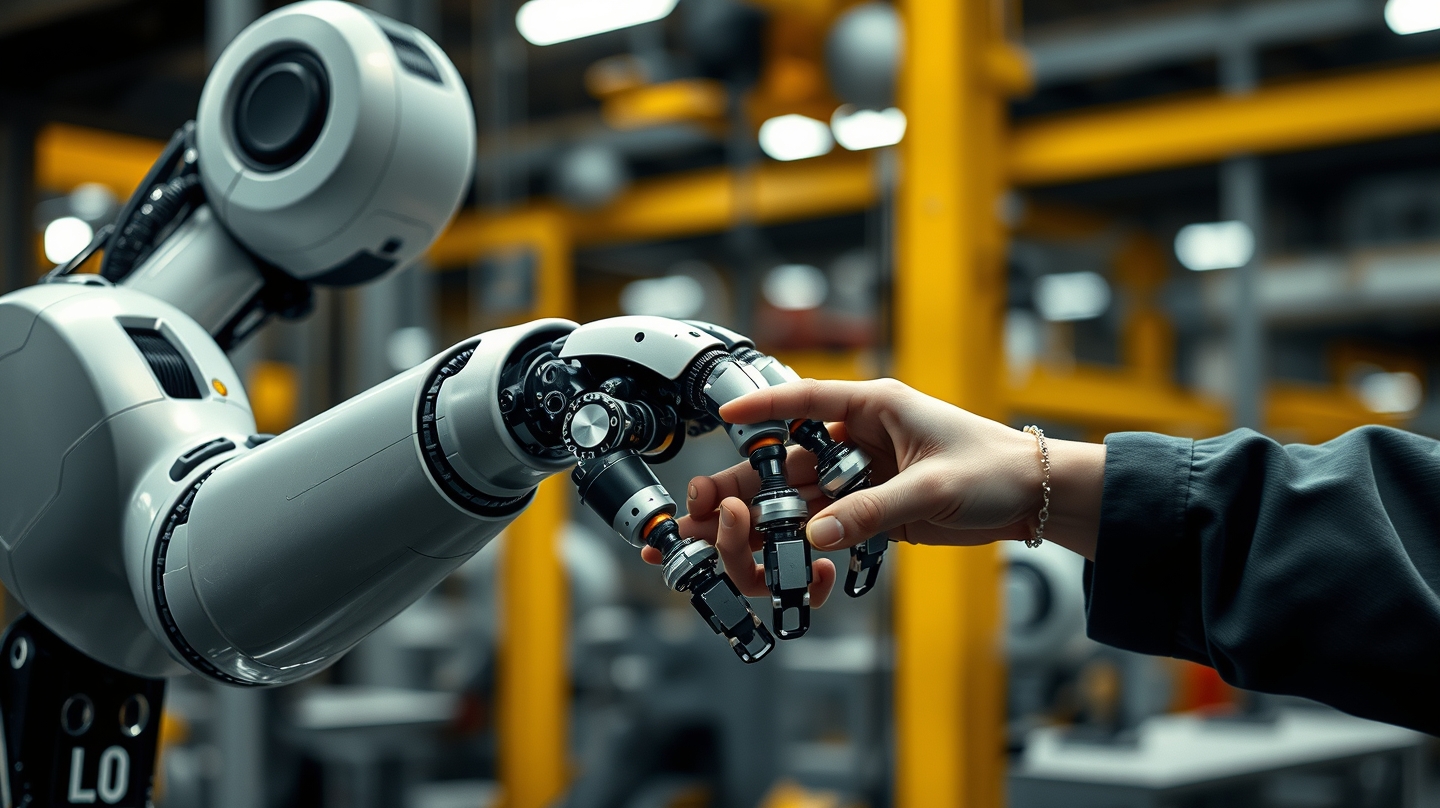
When a factory worker can teach a robot a new task in minutes rather than weeks, the line between human and machine collaboration blurs, raising questions about how quickly production lines can adapt to market swings.
Reimagine Robotics Ltd., a London‑Sydney startup that emerged from stealth this week, says its platform lets any employee show a robot a task, correct mistakes on the spot, and move on. Co‑founder and CEO Jonathan Scholz, who previously led Google DeepMind’s Applied Robotics team, describes the approach as “monkey‑see, monkey‑do” – a robot that learns by observation and immediate feedback.
The technology replaces traditional robot programming, which often requires specialist coders, with a visual‑instruction interface. Workers demonstrate a motion, the robot attempts it, and the worker nudges the arm or re‑positions a gripper until the behavior meets expectations. Scholz likens the robot to a new colleague asking, “How can I help?”
Early deployments illustrate the model’s speed. At a custom‑plastics manufacturer, Reimagine’s robots were taught overnight to tend 3D printers – removing print beds, engaging latches, and pressing controls. The same team later added washing, curing and drying steps without writing new code. In a hard‑drive recycling plant, a three‑robot cell was assembled with engineers to extract critical metals. The company reports that the time to prototype a new robot behavior dropped from roughly one day to ten minutes, shifting the bottleneck from software development to on‑floor instruction.
This shift has three practical implications. First, it lowers the barrier for small and midsize manufacturers to adopt automation, because they no longer need a dedicated robotics programmer. Second, it accelerates response to supply‑chain disruptions; a new task can be rolled out across a line in a single shift. Third, it preserves skilled labor by turning workers into robot trainers rather than replacing them.
Industry analysts see the approach as part of a broader trend toward “human‑in‑the‑loop” automation. As labor markets tighten and product cycles shorten, manufacturers are looking for flexible solutions that can be re‑programmed by the people who understand the process best. Reimagine’s model aligns with that demand, offering a way to embed expertise directly into the robot’s behavior.
Funding for the first phase came from Fly Ventures, firstminute capital and several angel investors. The startup plans a new fundraising round to expand its team and scale deployments across advanced manufacturing, electronics disassembly and other high‑mix, low‑volume sectors.
While the concept is not entirely new, the combination of a low‑code visual interface, rapid behavior iteration and a clear focus on worker‑centered training distinguishes Reimagine Robotics from legacy industrial‑automation vendors that still rely on lengthy offline programming cycles. If the platform lives up to its early results, it could reshape how factories think about workforce development and capital investment, making automation a more inclusive tool rather than a niche technology.
For workers, the change means new skill requirements – the ability to break down a process into teachable steps – but also a more active role in shaping the tools they use. For executives, the promise is a faster return on automation spend and a more resilient production system that can pivot as consumer demand evolves.




















