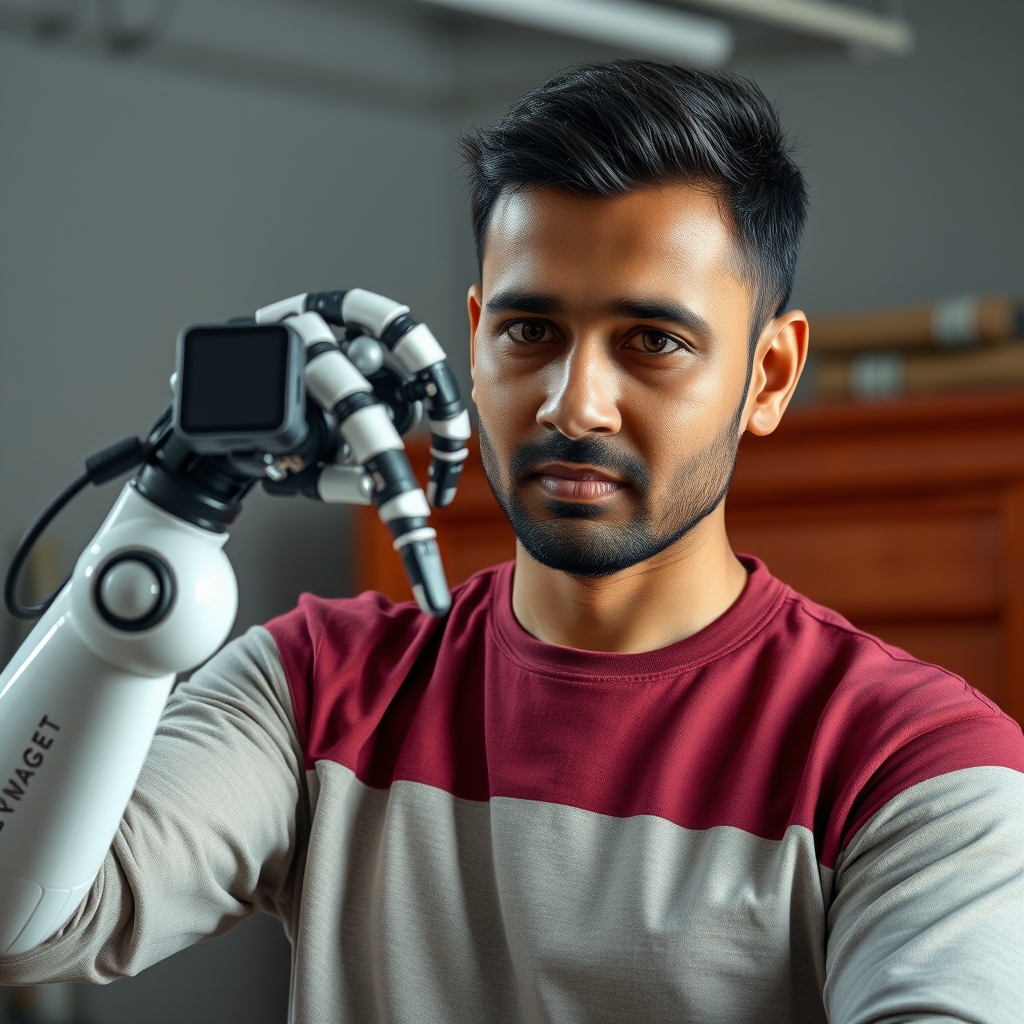
When Sai Vemprala, co‑founder and chief technology officer of General Robotics, talks about "modular intelligence," he isn’t describing a futuristic buzzword; he’s outlining a concrete shift in how robots are engineered today. In a recent episode of The Robot Report Podcast, Vemprala detailed the company’s GRID platform, a system that replaces the traditional single‑brain design with a collection of specialized AI modules that can be swapped, upgraded, or re‑configured on the fly.
The move away from a monolithic control unit addresses a long‑standing bottleneck in robotics: scaling complex behaviors without rewriting the entire software stack. By compartmentalizing perception, planning, and actuation into discrete, interoperable modules, General Robotics can iterate faster, integrate third‑party advances, and tailor robots to niche tasks ranging from warehouse picking to on‑set camera rigs.
This architectural choice matters beyond the factory floor. As digital‑first media consumption accelerates, production pipelines are under pressure to deliver more content with fewer human hands. Modular robots can be programmed to handle repetitive camera movements, lighting adjustments, or even post‑production asset sorting, freeing creative teams to focus on storytelling. In that sense, the GRID strategy dovetails with broader automation‑driven changes in media infrastructure.
Vemprala’s background reinforces the credibility of this approach. After earning a PhD in robotics from Texas A&M, he spent several years at Microsoft Research, where he contributed to simulation‑based training for autonomous systems. That experience with large‑scale AI ecosystems informs General Robotics’ emphasis on reusable components, a practice familiar to cloud‑native developers but still novel in physical AI.
Industry peers are watching. Agility Robotics, known for its humanoid Digit, recently announced experiments with wheeled platforms, while Boston Dynamics opened a Metaplant Application Center to train its Atlas robot on new tasks. Both moves echo General Robotics’ belief that flexibility, not a single, all‑purpose brain, will drive the next wave of robot adoption.
For investors and technologists, the modular model reduces risk. Instead of betting on one massive software rollout, companies can validate individual modules in controlled environments, gather performance data, and scale proven components across product lines. This mirrors trends in the creator economy, where modular tools—plug‑ins, APIs, and micro‑services—allow creators to assemble bespoke workflows without building everything from scratch.
Looking ahead, the implications are twofold. First, manufacturers that adopt modular robots can respond more nimbly to supply‑chain disruptions, swapping out a vision module that struggles with new packaging materials for an upgraded version without halting production. Second, media studios can embed robotic assistants directly into live‑stream setups, automating camera angles based on real‑time audience engagement metrics—a direct response to the shift toward digital‑first consumption.
While the concept is still emerging, the early results reported by General Robotics suggest that modular intelligence could become a standard design principle across hardware‑intensive AI fields. As Vemprala puts it, "When you can replace a brain as easily as you replace a software library, you unlock a pace of innovation that static systems simply cannot match."




















