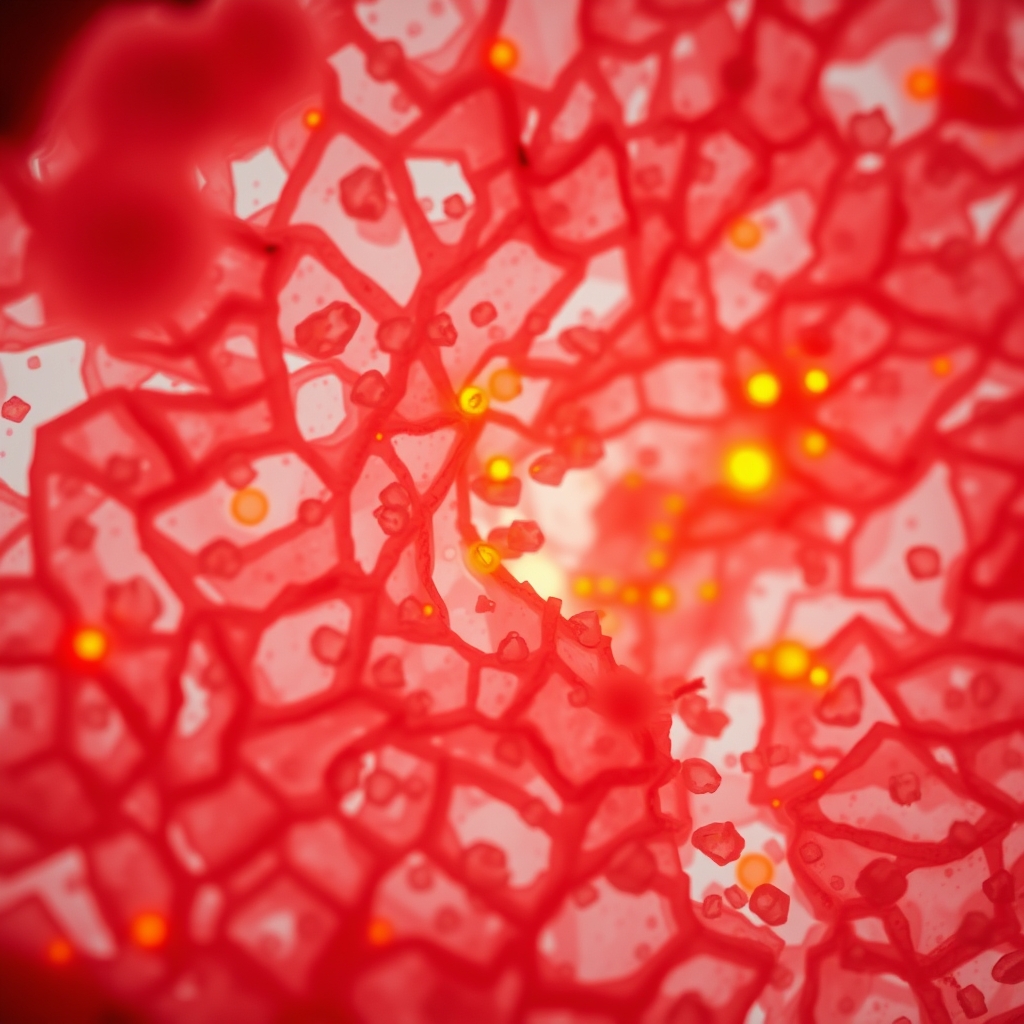
When a patient with inflammatory bowel disease (IBD) reports feeling well, doctors often celebrate remission. Yet a new study from the Walter and Eliza Hall Institute (WEHI) and the Royal Melbourne Hospital reveals a hidden molecular alarm that can persist long after symptoms disappear, quietly priming intestinal cells for future damage.
The research, published in Science, examined nearly 900 gut biopsies and patient‑derived mini‑intestines. By pairing high‑resolution molecular profiling with functional assays, the team identified a “smoldering” defect: intestinal epithelial cells remain unusually primed to undergo programmed death, even in patients whose disease appears clinically controlled.
“Once you’ve got the diagnosis, IBD doesn’t go away,” said co‑author Dr. Andre Samson. “Even if you become symptom‑free on current treatments, there’s a likelihood you’ll have a flare or relapse. What we found in patient samples was that intestinal cells are primed to die. Even in patients with essentially no symptoms, there’s still this persistent problem sitting there.”
This finding challenges the long‑standing view that cell death in IBD is merely a downstream consequence of inflammation. Instead, the abnormal apoptosis appears to be an active driver, present from the earliest stages of disease activity, including in clinically mild cases. Detecting it required detailed molecular analysis—something that traditional endoscopy and histology often miss.
Beyond its scientific novelty, the discovery has concrete implications for patient care. If clinicians can identify the smoldering defect early, they could flag individuals at higher risk of flare‑ups and adjust therapy before symptoms erupt. Such proactive monitoring aligns with the broader shift toward precision medicine, where treatment is tailored to the molecular profile of each patient rather than a one‑size‑fits‑all approach.
Technology plays a pivotal role in turning this insight into practice. The study leveraged automated image‑analysis pipelines and AI‑driven transcriptomic clustering to sift through massive datasets quickly. These same tools could be embedded into clinical workflows, allowing laboratories to run standardized screens on biopsy samples and deliver risk scores to gastroenterologists in real time.
For the roughly 180,000 Australians living with IBD, the potential benefits are immediate. Earlier detection of the hidden defect could reduce emergency hospital admissions, lower reliance on high‑dose steroids, and improve quality of life. Moreover, pharmaceutical developers may use the defect as a biomarker to test the efficacy of emerging therapies aimed at stabilizing epithelial cell survival.
From an industry perspective, the research underscores how automation and advanced analytics are reshaping medical diagnostics. As hospitals adopt AI‑enhanced pathology platforms, the line between research and routine care blurs, accelerating the translation of molecular discoveries into bedside tools.
While the findings are promising, they are not yet ready for universal clinical deployment. Larger, multi‑center trials are needed to validate the defect’s predictive power across diverse populations. Nonetheless, the study provides a clear structural insight: the gut’s cellular health can be quantified and monitored, adding a new layer to the traditional symptom‑based management of IBD.
In the meantime, patients and clinicians should remain aware that remission does not equal cure. Ongoing surveillance, potentially powered by the same automated workflows that uncovered the defect, may become the new standard for keeping IBD in check.




















