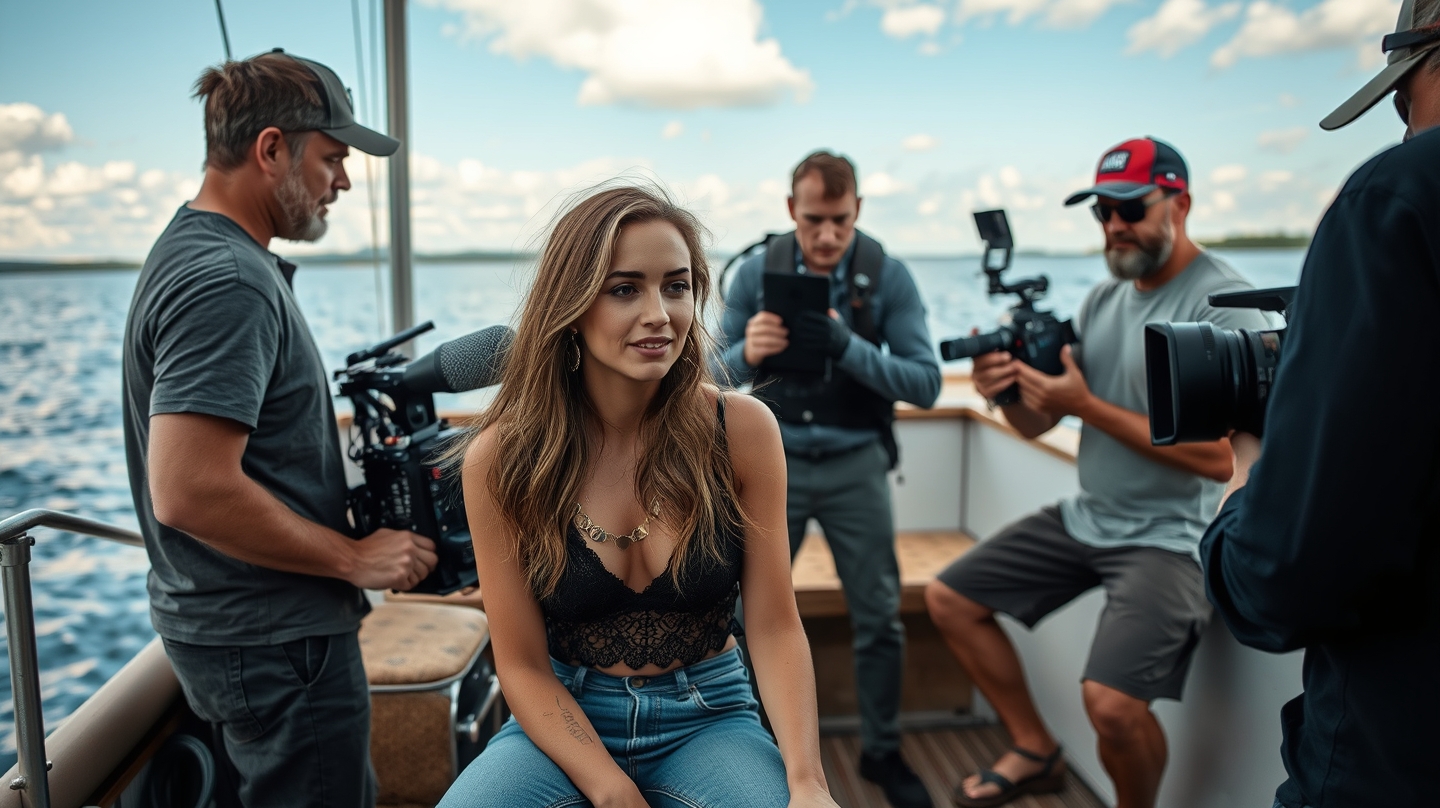
When Lindsey Ryan first showed a rough cut of Capsized to producers, the reaction was unanimous: the concept was insane. Yet the film, a comedy‑drama about a houseboat‑bound family caught in financial turbulence, is now set to debut at the Edinburgh International Film Festival, and its production story may be the more surprising element.
Ryan, a Long Island native who grew up on fishing boats, deliberately chose a real vessel for principal photography. The crew filmed on a modest houseboat, limited child actors to four‑hour days, and even kept a hamster on deck for continuity. What looks like a logistical nightmare was tamed by a suite of automation tools that turned a chaotic environment into a data‑rich set.
First, the production employed a cloud‑based scheduling platform that synced crew availability, tide tables, and Coast Guard clearance windows in real time. By automating these variables, the team reduced manual coordination time by an estimated 30 percent, according to the line producer. Second, on‑board cameras streamed 4K footage directly to a secure server via a satellite link, allowing the post‑production team in Los Angeles to begin ingest and proxy creation while the crew was still at sea. This parallel workflow compressed the typical post‑shoot turnaround from weeks to days.
Beyond logistics, Ryan’s team used AI‑assisted transcription to tag dialogue and ambient sound, enabling editors to locate specific moments without watching hours of footage. The same technology flagged continuity errors—such as a misplaced prop on the deck—before they became costly reshoots. While the film’s narrative remains rooted in human drama, its production pipeline illustrates a broader shift: indie filmmakers are increasingly adopting automation to compete with studio‑backed projects.
Industry observers note that this trend aligns with a larger transformation in media infrastructure. Cloud‑native editing suites, automated metadata generation, and remote collaboration tools have lowered barriers to entry, allowing creators to shoot in remote locations without sacrificing post‑production quality. For Ryan, the technology was not a gimmick; it was a necessity. “We wanted stories that are fresh again… and I think that where there’s a will, there’s a way,” she told THR, referencing both her narrative ambition and the technical means that made it possible.
The implications extend beyond a single film. As more independent productions adopt similar workflows, distribution platforms may receive a steadier stream of content that is already formatted for streaming, with metadata that improves discoverability. For audiences, this could translate into a wider variety of niche stories arriving faster and at lower cost.
From a structural perspective, Ryan’s approach demonstrates a new production archetype: the “distributed set.” Instead of a centralized studio lot, the set lives on a boat, while the data pipeline lives in the cloud. This decoupling reshapes budgeting models, as line items for physical storage and on‑site editing suites shrink, while subscriptions to cloud services rise. It also forces unions and guilds to reconsider labor agreements for remote post‑production work.
Ultimately, Capsized is a reminder that technology does not replace storytelling; it amplifies the ability to tell stories that would otherwise be too risky or expensive. By marrying a personal love of the sea with a modern, automated workflow, Ryan has set a precedent that could inspire a wave of location‑driven indie films, each leveraging the same tools that kept a hamster, a Coast Guard, and a camera crew in sync.




















