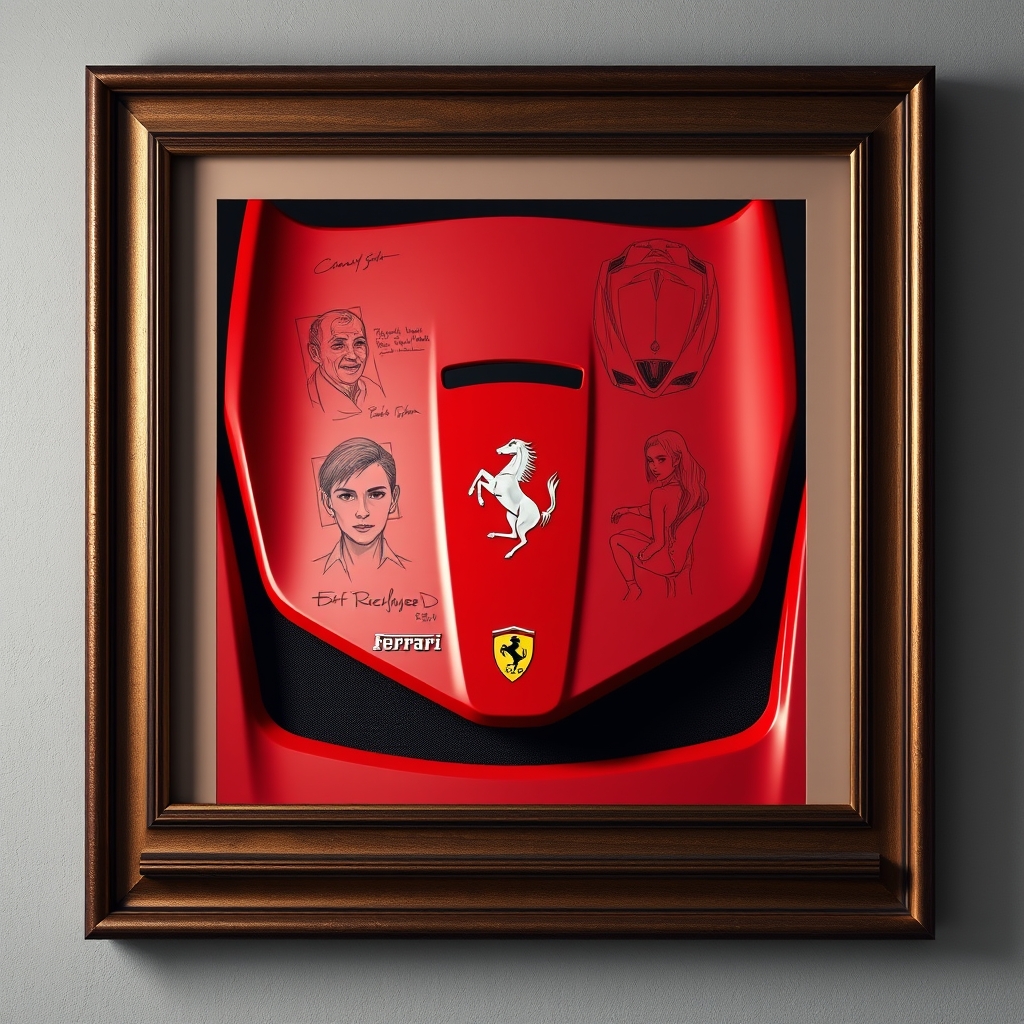
When Ferrari unveiled the 812 Competizione art car, its hand‑drawn lines sparked more than admiration—they sparked a new product line. The Italian marque now offers the front hood or dorsal panel of any current model, mounted in a gallery‑ready frame and overlaid with the original sketches of chief designer Flavio Manzoni. The result, dubbed “Sketch Body,” lets collectors display the anatomy of a Ferrari without owning the car itself.
At first glance the concept feels like a novelty, but it also illustrates how automotive design has become a technology‑driven workflow. Designers begin with hand‑drawn concepts, which are digitized, refined in CAD, and finally translated into sheet‑metal by CNC‑controlled presses. By preserving the sketch on the finished panel, Ferrari showcases the full arc from ink to alloy, a narrative that would have been impossible before modern automation.
Ferrari’s Collectibles series, which previously sold race‑used F1 components and engine parts, now extends that philosophy to visual art. A customer could, for example, match a Sketch Body panel to the exact paint code of the 812 GTS parked in their garage, creating a personal museum piece that mirrors the car’s silhouette. The panels are produced on demand, leveraging the same digital twin technology that powers the brand’s virtual configurators and that Meta’s AR platforms use to project 3‑D car models into living rooms.
Why does this matter beyond the glossy showroom? First, it signals a broader shift in luxury branding: manufacturers are monetizing the design process itself, not just the finished product. Second, the initiative leans on automation‑driven media infrastructure—high‑resolution 3‑D scanning, cloud‑based rendering, and AI‑assisted quality checks—to ensure each panel faithfully reproduces the original sketch. This infrastructure, pioneered by firms like Meta in their metaverse ventures, is now being repurposed for tangible collectibles.
For enthusiasts, the panels offer a low‑entry point into Ferrari ownership culture. While a new 488 GTB can command millions at auction, a Sketch Body panel is priced more like a limited‑edition artwork, making the brand’s aesthetic accessible to a wider, albeit still affluent, audience. The move also reinforces Ferrari’s ancillary revenue strategy, which already includes branded apparel, accessories, and even a short‑lived breakfast cereal.
Industry observers note that the convergence of automotive engineering and fine art could inspire similar programs across sectors. As manufacturers adopt digital design pipelines, the raw data—sketches, CAD files, CNC toolpaths—becomes a new class of intellectual property that can be packaged for collectors. This mirrors trends in technology adoption where companies monetize the creative process, from software UI mockups sold as NFTs to architectural blueprints offered as limited prints.
Ultimately, the Sketch Body line is a litmus test for how far the luxury market will go in turning its own production DNA into sellable content. If the panels resonate, we may see an influx of “design‑as‑art” offerings, from aerospace skin sections to consumer‑electronics chassis, each framed and displayed as a tribute to the engineering that powers them.




















