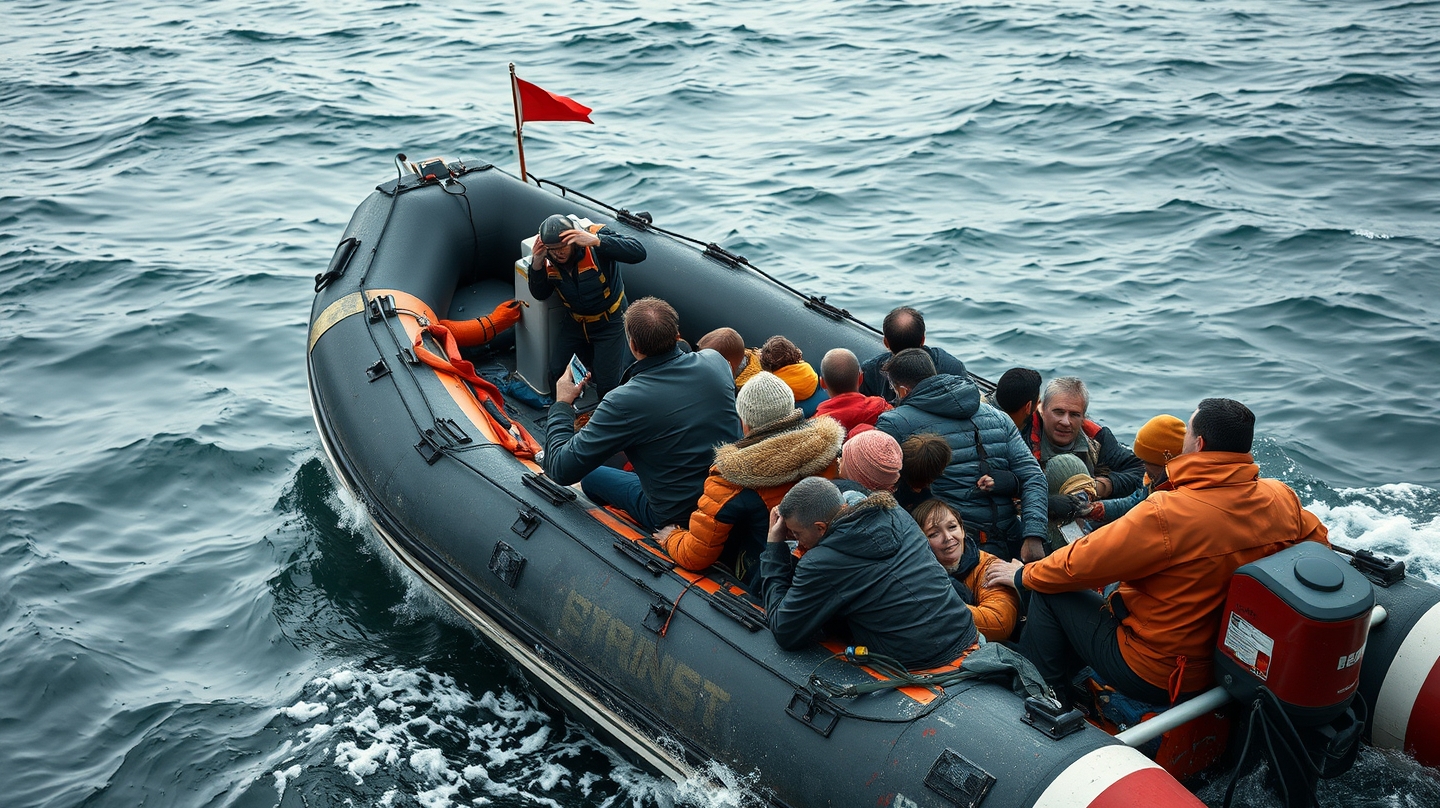
When a 15‑metre inflatable boat arrived in the early hours of Monday, its deck was so packed that passengers were dangling their legs over the side, a stark visual that belies a quieter technological battle unfolding beneath the waves.
The vessel, which left the French coast near Berck‑sur‑Mer, carried an estimated 230 people – the highest number ever recorded on a single craft making the crossing. French maritime officials described the boat as "buckling" under the weight, while a Home Office spokesperson warned that criminal gangs were employing "reckless and dangerous tactics" by cramming ever greater numbers onto unseaworthy vessels.
French rescuers intervened twice. First, they saved 30 migrants stranded by the tide during a failed boarding attempt on Berck beach. Later, two passengers who signalled distress were transferred to a French Navy rescue ship and taken to Calais. The remaining occupants continued their journey, ultimately reaching a UK port where Border Force officers processed them.
Statistics released by the Home Office show a paradox. While the total number of Channel crossings in 2026 is projected to fall by roughly 43% compared with last year, the average passengers per boat has risen dramatically – from an average of seven in 2018 to more than 60 in 2023. The record‑setting crossing follows a series of high‑profile incidents, including a fire‑afflicted boat that rescued 173 migrants last Tuesday.
Officials attribute the overall decline to a sustained crackdown on the supply chain that fuels people‑smuggling operations. Since the Labour government took office, more than 1,100 small‑boat engines and related equipment have been seized, and a sophisticated surveillance network now monitors the Channel 24‑hours a day. The system relies on AI‑driven radar, satellite imagery, and autonomous surface vessels that can flag abnormal vessel behaviour in real time.
These technological tools have reshaped both enforcement and smuggling tactics. Smugglers, aware that traditional low‑profile boats are more likely to be intercepted, are consolidating passengers onto larger, faster inflatable craft that can briefly outrun detection windows. The shift mirrors a broader trend in illicit logistics: as law‑enforcement technology improves, criminal networks adopt higher‑capacity, low‑cost solutions to preserve profit margins.
Beyond the frontline, the media landscape covering the crisis is also evolving. Newsrooms are deploying automated transcription and fact‑checking pipelines that ingest official statements, rescue footage, and satellite data, allowing reporters to publish verified updates within minutes. This automation reduces the lag between an event and public awareness, but it also raises questions about narrative framing when human editorial oversight is compressed.
The human cost remains stark. Overcrowded vessels are prone to capsizing, and the cramped conditions increase the risk of dehydration, hypothermia, and injury. While the UK and French authorities have improved rescue response times, the underlying demand for crossings persists, driven by stagnant asylum processing in northern France and limited legal pathways to the UK.
From a structural perspective, the record crossing signals a tactical adaptation by smuggling gangs: larger payloads per journey to offset the higher interception risk introduced by AI‑enabled patrols. This adaptation may prompt a new wave of enforcement tools, such as predictive analytics that anticipate departure points based on historical load patterns.
In the coming months, policymakers will need to balance tighter technological controls with humanitarian safeguards. The record‑size crossing underscores that technology alone cannot eliminate the perilous journeys; comprehensive asylum reform and cross‑Channel cooperation remain essential to reduce the incentive for migrants to risk such dangerous voyages.




















