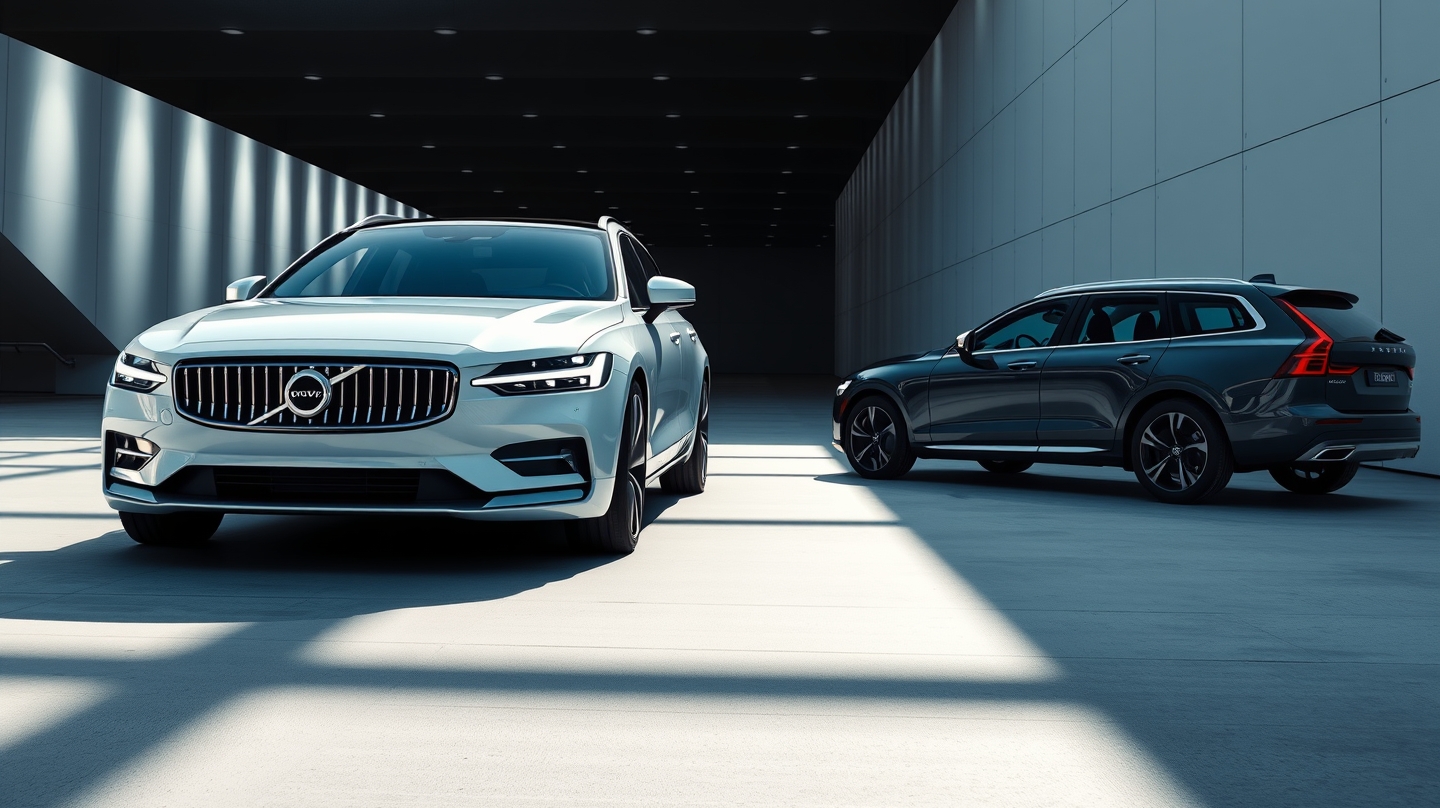
Volvo Cars is reportedly preparing to bring an electric sedan and a matching wagon to U.S. showrooms as early as 2028, a move that could soften the current SUV‑centric landscape. The two models, expected to sit on the company’s SPA3 platform, would be priced in the low‑$50,000 range and limited to roughly 10,000 units a year.
According to Automotive News, the vehicles are already in development for Europe and would be homologated for the United States without major hurdles. While Volvo has not confirmed the plan, the source familiar with the automaker’s roadmap said the models would likely bear 60‑ or 70‑series badging—potentially an “ES60” sedan and an “EV60” wagon. A more rugged “Cross Country” variant of the wagon is also being considered.
The significance of the announcement goes beyond a new product line. Volvo’s decision to revive the wagon body style, a segment it abandoned in the U.S. after the 2026 model year, reflects a strategic response to consumer fatigue with the SUV flood. CEO Håkan Samuelsson recently warned that the market may have leaned too heavily toward crossovers, suggesting a broader industry desire for diversified offerings.
From a technology perspective, the SPA3 platform showcases Volvo’s commitment to modular, software‑centric architecture. Built in Europe, the platform relies on highly automated assembly lines that integrate robotics, AI‑driven quality checks, and flexible tooling. This level of automation reduces the marginal cost of adding new body styles, making a low‑volume launch financially viable.
For the U.S. market, the modest production target signals that Volvo does not anticipate a mass‑market shift but rather aims to capture niche buyers who value practicality and sustainability. At a starting price of just over $50,000, the EVs sit between the more affordable compact EVs and premium luxury models, positioning them to attract professionals and families seeking an alternative to the typical SUV.
Industry analysts see the move as part of a larger trend where automakers use modular platforms to spin off multiple body styles from a single set of components. This reduces development time and leverages economies of scale, a practice that is accelerating as manufacturers race to meet stricter emissions standards.
The announcement also highlights how automotive journalism is evolving. Outlets like Car and Driver increasingly rely on automated media workflows—natural‑language generation, AI‑assisted fact‑checking, and real‑time data feeds—to publish timely reports on niche developments. The rapid dissemination of Volvo’s plan underscores the growing role of technology in both the products being reported and the reporting process itself.
Consumers should watch for official confirmation from Volvo later this year, as the automaker finalizes design details and U.S. safety certifications. If the timeline holds, dealerships could begin taking orders in 2027, with deliveries slated for early 2028.
In the meantime, the prospect of an electric wagon revives a beloved Volvo heritage while illustrating how a legacy brand can adapt its portfolio through advanced manufacturing and digital strategy.




















