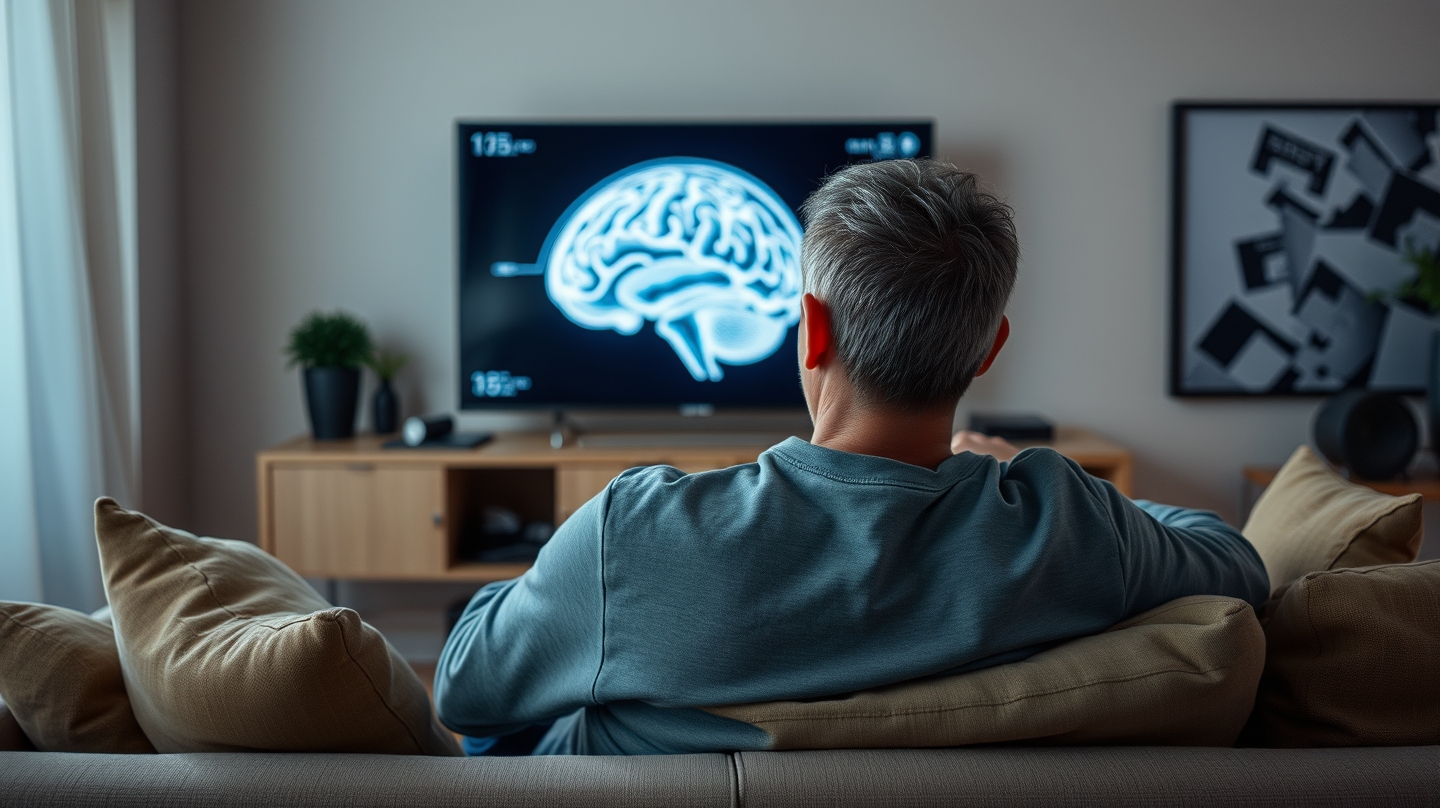
When a beloved evening ritual turns into a hidden health risk, the contrast is stark: millions of mid‑life adults unwind in front of the TV, yet a new study suggests that the same habit may be silently shrinking the very brain structures that support memory and decision‑making.
Researchers at the University of Southern California examined roughly 1,700 participants from the long‑running Atherosclerosis Risk in Communities (ARIC) study. On average, participants were 53 years old when they reported how often they watched television during their free time in the late 1980s. Two decades later, magnetic resonance imaging (MRI) scans revealed that those who described themselves as watching TV "very often" had noticeably smaller frontal and occipital lobes, as well as larger volumes of white‑matter hyperintensities—markers linked to vascular damage, cognitive decline, and dementia.
Crucially, the findings persisted after adjusting for physical activity, diabetes, body‑mass index, smoking, and alcohol consumption. In contrast, participants who spent comparable hours seated at mentally engaging jobs—such as office work that required problem‑solving—showed healthier brain patterns. "For years we've focused on how much people sit. Our findings suggest we should also pay attention to what they're doing while they're sitting," said David Raichlen, professor of biological sciences and anthropology at USC Dornsife College and senior author of the study, published in Alzheimer's and Dementia: Journal of the Alzheimer's Association.
Beyond the immediate health message, the research intersects with broader technological trends reshaping media consumption. Automation and algorithm‑driven recommendation engines have made passive TV viewing more effortless than ever. Streaming platforms curate endless queues that reward binge‑watching, reducing the cognitive engagement required to select content. This automation‑driven media infrastructure, while convenient, may inadvertently amplify the very type of low‑stimulus sitting linked to brain atrophy.
Understanding the nuance is essential. Not all sedentary behavior carries the same risk. The study found no comparable brain changes among participants who reported long hours of seated work, suggesting that mental engagement—whether through problem‑solving, conversation, or interactive digital tasks—mitigates the harmful effects of inactivity. As media technology continues to automate content delivery, the line between passive consumption and active engagement blurs. Interactive formats, such as educational gaming or live‑streamed discussions, could offer a healthier alternative by demanding attention and decision‑making.
Real‑world implications are already emerging. Healthcare providers are beginning to incorporate media‑use questionnaires into routine check‑ups, asking patients not just how long they sit, but what they do while seated. Public‑health campaigns are shifting language from the generic "sit less" to more specific guidance like "choose mentally stimulating activities while you sit." For individuals, simple swaps—opting for a documentary that prompts reflection, engaging in a language‑learning app, or discussing a show with friends—can transform a passive hour into a cognitively active one.
While the study’s observational design cannot prove causation, its longitudinal scope and rigorous controls lend weight to the association. Limitations include reliance on self‑reported TV habits and the lack of data on newer streaming behaviors that have proliferated since the 1990s. Future research will need to address how algorithmic personalization and emerging virtual‑reality experiences influence brain health across the lifespan.
In the meantime, the evidence adds a new dimension to the conversation about screen time. It suggests that the content and context of sitting matter as much as the duration. As technology continues to automate media delivery, individuals and policymakers alike must consider how to embed mental engagement into everyday leisure, preserving brain health while still enjoying the comforts of modern entertainment.




















