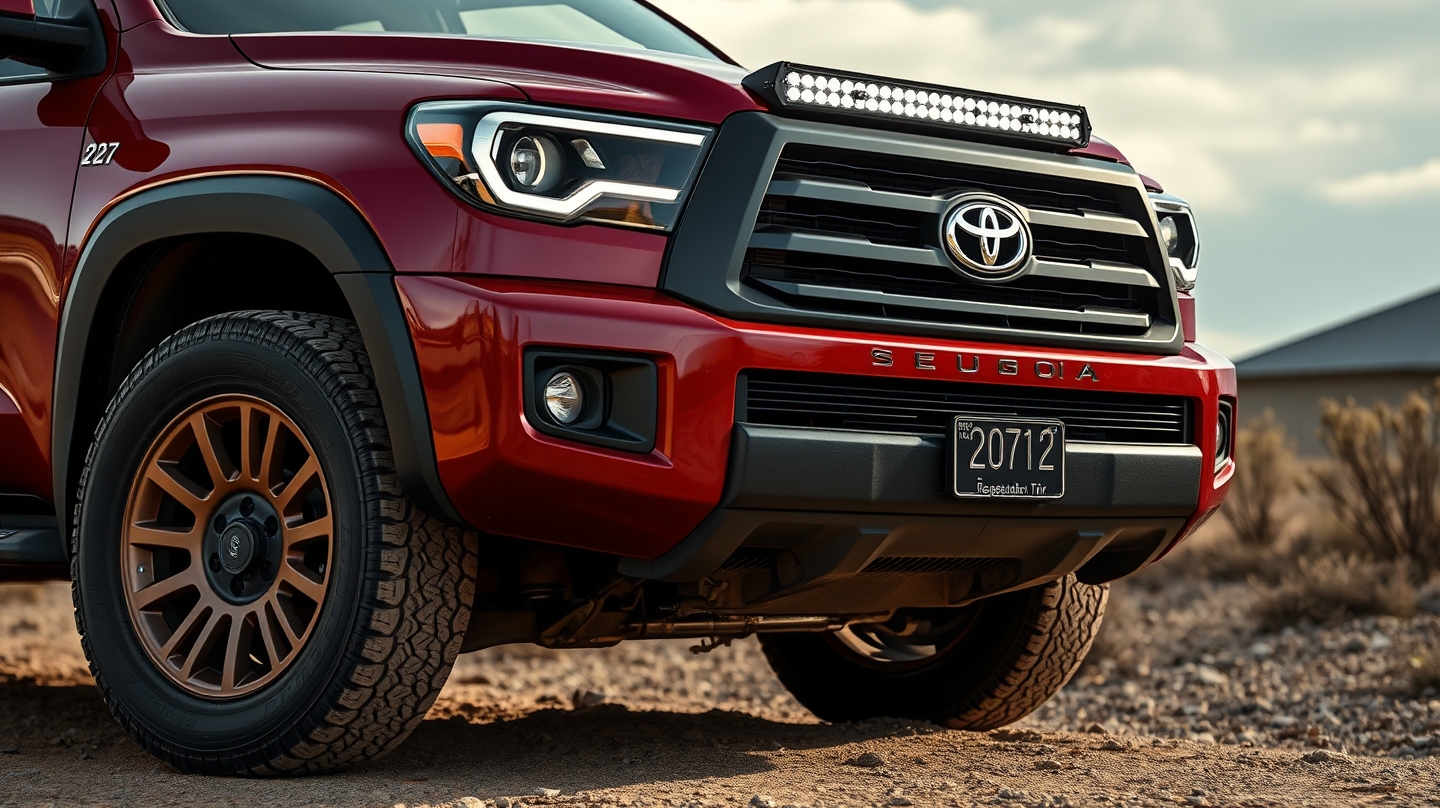
When Toyota unveiled the refreshed 2027 Tundra, the surprise was a new Trailhunter off‑road trim. A few days later the automaker applied the same formula to the Sequoia, its full‑size SUV, swapping a modest facelift for a suite of hardware and software upgrades that blur the line between luxury comfort and serious off‑road capability.
The most visible change is a larger, more pronounced front grille that sits above rectangular fog lights integrated into a chunkier lower bumper. While the exterior tweak is subtle, the interior receives a far bigger leap: every Sequoia now ships with a 14.0‑inch touchscreen, replacing the previous 8.0‑inch panel found on the base SR5. The new screen runs the latest version of Toyota’s infotainment system, adding voice‑assistant functions, a built‑in dash‑camera that records 20‑second clips, and faster access to navigation and media.
Under the hood, the Trailhunter package builds on the SR5 trim and brings in off‑road specialists. Old Man Emu, the Australian suspension tuner that already outfits the Tacoma Hybrid Trailhunter and 4Runner Hybrid, supplies a reinforced suspension kit. Michelin LTX Trail 265/70R‑18 tires, a locking rear differential, front recovery hooks, and extra under‑body armor round out the mechanical upgrades. Visually, bronze wheels and Trailhunter badges signal the rugged intent.Technology is the other half of the equation. The Sequoia shares the TNGA‑F platform and optional hybrid powertrain with the Tundra, allowing Toyota to spread development costs while delivering a consistent driving feel across its large‑vehicle lineup. Safety Sense 4.0 receives a hardware refresh, improving adaptive cruise control, automatic high‑beams, and emergency braking detection. Multi‑Terrain Select drive modes and Crawl Control, already familiar to Toyota’s off‑road fans, are now standard on the Trailhunter.
These updates matter beyond the showroom floor. The larger touchscreen and integrated dash‑camera illustrate how automakers are turning vehicles into data‑rich platforms. For owners, the dash‑camera offers concrete evidence in the event of a collision or insurance claim, while voice‑assistant integration reduces driver distraction. The hybrid powertrain, meanwhile, aligns the Sequoia with tightening emissions standards and growing consumer demand for fuel‑efficient large SUVs.
From a production standpoint, platform sharing between the Tundra and Sequoia reduces part variance and streamlines assembly lines—a form of automation that lowers costs and shortens development cycles. This approach mirrors broader industry trends where manufacturers leverage a single architecture to serve trucks, SUVs and even crossovers, accelerating technology adoption across segments.
Market analysts see the Trailhunter as a response to a niche but growing segment of buyers who want premium comfort without sacrificing off‑road capability. The bronze‑finished wheels and rugged accessories appeal to outdoor enthusiasts, while the upgraded infotainment and safety suite keep the vehicle relevant to tech‑savvy families. As more competitors introduce similar hybrid‑powered, tech‑laden SUVs, Toyota’s move reinforces its strategy of incremental innovation rather than radical redesign.
Looking ahead, the Sequoia’s new media infrastructure—voice control, dash‑camera, larger screen—sets a baseline for future over‑the‑air updates. As software becomes a larger differentiator, owners may see new features added long after purchase, echoing trends seen in smartphones and connected home devices.
The 2027 Sequoia will be offered in six trims: SR5, Limited, Platinum, 1794 Edition, TRD Pro and Capstone. Pricing and full specifications are expected before the model hits showrooms this fall, but the combination of off‑road hardware and advanced in‑vehicle technology positions the Trailhunter as a compelling option for buyers seeking both capability and connectivity.




















