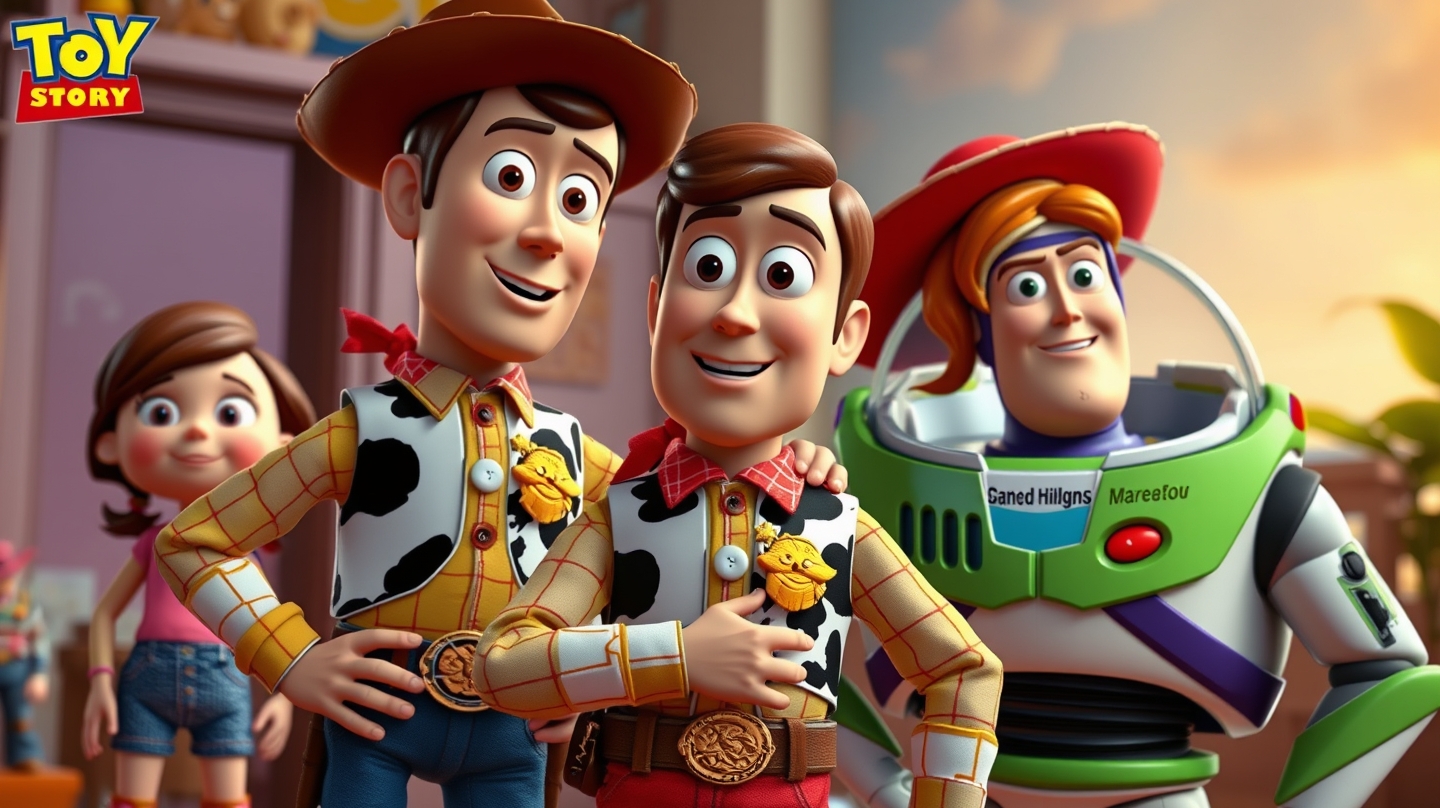
The cinematic world is abuzz with the news of Toy Story 5's monumental box office success, as it hurtles towards the largest opening of the year, with estimates suggesting a whopping $160 million. This feat is all the more impressive given that the film has already achieved the second-biggest opening day for an animated feature, raking in $71 million, just shy of The Incredibles 2's $72.2 million in 2018.
Audiences have warmly received the film, awarding it an A CinemaScore, and its performance is outpacing that of its predecessor, Toy Story 4, which debuted with $120.9 million in June 2019. The success of Toy Story 5 can be attributed, in part, to the visionary direction of Andrew Stanton, who is joined by co-director Kenna Harris.
Meanwhile, other films are experiencing varied degrees of success. Steven Spielberg's Disclosure Day, for instance, is witnessing a significant drop of 69 percent in its second weekend, with projected earnings of around $17 million, bringing its domestic total to approximately $78 million. On the other hand, Focus Features' Obsession continues to defy expectations, entering its sixth weekend with a predicted $14 million, thereby crossing the $215 million mark domestically.
New releases, such as the Neon horror feature Leviticus and Hugh Jackman's The Death of Robin Hood, are also vying for attention, with the former expected to garner around $3 million and the latter eyeing $2.5 million. These films, each in their unique way, contribute to the rich tapestry of the cinematic landscape, reflecting the diverse tastes and preferences of modern audiences.
The success of Toy Story 5, however, raises interesting questions about the future of animation and the cinema industry as a whole. As we witness a gradual transition from traditional media to digital platforms, films like Toy Story 5 serve as a testament to the enduring power of storytelling and the impact of technological advancements on the cinematic experience. This shift not only changes how we consume movies but also influences the types of stories that are told and how they are produced.
Furthermore, the box office performance of Toy Story 5 and other films underscores the importance of understanding audience behavior and market trends in the cinema industry. The ability of a film to connect with its audience, to evoke emotions, and to spark conversations is crucial in today's competitive entertainment landscape. As such, the success of Toy Story 5 can be seen as a reflection of the industry's capacity to evolve, to innovate, and to cater to the changing preferences of moviegoers.




















