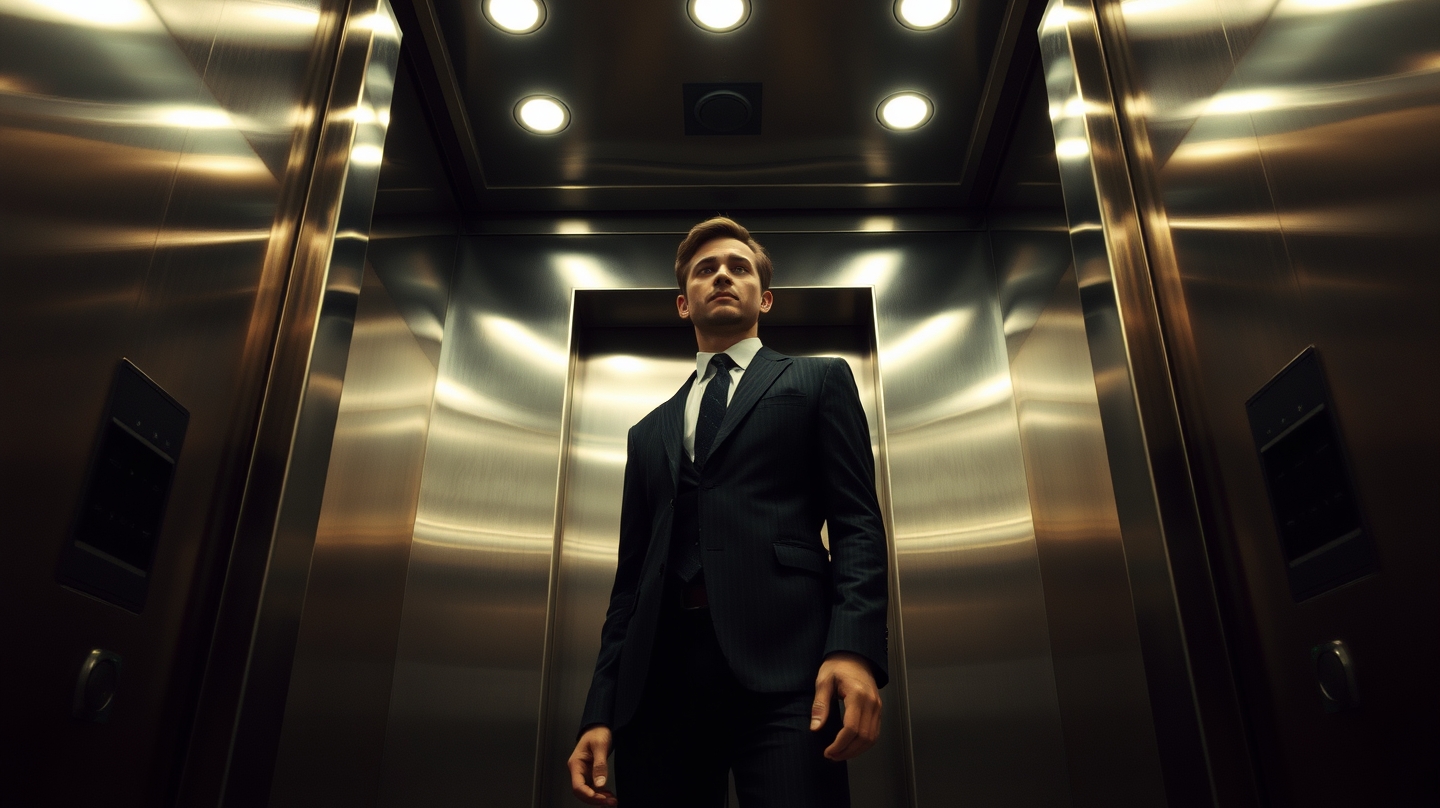
In the 18th century, a small cabin suspended by ropes was installed in a courtyard of the Palace of Versailles for the private use of King Louis XV. This 'flying chair' allowed movement between floors without stairs and introduced one of the central questions of modern architecture: how to move people vertically in a way that is efficient, safe, and integrated into the building.
The mechanization of this principle, with the introduction of a safety elevator in the early 1850s, paved the way for an unprecedented urban transformation. Without the elevator, the skyscrapers of Chicago and New York in the 1880s would have been unfeasible not because of structural limitations, but because of access.
The elevator made it possible to build higher, and it also defined the logic of how these buildings would operate, where their cores would be placed, how their lobbies would be organized, and who could reach which spaces. Even with widespread adoption of elevator call buttons in the 1950s, this logic remained relatively simple: press a button, choose a floor, arrive at your destination.
However, as buildings became taller, denser, and more programmatically complex, vertical mobility began to require a radically different approach, one less focused on serving a static core and more centered on managing flows. The traditional system based on 'up' and 'down' buttons could not anticipate where passengers were going, group them according to nearby destinations, or reduce unnecessary stops.
This limitation was addressed by the introduction of destination control systems, such as Schindler Miconic 10, which allowed passengers to enter their destination floor before stepping into the elevator. With destinations known in advance, the system could group passengers with compatible routes, reduce unnecessary stops, and distribute flows more evenly across the available cabins.
The impact of this technology-driven automation and workflow transformation can be seen in the way buildings are designed today. The lobby is no longer just a place to wait, but a threshold where the building's internal logic has to become clear to its users. The elevator hall is no longer simply the leftover area in front of the doors, but a critical component of the spatial experience.
The New York Marriott Marquis at Times Square is a prime example of this, with its signature cylindrical elevator core housing 16 passenger units. The introduction of destination dispatch in this hotel has transformed the way people move through the building, making it a model for contemporary architecture.
The evolution of vertical mobility is not just about technology; it's about how we design buildings to meet the needs of their occupants. As we continue to push the boundaries of what is possible, we must consider the impact of our designs on the people who use them. By prioritizing efficiency, safety, and integration, we can create buildings that are not just functional, but also beautiful and sustainable.




















