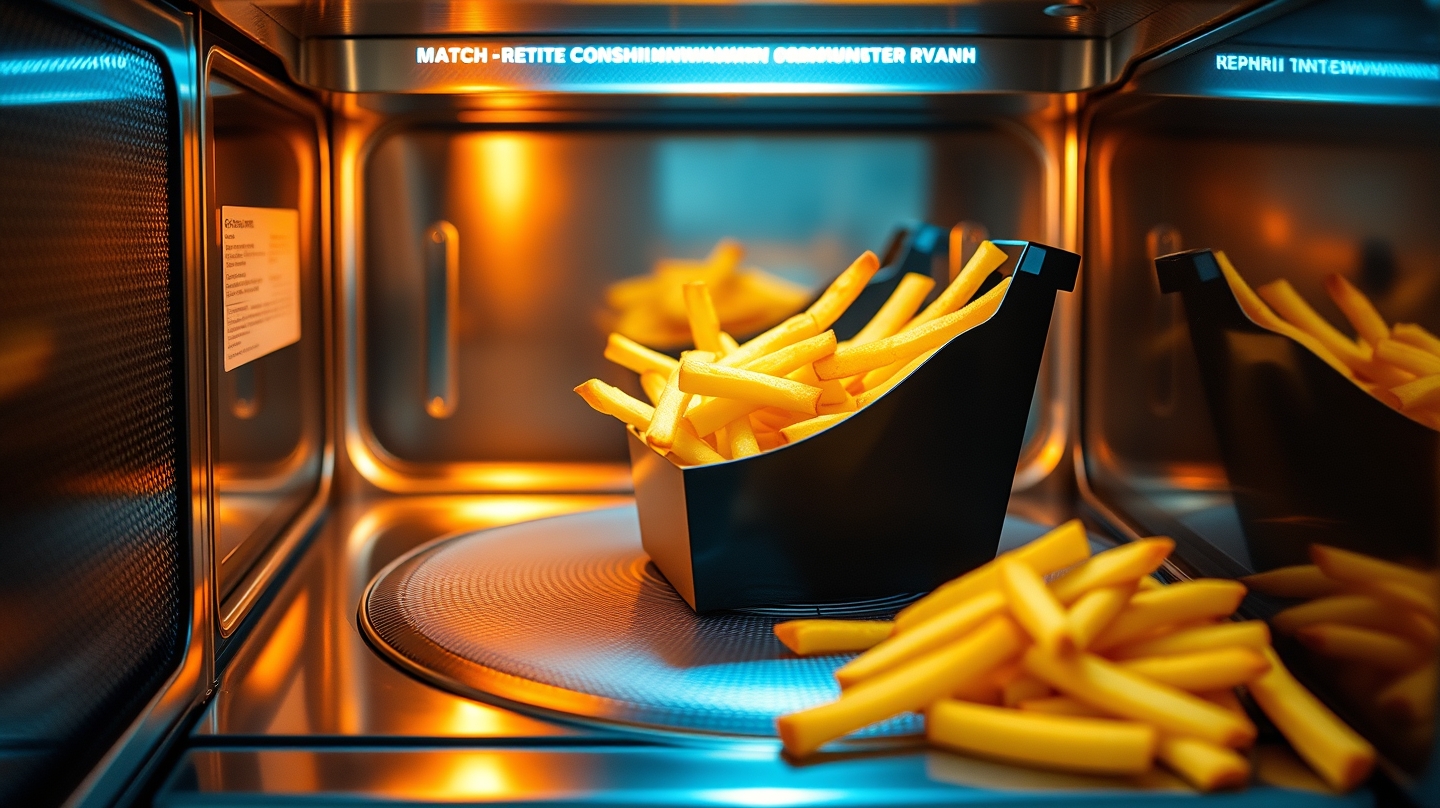
Imagine biting into a golden French fry that tastes exactly like the deep‑fried version you crave, yet contains far less oil. Researchers at the University of Illinois Urbana‑Champaign have paired microwave energy with traditional frying to achieve just that, sparking a potential shift in how the food industry approaches a beloved staple.
The team, led by Professor Pawan Singh Takhar of the Department of Food Science and Human Nutrition, combined a dual‑frequency microwave fryer—capable of operating at 2.45 GHz and 5.8 GHz—with a conventional hot‑oil bath. Potatoes were peeled, cut, blanched, salted, and then subjected to a brief microwave pre‑treatment before the final fry at 180 °C. By measuring temperature, internal pressure, moisture loss, and oil uptake, the researchers mapped how water vapor escaped and how oil entered the porous structure of the fry.
Results showed that the microwave step accelerated water evaporation, creating a pressure gradient that limited oil infiltration when the fries entered the oil. Compared with standard frying, the hybrid method reduced oil absorption by roughly 35‑40 % while preserving the crisp exterior and fluffy interior that consumers expect. Cooking time also dropped by about 20 %, offering efficiency gains for commercial kitchens.
Why does this matter? Fried foods contribute significantly to dietary fat and calorie intake, linking them to obesity, hypertension, and related chronic diseases. A scalable technique that trims fat without compromising flavor could help public‑health initiatives aimed at reducing excessive oil consumption, especially in fast‑food contexts where fries are a top‑selling item.
Beyond health, the method illustrates a broader trend: integrating electromagnetic technologies into traditional food‑processing lines. The dual‑frequency fryer, originally developed in collaboration with Washington State University, demonstrates how precise control of microwave energy can be woven into existing workflows, reducing energy use and cooking time. This aligns with the food‑tech industry’s push toward automation and smarter equipment that delivers consistent quality while lowering operational costs.
Real‑world implications are already emerging. Several regional quick‑service chains have begun pilot testing the hybrid system in select outlets, reporting lower oil usage and faster service turnover. For consumers, the change could translate into menu items marketed as “reduced‑fat” without sacrificing the indulgent texture that drives repeat purchases.
From a structural perspective, the research highlights a workflow transformation: a pre‑process microwave stage that prepares the food matrix before conventional heat application. This two‑step architecture mirrors automation trends in other sectors, where an initial rapid conditioning step—often digital or electromagnetic—optimizes the material for a subsequent mechanical operation.
Looking ahead, the technology could extend to other fried products such as onion rings, chicken nuggets, or even battered fish. By adjusting microwave frequency and power, manufacturers might fine‑tune moisture removal and crust formation for a variety of textures. Moreover, the reduced oil demand eases supply‑chain pressures on vegetable oil markets, potentially lowering costs and environmental footprints associated with oil production.
While the findings are promising, broader adoption will hinge on equipment cost, regulatory approvals, and consumer perception. Nonetheless, the study provides a data‑backed pathway for the food industry to reconcile taste, health, and efficiency—a balance that has long eluded traditional frying.




















