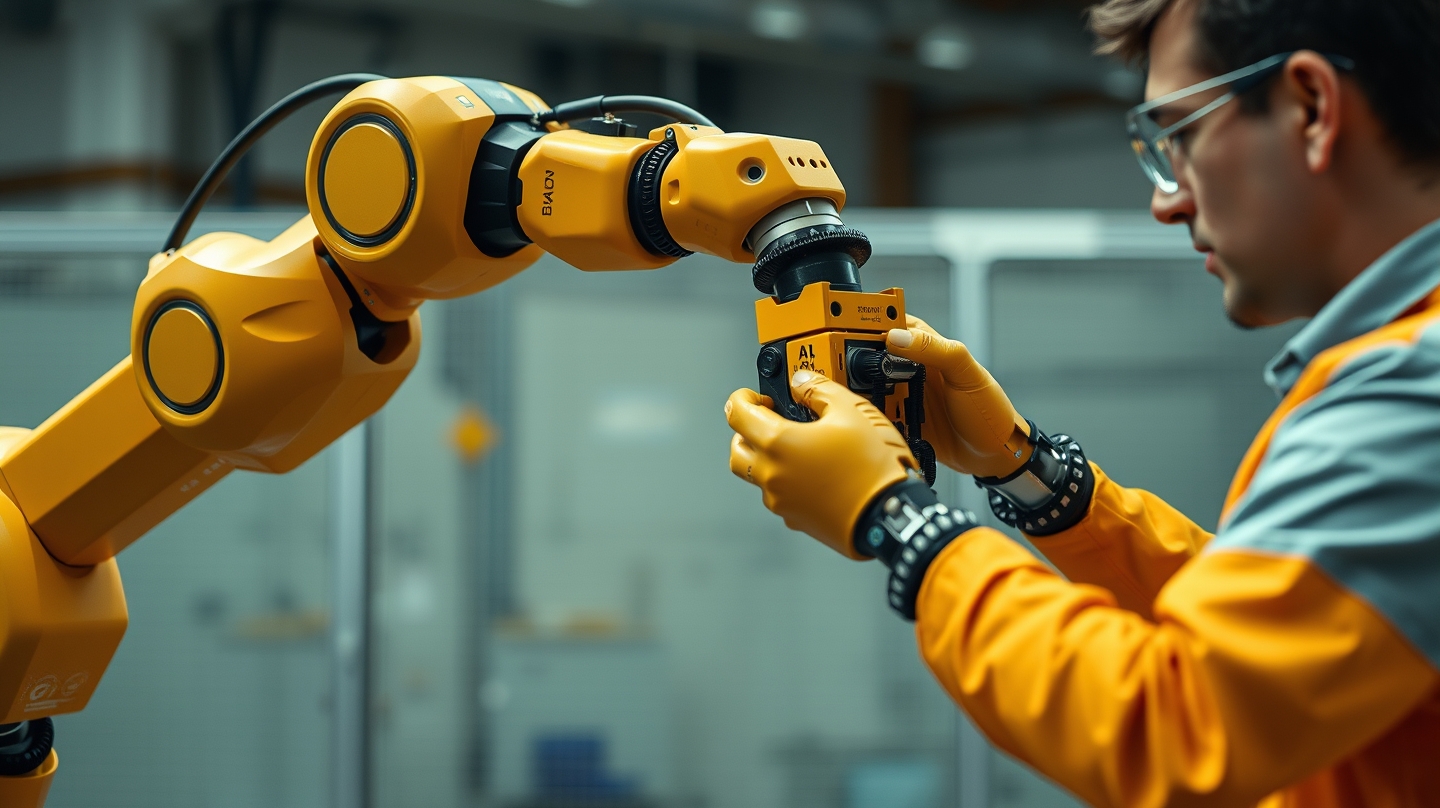
When most robotics firms announce a new model, the headline focuses on hardware; X Square Robot flips the script by putting its software stack on the public road. The move creates a rare experiment: can an openly shared, data‑centric architecture shrink the gap between laboratory demos and production‑ready robots?
The company’s “World Unified Model” bundles three components – a world‑prediction engine, an action generator, and a data‑collection pipeline – into a single code base. Unlike traditional stacks that treat perception, planning and control as separate modules, X Square’s approach treats every robot interaction as a unit of learning. A demonstration is counted only when it actually changes the environment, not merely when joint angles move.
Why does this matter? Robotics has long been hamstrung by the cost and inconsistency of interaction data. X Square’s Universal Manipulation Interface (UMI) captures human‑guided demonstrations through a dual‑gripper rig, then validates each trajectory by replaying it on a real robot. Only successful replays are kept, turning data quality into a measurable metric. The company argues that a smaller, cleaner dataset can outweigh the brute‑force scaling strategies popular in large‑language‑model research.
From an industry perspective, the stack could lower the barrier for manufacturers that lack deep AI expertise. By releasing the code openly, X Square invites academic labs, system integrators, and even media‑infrastructure providers to plug the stack into existing hardware. The result may be a faster diffusion of automation across sectors that have been slow to adopt robotics, such as broadcast studios, where repetitive handling of equipment still relies on manual labor.
One structural insight emerges from the stack’s emphasis on physical events rather than fixed time slices. By aligning the model’s predictions with observable changes – a door closing, a package being lifted – the system can generalize across tasks that share similar outcomes, even if the motions differ. This event‑centric view mirrors trends in video‑understanding research, where temporal anchors improve transferability.
Real‑world implications are already surfacing. A pilot deployment at a Chinese electronics assembly line reported a 30% reduction in failed pick‑and‑place attempts after integrating the open‑source stack with legacy robot arms. The improvement stemmed not from new hardware but from the stack’s ability to reject low‑quality demonstrations during training, ensuring that only robust behaviors are reinforced.
Broader adoption could reshape the automation landscape. As more firms adopt a common software foundation, interoperability between robots from different vendors becomes feasible, echoing the open‑source standards that accelerated cloud computing. Moreover, the data‑centric philosophy may influence how media companies automate content handling – from ingesting raw footage to routing assets – by treating each handling step as a verifiable interaction.
Nevertheless, challenges remain. The stack’s reliance on high‑fidelity replay hardware means smaller players may need to invest in calibration rigs before they can benefit. Additionally, open‑source projects often face fragmentation if divergent forks emerge. X Square’s commitment to a single code base and its public benchmarking portal aim to mitigate those risks, but the ecosystem will need clear governance to stay cohesive.
In sum, X Square Robot’s open‑source embodied‑AI stack offers a concrete alternative to the “bigger‑is‑better” data strategy that dominates much of AI research. By prioritizing interaction quality, event‑based modeling, and community access, the company positions itself at the intersection of technology adoption and industry transformation – a space where the next wave of automation could be built on shared, verifiable intelligence.




















