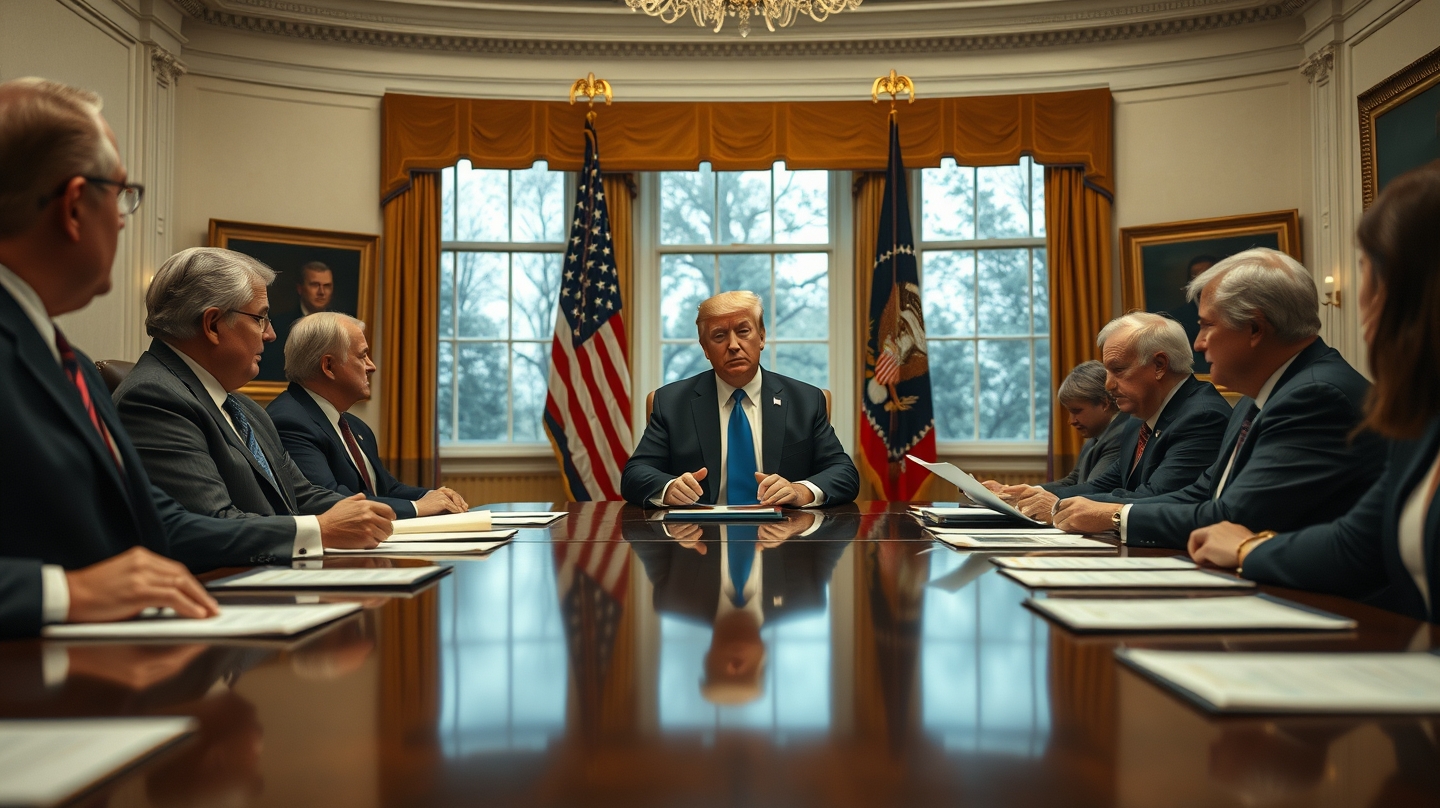
President Donald Trump is scheduled to sit down with a bipartisan group of senators on Thursday, a meeting that insiders say is aimed at breaking the last deadlock in the Digital Asset Market Clarity Act – the ethics provision that would bar senior officials from holding personal stakes in crypto firms.
The bill, championed by Republican senators such as Cynthia Lummis and Bernie Moreno, cleared the Senate Banking Committee with a 15‑9 vote but stalled on the question of conflict‑of‑interest rules. Democrats, including Ruben Gallego and Angela Alsobrooks, have made the ethics language a condition of their support, citing Trump’s own reported $1 billion crypto earnings in 2025 as a potential conflict.
“We’ll be talking about the entirety of the bill,” Moreno told reporters. “The president’s been very engaged in this bill, and he’s the one who’s really driven the innovation that I think will pay dividends.” The president’s engagement, however, is double‑edged: while he has urged the Senate to pass the legislation, he has not disclosed which version of the ethics clause he would sign.
Negotiators are racing against a narrow Senate calendar. Majority Leader John Thune hopes to bring the measure to the floor before the August 7 deadline that marks the end of the current work period and the start of the chamber’s summer recess. If the Senate fails to act, the bill could be delayed until after the November midterms, a scenario that would likely dampen market enthusiasm.
Why it matters: The ethics provision is more than a political footnote. Institutional investors, from pension funds to corporate treasuries, have long cited regulatory uncertainty as a barrier to allocating capital to digital assets. A clear rule that separates government officials from crypto holdings would address a key compliance risk, potentially unlocking billions of dollars of institutional flow.
Market reaction: Already, crypto exchanges and custodians have hinted that a clean passage could accelerate the launch of regulated products. In contrast, a stalemate or a watered‑down ethics clause could keep the market in a holding pattern, with price volatility persisting as investors await clarity. Analysts at Galaxy Research have placed the odds of passage at an even 50‑50, reflecting the tight timeline and the political calculus.
Real‑world implication: The NFL, which recently signed a multi‑year partnership with a major crypto sponsor, has publicly said it will monitor the legislative outcome before expanding its own crypto‑related advertising. That stance underscores how the bill’s fate ripples beyond Wall Street to mainstream brands that are testing the waters of digital‑asset sponsorship.
Beyond the immediate financial impact, the Clarity Act signals a broader trend toward technology‑driven automation and workflow transformation in financial regulation. By codifying ethics rules, lawmakers aim to create a predictable environment where automated compliance tools can operate without fearing sudden policy reversals.
Structural insight: The bill’s journey illustrates how a single clause can become the fulcrum of a larger legislative effort. The Senate’s procedural schedule, the need for bipartisan sponsorship, and the timing of the summer recess together create a high‑stakes negotiation window that forces both sides to prioritize the ethics language over other provisions.
In the coming days, the White House meeting will likely produce a revised draft, though it remains unclear whether the ethics language will be fully incorporated or deferred for later debate. Whatever the outcome, the decision will shape how quickly the crypto market can move from a speculative niche to a regulated asset class that institutional players feel comfortable entering.




















