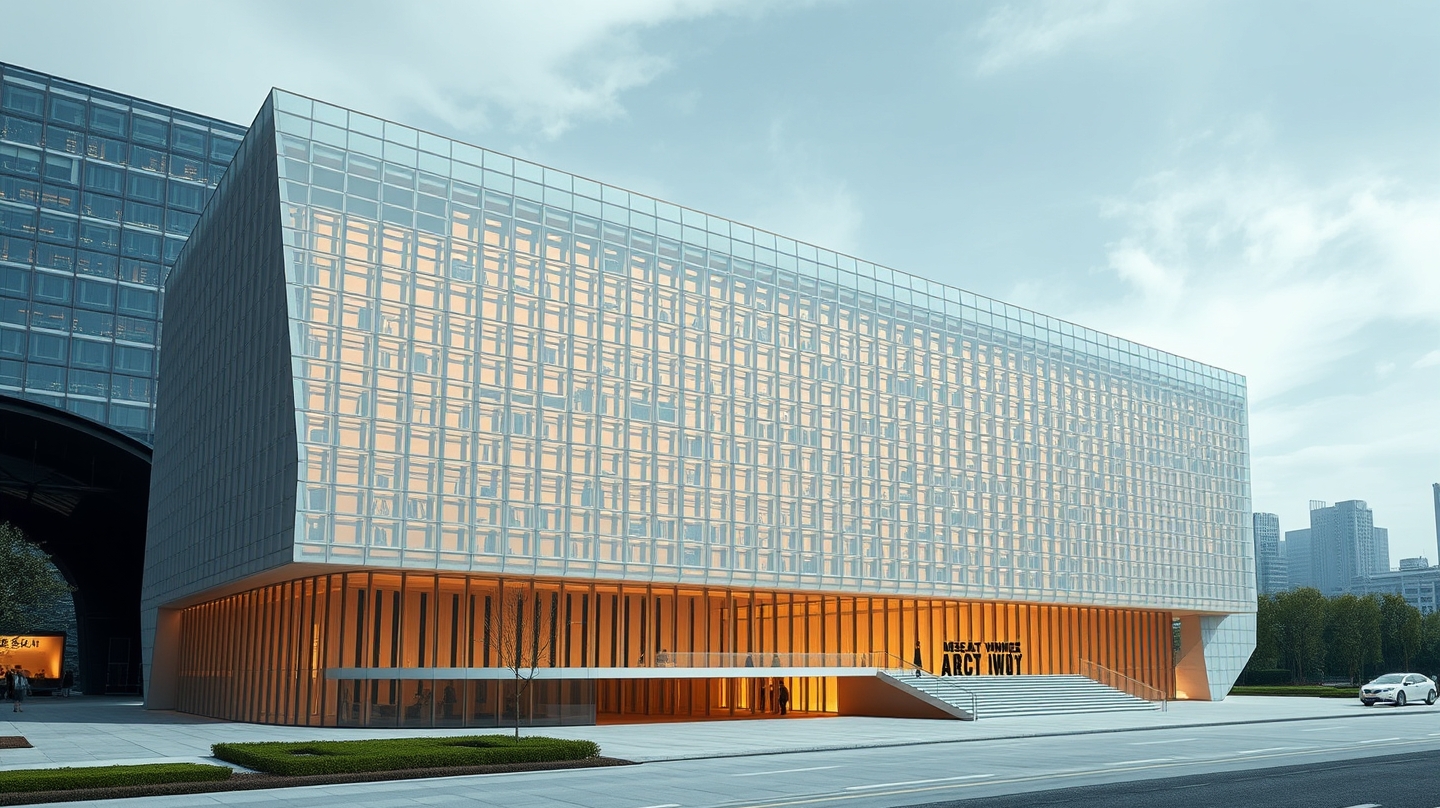
When the Museum of Art Pudong (MAP) opened its doors to "Jean Nouvel: Without the Artist, Architecture Disappears," the exhibition immediately turned the museum’s own shell into a narrative device. Designed by Nouvel between 2015 and 2021, the building is no longer a neutral backdrop; it is an active participant that demonstrates how automation, digital archives, and immersive media can transform a cultural institution’s storytelling toolkit.
The show, which runs until August 31, 2026, marks MAP’s fifth anniversary and the first solo presentation of Nouvel’s work inside a structure he designed. Curated in partnership with Ateliers Jean Nouvel, the program assembles models, large‑scale films, archival drawings, and a full reconstruction of the Paris studio. Yet the most striking element is the integration of site‑specific audiovisual installations that react to the museum’s light, materiality, and river‑front context—an explicit nod to Nouvel’s lifelong focus on perception.
Beyond the aesthetic, the exhibition is a case study in technology‑driven workflow. The studio reconstruction is not a static replica; it hosts a cloud‑based digital archive that visitors can explore via touch‑screens and QR‑linked video interviews. This infrastructure relies on automated metadata tagging, enabling rapid retrieval of design sketches, BIM models, and construction photographs spanning five continents. By exposing the archival process, MAP illustrates how contemporary museums are adopting the same automation pipelines that architectural firms use to manage complex projects.
Nouvel’s portfolio, from the Philharmonie de Paris to the National Museum of Qatar, is presented alongside interactive timelines that map each project’s digital development stages. Visitors can watch a time‑lapse of a BIM model morphing from concept to construction, underscoring how computational design tools have become integral to architectural practice. The exhibition therefore answers a broader question: how does the rise of digital fabrication and data‑rich workflows affect the public’s perception of built works?
Industry observers note that MAP’s approach could signal a shift for cultural venues worldwide. By embedding the building within its own narrative and leveraging automated media pipelines, museums can reduce reliance on external production teams, lower costs, and offer more dynamic visitor experiences. The model aligns with a growing trend where institutions treat their physical spaces as programmable platforms, capable of updating content in real time based on sensor data or visitor interaction.
For architects, the exhibition reinforces a longstanding principle in Nouvel’s oeuvre: architecture must respond to its specific context. Yet the context now includes digital infrastructure. The “Without the Artist, Architecture Disappears” title, borrowed from Nouvel’s 2025 publication, invites viewers to consider the invisible labor—software, data, and automated processes—that underpins every realized form. By making that labor visible, MAP challenges the myth of the solitary genius and highlights the collaborative, technology‑enabled nature of modern design.
Real‑world implications are already emerging. Several Asian museums have announced pilot programs to integrate AI‑curated tours and automated lighting systems modeled after MAP’s installations. Meanwhile, architectural firms are exploring public‑facing digital archives as a marketing tool, echoing the studio reconstruction’s open‑access philosophy. The exhibition thus sits at the intersection of cultural heritage, technological adoption, and industry transformation.
In addition to the digital layers, the physical exhibition retains the tactile richness of Nouvel’s practice. Scale models of the Shenzhen Opera House, the Shanghai Start Museum, and the Tencent Guangzhou Headquarters sit beside conceptual studies for unrealized projects like Tour Sans Fins. This juxtaposition of realized and speculative work, presented through both analog and automated media, offers a holistic view of an architect’s iterative process.
Jean Nouvel’s career, punctuated by the 2008 Pritzker Prize, the Royal Gold Medal, and the Golden Lion at the 2000 Venice Architecture Biennale, has always been defined by a dialogue between material, light, and place. MAP’s exhibition expands that dialogue to include data, automation, and the evolving expectations of museum audiences. As cultural institutions grapple with budget constraints and the demand for immersive experiences, the exhibition provides a blueprint for leveraging technology without sacrificing intellectual rigor.
Ultimately, "Without the Artist, Architecture Disappears" does more than celebrate a singular career; it maps the current terrain where architecture, media infrastructure, and automation intersect. Visitors leave with a clearer sense of how digital tools shape not only the buildings we inhabit but also the stories we tell about them.




















