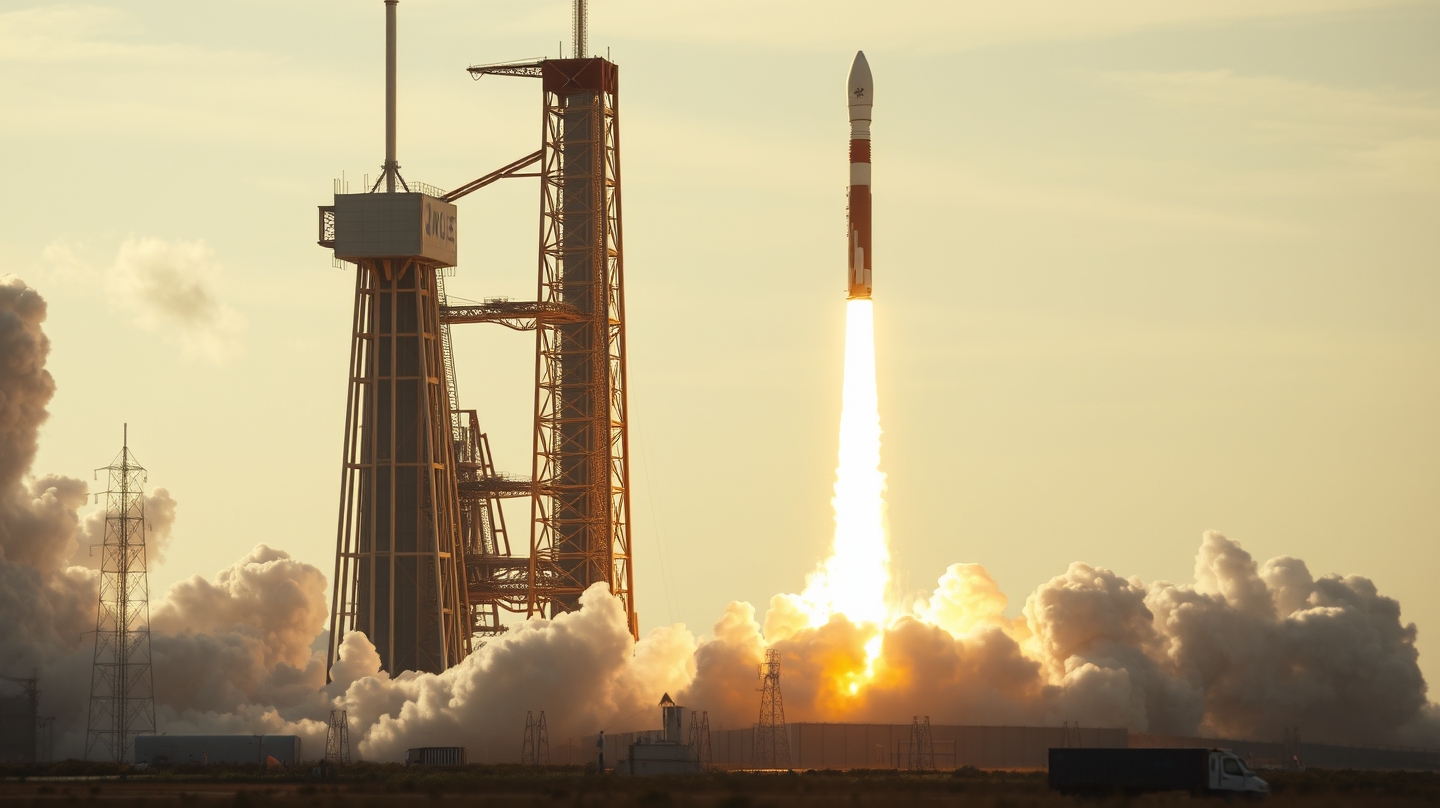
More than a dozen Wall Street analysts have converged on a bullish outlook for Space Exploration Technologies Corp. (NASDAQ:SPCX) this week, setting 12‑month price targets that collectively suggest a potential 35% rally from today’s price. The surge of coverage, however, does more than lift a ticker—it signals a broader confidence in SpaceX’s technology‑driven automation strategy and its ripple effects across media‑infrastructure markets.
On July 7, 2027, Raymond James analyst Brian Gesuale initiated coverage with a “Strong Buy” rating and a $800 target, implying a near‑400% upside. Clear Street’s Brian Dobson, Stifel Nicolaus’s Jonathan Siegman, Wells Fargo’s Ken Gawrelski, and a roster of peers from Citigroup, Morgan Stanley, Goldman Sachs, UBS, William Blair, Bernstein, JPMorgan, RBC Capital, Macquarie, Cantor Fitzgerald, Mizuho, and Needham followed suit, delivering targets ranging from $190 to $250. TipRanks aggregates these forecasts into an average target of $216.48, while SPCX currently trades around $160.42, up 18% since its June IPO.
The consensus matters for three reasons. First, a unified bullish stance reduces perceived valuation risk, encouraging institutional capital to allocate more weight to SPCX in diversified portfolios. Second, the price targets are anchored in SpaceX’s expanding automation suite—ranging from reusable launch systems to satellite‑based broadband that underpins next‑generation media distribution. Finally, the coverage highlights a market shift: investors are rewarding firms that embed automation into core revenue streams, a trend echoed in cloud‑computing and AI‑driven content platforms.
SpaceX’s automation agenda extends beyond rockets. Its Starlink constellation is being positioned as a backbone for low‑latency video streaming, remote production, and real‑time data analytics. By offering a global, high‑capacity network, the company is effectively building a media‑infrastructure layer that could displace traditional fiber‑optic providers. Analysts such as Morgan Stanley’s Adam Jonas cite the “synergy between launch cadence and broadband rollout” as a catalyst for earnings growth, justifying higher price targets.
From an industry perspective, the analyst chorus underscores a broader transformation: technology adoption is no longer confined to software firms; hardware‑intensive companies like SpaceX are now central to the automation narrative. The ripple effect is visible in adjacent sectors—media companies are exploring satellite‑direct feeds to cut latency, while advertisers anticipate more precise audience targeting through real‑time data streams enabled by SpaceX’s network.
Investors, however, should weigh the structural insight that analyst consensus can amplify short‑term price momentum but does not guarantee long‑term performance. The average target of $216 reflects optimism about upcoming launch contracts and the anticipated scaling of Starlink services, yet it also assumes successful navigation of regulatory hurdles and competitive pressures from emerging low‑Earth‑orbit constellations.
In practical terms, the bullish outlook could influence corporate budgeting decisions. Media firms may accelerate partnerships with SpaceX to secure satellite bandwidth, while telecom operators might reconsider capital expenditures on terrestrial infrastructure. The downstream effect is a subtle reshaping of the technology‑driven automation landscape, where space‑based assets become integral to everyday digital workflows.
Overall, the wave of coverage does more than lift SPCX’s price; it spotlights how a company rooted in aerospace is becoming a linchpin of automation‑enabled media infrastructure. As analysts continue to refine their models, the market will watch closely to see whether SpaceX can translate its technical ambitions into sustainable financial returns.




















