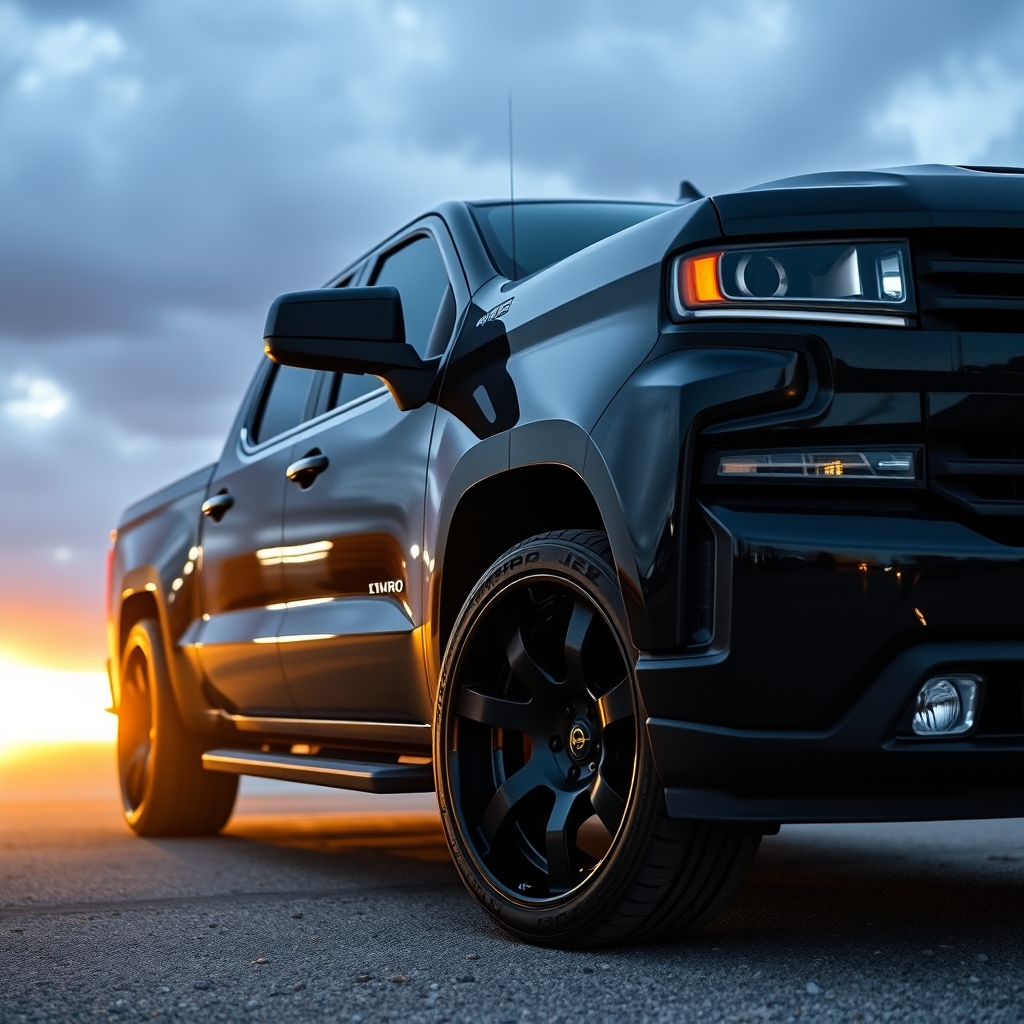
When Fox Factory, a name most enthusiasts associate with mountain‑bike shocks and trophy‑truck suspension, announced a lowered Chevrolet Silverado 1500 that drops three inches and pushes 675 horsepower, the contrast is striking. The Black Widow SR takes a work‑horse platform built for hauling and transforms it into a street‑ready muscle machine, all while keeping the payload and towing capacity that fleets rely on.
At its core, the truck is a 2024 Chevrolet Silverado 1500 equipped with a 6.2‑liter supercharged V‑8 that delivers 675 hp and 655 lb‑ft of torque. The powerplant sits behind a reinforced chassis, a 22‑inch wheel package wrapped in 305‑series sticky rubber, and a custom‑fabricated grille that hints at the vehicle’s aggressive intent. The suspension drop, engineered with computer‑aided design and CNC‑machined components, reduces body roll and raises the center of gravity just enough to improve cornering without compromising the 13,300‑lb towing limit.
Fox Factory’s involvement goes beyond bolt‑on parts. The company uses a closed‑loop automation workflow that starts with virtual simulations of load paths, proceeds through robotic machining of suspension arms, and finishes with a data‑driven quality‑control stage that logs torque specifications for every bolt. This technology‑driven process mirrors the automation trends reshaping the broader automotive supply chain, where manufacturers rely on digital twins and AI‑assisted testing to cut development cycles.
For buyers, the implications are immediate. The Black Widow starts at $84,685, but the supercharged version climbs past $101,000 once optional Brembo brakes, a retractable tonneau cover, and premium paint finishes are added. While the price tag places the truck in the luxury segment, the payload remains at 1,980 lb, meaning owners can still tow a trailer or haul a classic dragster without sacrificing performance. In real‑world terms, a contractor who needs a capable work vehicle can also enjoy weekend track days, blurring the line between utility and lifestyle.
Beyond the showroom, the launch reflects a shift in how automakers and aftermarket specialists approach vehicle customization. Digital configurators on manufacturer websites now let customers select suspension drops, wheel sizes, and power upgrades with real‑time pricing. This data feeds directly into production planning systems that use robotic assembly lines to install the chosen components, reducing lead times that once stretched months.
Industry analysts see the Black Widow as a case study in how automation is enabling niche, high‑margin products. Fox Factory’s ability to offer a factory‑supported, warranty‑backed package—rather than a DIY aftermarket build—relies on a supply chain that can scale small‑batch production while maintaining the quality standards expected from a billion‑dollar brand. The same principles are being applied in media infrastructure, where automated content pipelines deliver video reviews, 3D renders, and interactive specs to consumers across social platforms, ensuring the story of a new truck reaches the right audience at the right moment.
While the Silverado market remains dominated by lifted, off‑road variants, the Black Widow demonstrates that there is demand for a refined, performance‑focused pickup. If the model succeeds, other manufacturers may follow suit, offering lowered, high‑output versions of their own trucks. The ripple effect could influence dealer inventories, financing packages, and even insurance underwriting, as risk models adjust to vehicles that combine heavy‑duty capability with sports‑car dynamics.
In the end, the Black Widow is less about shock value and more about showcasing how a disciplined, technology‑first approach can repurpose an existing platform for a new market segment. It underscores a broader industry narrative: automation is no longer a back‑office tool; it is the engine driving product differentiation, speed to market, and the ability to meet increasingly specific consumer expectations.




















