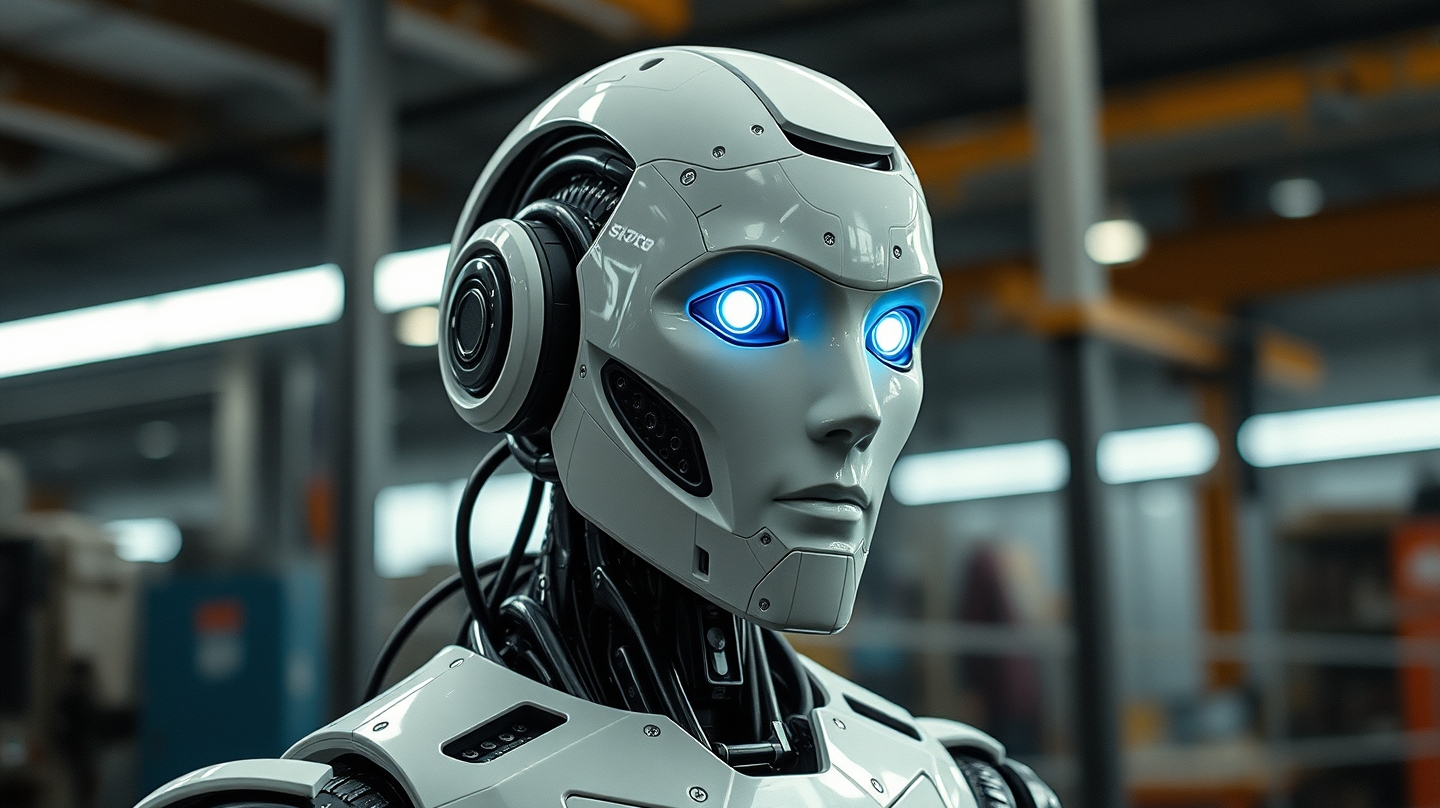
Genesis AI has unveiled Eno, a general-purpose robot that is set to transform the way we approach automation and workflow transformation. Powered by GENE, the company's foundation model, Eno is designed to deliver value to society and excel in the real world through intentional design and a single, comprehensive system.
According to Zhou Xian, co-founder and CEO of Genesis AI, 'The only path to creating a robot that can truly deliver value to society and excel in the real world is through intentional design and a single, comprehensive system.' Eno is an important step forward for what general-purpose robots can help society achieve, and it is just the beginning.
Genesis plans to begin Eno's production and targeted customer deployments by the end of 2026. The mobile manipulator will roll out first with industrial customers, including manufacturing, logistics companies, and laboratories, followed by service industry customers such as hotels and hospitals, with consumer home and outdoor applications to follow.
Eno's design is guided by a philosophy of essentiality and intention. Rather than mimicking a fully-human appearance, the company designed Eno around human capability, prioritizing mobility, dexterity, and real-world functionality. The robot's minimalist tower of articulated panels can adjust its height and reach in real-time and fold down for compact storage while not in use.
At the center of the system are arms fitted with Genesis AI's proprietary dexterous robotic hands, which match the form and function of human hands. This allows Eno to easily interact with tools, objects, and environments already designed with humans in mind.
Genesis says AI and hardware go hand in hand, and Eno was designed in tandem with GENE, the company's robotics-native AI brain. GENE empowers Eno's hands with human-level dexterous manipulation, allowing the robot to perform complex, long-horizon tasks with millimeter precision.
In real-world environments, Eno can manage entire workflows, from keeping production lines stocked to preparing facilities for the next shift. By continuously interacting with surrounding systems, prioritizing tasks, and coordinating with people and machines, Eno functions as an autonomous physical agent.
The implications of Eno's technology are far-reaching, with potential applications in various industries, including manufacturing, logistics, and healthcare. As technology-driven automation and workflow transformation continue to shape the future of work, Eno is poised to play a significant role in this transformation.




















