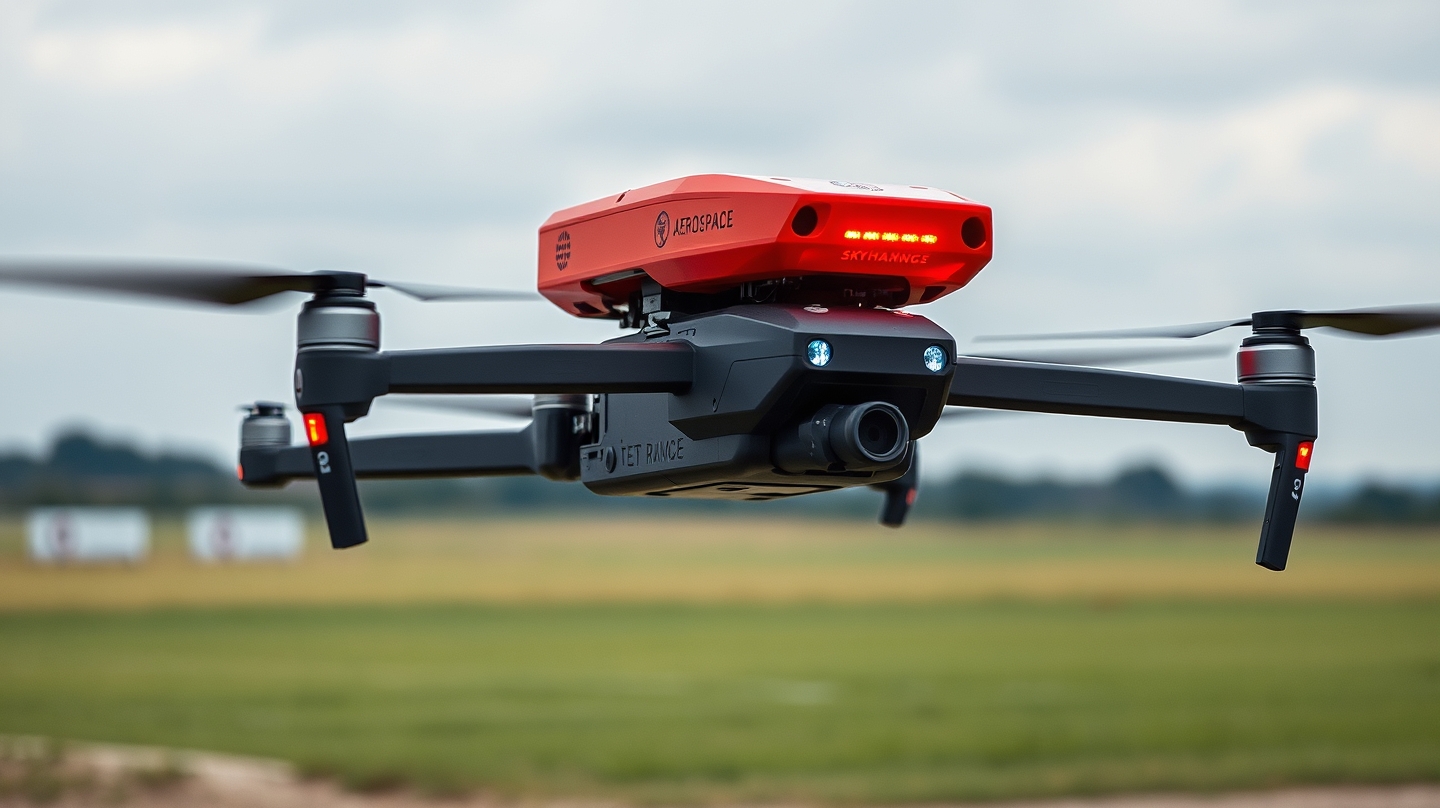
Cambridge Aerospace Ltd., the UK‑based developer of the Skyhammer air‑defence system, announced a $300 million Series C round that lifts its valuation to $3.4 billion. The funding, led by DFJ Growth and supported by Lux, Accel, Lakestar, Never Lift, Ora Global and Elad Gil & Co., is earmarked for a rapid expansion of manufacturing capacity and the next phase of product development.
The timing is notable. Only months after a $200 million Series B in April, the company has secured multiple contracts from the UK Ministry of Defence, including a deal to supply low‑cost interceptors for the British Armed Forces. CEO Steven Barrett described the raise as “a testament to the incredible work of the entire Cambridge Aerospace team” and emphasized the need to “scale our manufacturing and delivery to meet the pace of threats and the needs of allied nations.”
Beyond raw capital, the round signals a broader market shift toward automation‑driven defense solutions. Skyhammer, with a 30 km range and 700 km/h top speed, relies on autonomous target identification, tracking and neutralisation—capabilities that reduce human workload and enable faster response cycles. The company’s iterative testing regime, which now runs weekly, illustrates a data‑centric approach that feeds real‑time performance metrics into a cloud‑based analytics platform. This workflow mirrors trends in other high‑growth drone firms such as Quantum Systems, which recently raised $1.2 billion, and Mach Industries, which secured $300 million to accelerate its uncrewed systems line.
From an industry transformation perspective, Cambridge Aerospace’s funding underscores the accelerating adoption of advanced robotics in national security. The infusion will fund modular production lines that can be reconfigured for different air‑defence payloads, a structural insight that could lower per‑unit costs and shorten time‑to‑market. By standardising components across its product suite, the firm aims to create a plug‑and‑play ecosystem that integrates seamlessly with allied command‑and‑control networks—a step toward the “automation‑driven media infrastructure” that underpins modern battlefield awareness.
Real‑world implications are already materialising. The UK Ministry of Defence expects the Skyhammer system to augment existing Patriot and CAMM installations, providing a layered defence against swarms of inexpensive commercial drones that have proliferated in recent conflicts. For NATO allies, the ability to field a cost‑effective interceptor could reshape procurement strategies, shifting budgets from legacy platforms to scalable, software‑defined solutions.
Analysts also note the competitive pressure this creates for legacy defence contractors. As venture‑backed startups demonstrate rapid development cycles and aggressive pricing, traditional players must either partner with innovators or accelerate their own automation initiatives. The ripple effect extends to supply‑chain partners, who will need to adopt digital twins and predictive maintenance tools to keep pace with the heightened production tempo.
In sum, the $300 million raise does more than boost Cambridge Aerospace’s balance sheet; it accelerates a technology adoption curve that is reshaping how nations defend their airspace. The convergence of autonomous drones, modular manufacturing and data‑rich operational feedback loops points to a future where sky‑defence is as much about software agility as it is about kinetic performance.




















