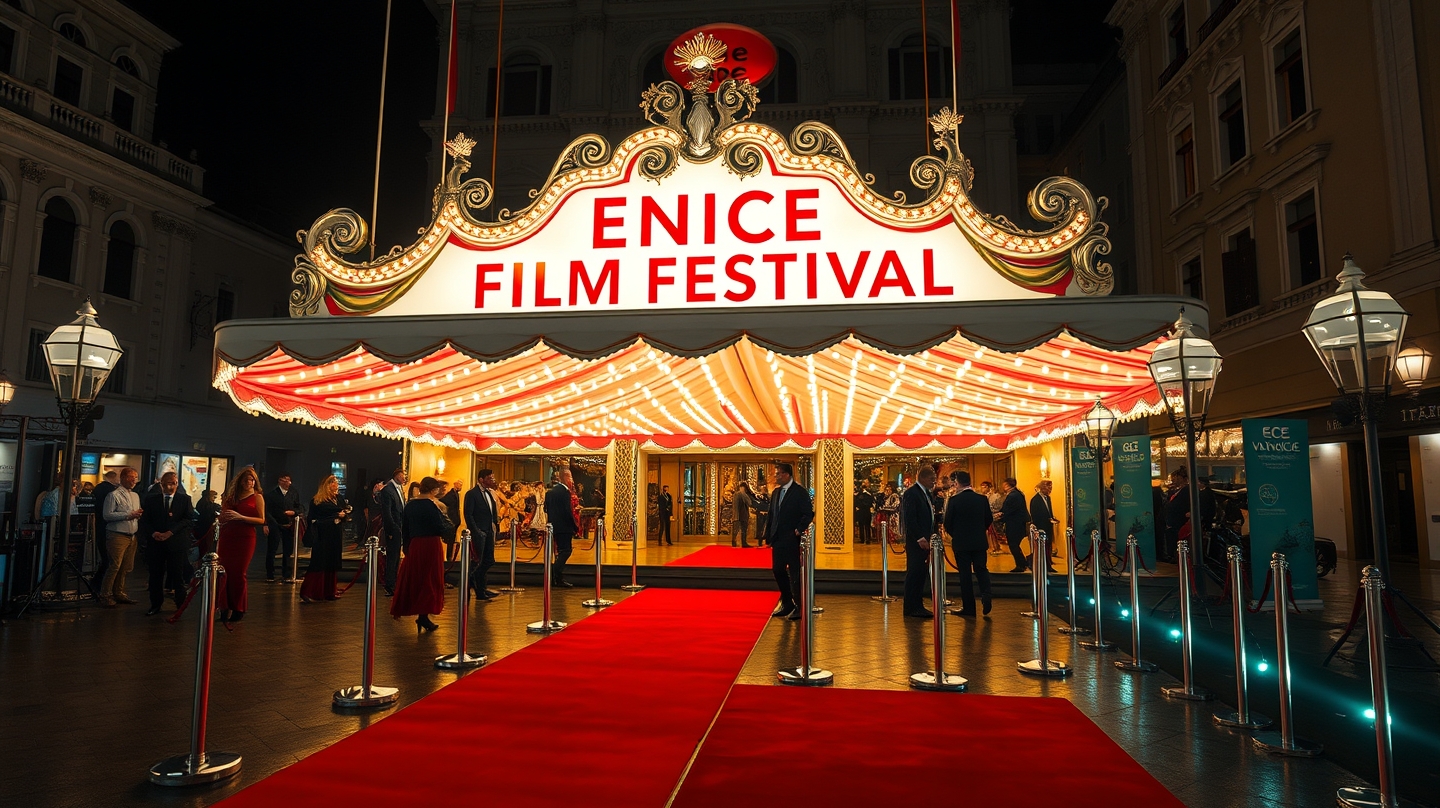
When the curtain rose on the 83rd Venice International Film Festival’s official program, the excitement was tempered by a sharp political note: the European Commission withdrew a €2 million grant, accusing the Biennale of political bias for allowing a Russian presence. At the same time, the festival’s slate leaned heavily into documentaries and narrative works that explore technology, media infrastructure and the evolving creator economy.
Festival director Alberto Barbera and Biennale president Pietrangelo Buttafuoco confirmed the competition and sidebar selections from the historic La Biennale Library. Highlights include the opening biopic Ink about Rupert Murdoch’s tabloid empire, the closing period drama Dio Ride, and a Spotlight section that features Palestinian director Muayad Alayan’s Conversation With the Sea and Gael Garcia Bernal’s Hombre Al Agua. The lineup also showcases politically resonant titles such as Hungarian filmmaker Gábor Reisz’s Ground Floor, a metaphor for the current climate in Budapest, and Alina Serban’s I Matter, the first Roma‑directed film in the Spotlight program.
Buttafuoco’s press‑conference remarks framed the grant withdrawal as a “wolf” preying on a “lamb,” emphasizing that the decision was political rather than legal or cultural. The €2 million cut, originally earmarked for the La Biennale di Venezia Foundation, underscores the growing tension between European cultural institutions and geopolitical considerations, a dynamic that could reshape funding models for festivals worldwide.
Beyond the politics, the festival is signaling a clear embrace of technology‑driven workflows. A new Venice Open Non‑Fiction sidebar will premiere high‑profile documentaries—including Alex Gibney’s portrait of Elon Musk titled Musk, Julia Loktev’s follow‑up on Russian journalism, and Barbara Kopple’s Union Town. These films are slated for simultaneous streaming on platforms such as YouTube and Meta’s Facebook Watch, reflecting a hybrid distribution model that blends theatrical prestige with on‑demand accessibility.
The Musk documentary, in particular, illustrates how festival premieres can become instant digital events. By leveraging YouTube’s global reach, the film is poised to shape public perception of the tech billionaire while offering creators a data‑rich environment for audience analytics. This approach mirrors a broader industry shift where festivals act as launchpads for content that lives both on the red carpet and on streaming dashboards.
Automation is also entering the festival’s backstage. From AI‑assisted programming tools that help curators match films with thematic sections, to cloud‑based workflow platforms that streamline subtitle generation and rights clearance, Venice is testing a suite of technologies that could become standard across major cultural events. These efficiencies free staff to focus on editorial decisions, while also generating metadata that fuels recommendation engines on social platforms.
The addition of the Open Non‑Fiction sidebar serves as a structural insight into audience behavior: viewers increasingly expect immediate, searchable access to documentary content. By offering a dedicated space for on‑demand premieres, Venice acknowledges the creator economy’s demand for rapid distribution and the monetization opportunities that arise from platform partnerships.
For filmmakers, distributors and cultural policymakers, the 2026 Venice lineup is a barometer of how art, politics and technology intersect. The funding controversy may prompt European bodies to revisit grant criteria, while the festival’s tech‑forward programming could set a template for how prestigious events adapt to a digital‑first audience.




















