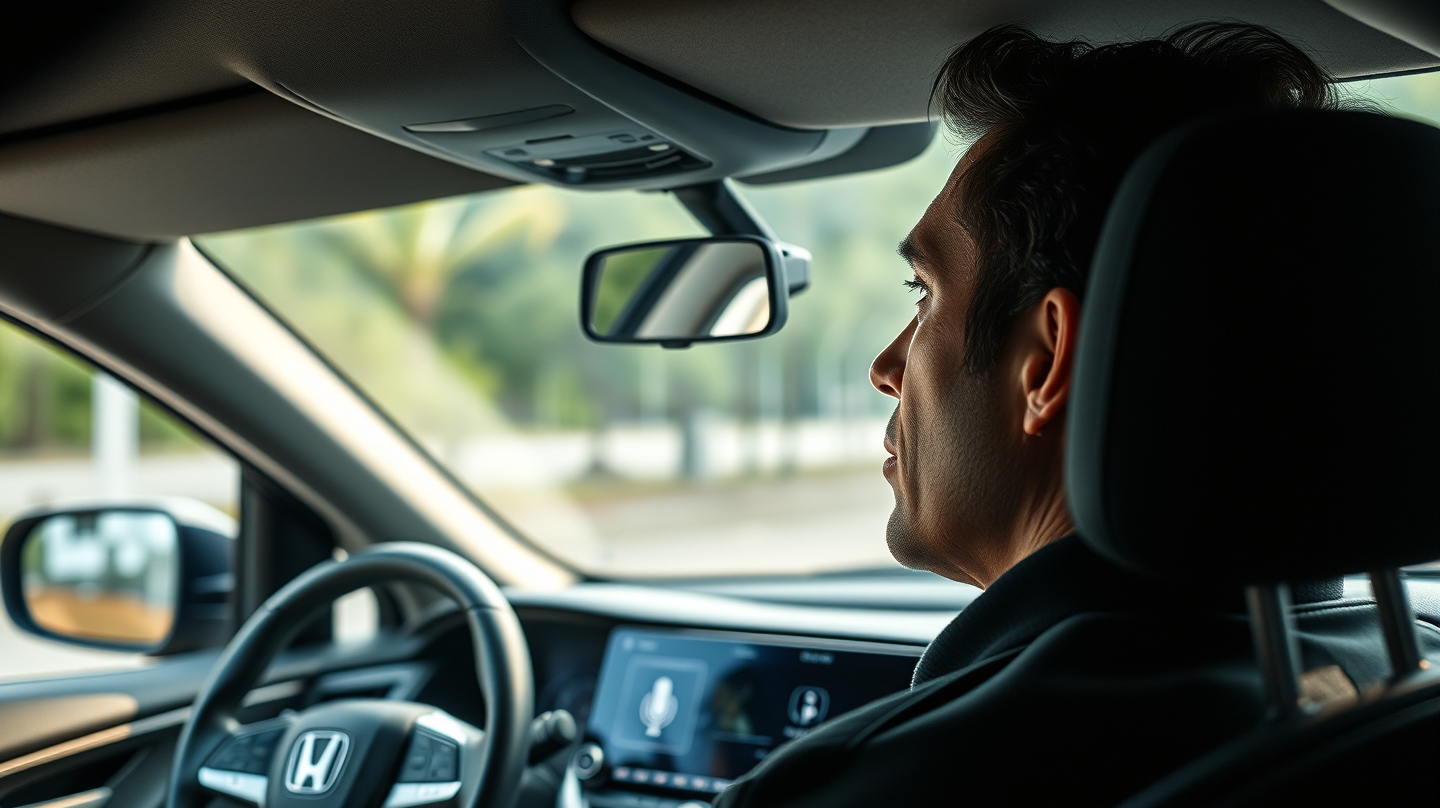
While most drivers still issue short commands, Honda’s latest cars will let you hold a genuine conversation with your vehicle. The automaker is upgrading nine Honda and three Acura models with Google Gemini, an AI assistant that moves beyond the rigid, single‑prompt style of the older Google Assistant.
Gemini arrives on vehicles that already run Google’s infotainment platform. Once a driver signs into a personal Google account, the system can answer layered questions, retain context, and even suggest follow‑up actions. A request to "find a scenic route to the coast" can be refined on the fly with follow‑up queries about traffic, fuel stops, or points of interest, all without the driver needing to repeat the original command.
Honda frames the rollout as a response to a changing expectation of connectivity. "Connected technology is no longer a convenience for Honda customers—it's an essential part of the driving experience," said Jessika Laudermilk, assistant vice president of Honda National Auto Sales. The move aligns the brand with a broader industry shift toward conversational interfaces, a trend accelerated by the rapid adoption of large‑language models across consumer tech.
Only certain trims and model years qualify. The list includes the 2024 Acura ZDX, the 2025‑current Acura MDX, the 2026‑current Acura ADX A‑Spec Advance, and several Honda models ranging from the 2023‑current Accord Touring Hybrid to the 2026‑current Prologue, Pilot, Passport, CR‑V Sport Touring Hybrid, and Prelude. Owners of qualifying vehicles will receive the Gemini update over‑the‑air, making the transition seamless.
From an architectural standpoint, Gemini represents a shift from a command‑based UI to a conversational layer that sits atop existing telematics and infotainment stacks. This requires tighter integration with vehicle data buses, more robust on‑board processing, and a privacy framework that balances personalized assistance with driver data protection. Automakers that master this integration can offer richer, context‑aware services without overloading the driver’s attention.
The real‑world impact is immediate. Drivers can ask Gemini to summarize the morning news, draft a shopping list, or brainstorm weekend itineraries—all while keeping eyes on the road. For fleet operators, the technology promises streamlined logistics through natural‑language dispatch and status updates. However, the conversational model also raises questions about data security and the potential for distraction, prompting regulators to revisit in‑car AI guidelines.
Honda’s partnership with Google also positions the company against rivals that are experimenting with their own AI ecosystems. Meta, for instance, has been piloting AR‑enhanced navigation and voice‑first interactions in select markets, signaling a competitive race to embed large‑language models in vehicles. The outcome could shape standards for data sharing, OTA update cadence, and the future of in‑car digital assistants.
In the longer view, the Gemini rollout illustrates how automotive manufacturers are adopting AI not merely as a feature but as a core component of the driving experience. As more brands embed conversational agents, the industry may see a convergence of mobility services, personalized content, and automated workflow—transforming cars from transport tools into mobile extensions of users’ digital lives.




















